

This is not about cooking instant ramen. You obviously know how to cook instant ramen. The instructions are right there on the package.
This is also not about trying to make "authentic" ramen, whatever that might mean for a dish with origins as complicated and multifarious as ramen has. No, this is a column about trying to replicate fancy ramen, for lack of a better term, at home. In the United States, the past decade has seen a proliferation of restaurants that sell bowls of ramen for $12 to $15 a pop. What's crazy is that those bowls of ramen often make you feel that you got your money's worth.
And the good news is that you can make a pretty good imitation of fancy ramen at home, in case your budget cannot withstand visits to fancy ramen joints, or you don't live within driving distance of a fancy ramen joint. And as long as authenticity isn't your top priority, you don't have to sacrifice an entire day to make said ramen.
The main thing to keep in mind when making non-instant ramen is that everything needs to be cooked separately and combined only at the very last minute. The noodles need to be boiled by themselves in salted water and then drained. (Fresh ramen noodles are great, if you can find them; otherwise, any long wheat noodle will do.) The vegetables (and meat, if you are a meat-eater) need to be thoroughly cooked on their own. The broth needs to be heated in its own pot immediately before serving. If you like eggs on your ramen, poach them (or boil them) in their own saucepan. You will need to use lots of pots and pans while making ramen.
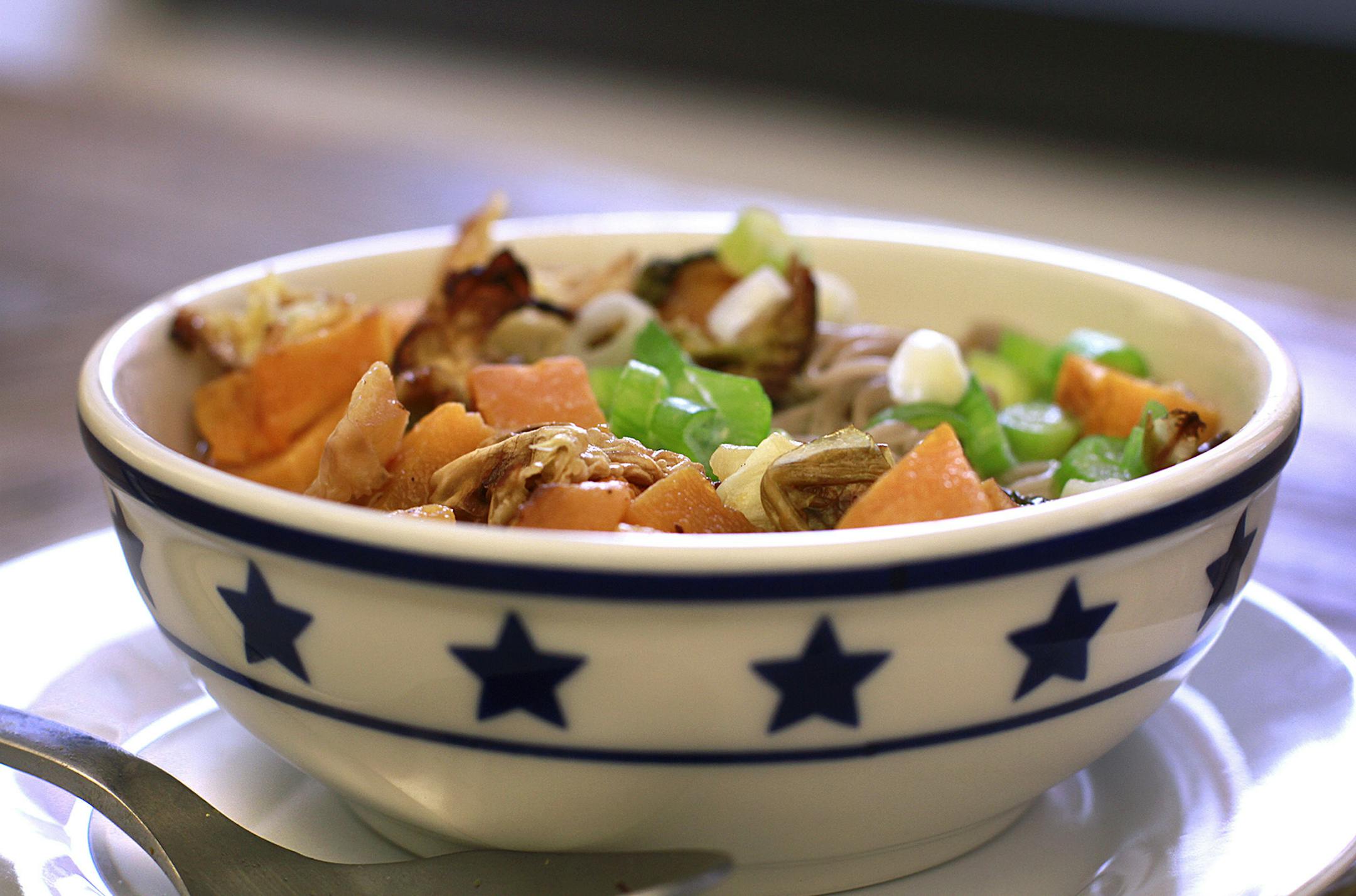
My neighborhood ramen restaurant, the one with continual two-hour waits, makes a killer vegetarian ramen with cabbage, butternut squash (which adds a pleasant touch of sweetness), and an insanely delicious miso broth. A minimalist miso broth — just miso and hot water — is nutty and nuanced but kind of thin tasting. A traditional miso broth, based on the fish- and seaweed-infused liquid known as dashi, is time-consuming and requires ingredients not easily obtained in your average American grocery store. But you can make a decent, savory, not-too-salty miso broth by combining hot vegetable or chicken stock with boiling water and miso paste right before you assemble your miscellaneous ramen components.
I'm not kidding about the "boiling" part. You have some leeway on the temperature of your vegetables and meat — it's not a big deal if they're lukewarm by the time you're putting everything together — but your broth must be piping hot when you serve the ramen, or else the whole exercise is for naught. And the noodles will soften slightly while they're sitting in the hot broth, so err on the side of undercooking them. Ramen noodles should be al dente or even firmer — if you're going to cook them till they're mushy, you may as well eat the instant kind instead.


