

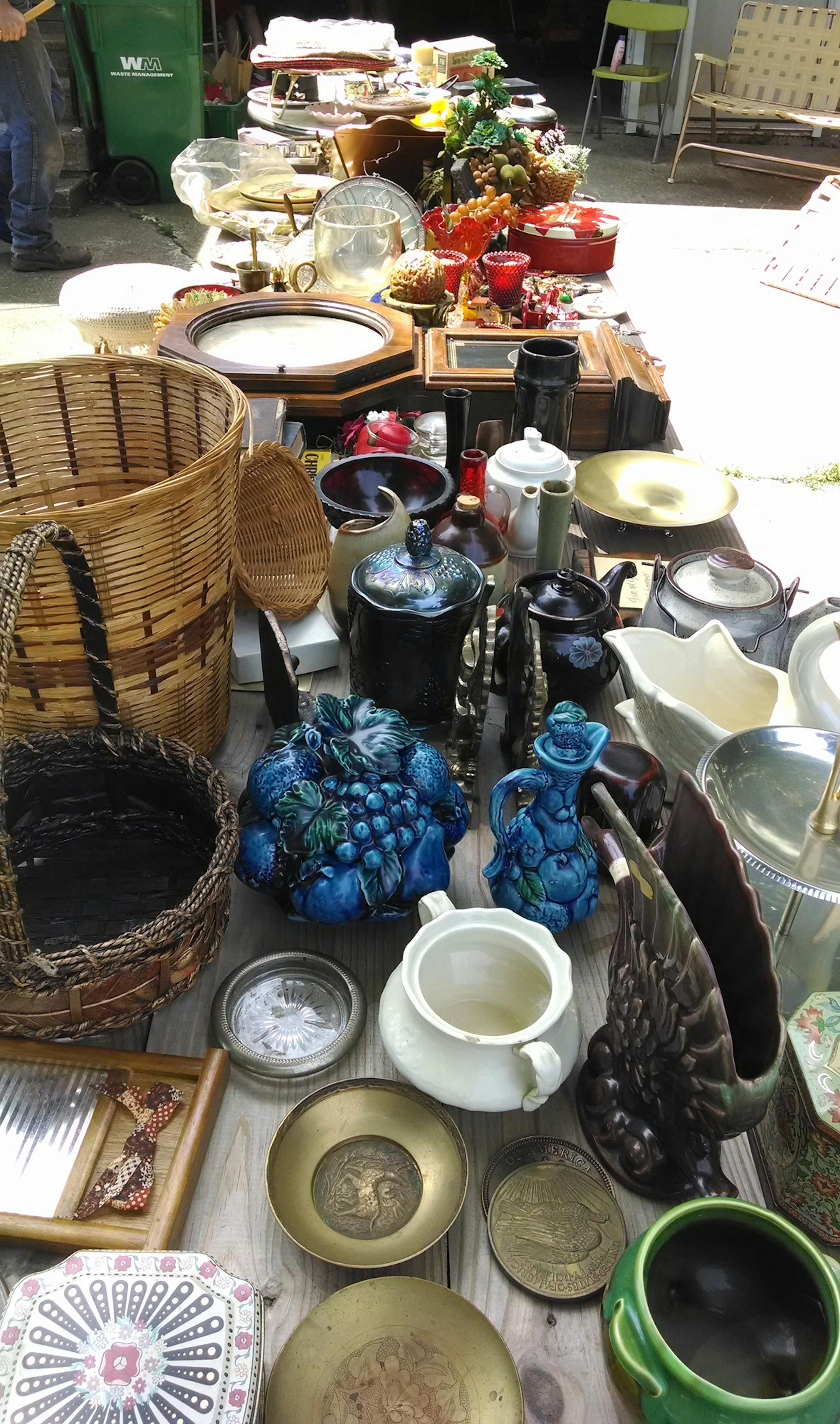
The plethora of fluorescent yellow signs and tiny flags cluttering every suburban corner of the United States may have given us a few hints: It's prime season for hitting garage and estate sales.
But if you feel as if you're the lone soul who goes week after week and returns home with flops, then it's time you hear from the experts to learn how to score big, and how not to lose when shopping at an estate sale or at a garage sale.
Come prepared. "There are three pieces of equipment that are mandatory: a flashlight, a magnifying glass and a tape measure," said Joe Rosson, antiques appraiser and former co-host of "Treasures in Your Attic" on PBS. "Without these, you will always encounter a situation where one of them is absolutely necessary to making a decision." A tape measure can tell you if it will fit in your living room or in your vehicle. A flashlight might help you peek into the back of a closet, or get a good look at how a piece was made. A magnifying glass might illuminate an item's chip, crack or mark.
Bring a strong magnet. "Gold and silver will not stick to a magnet," said Norman Gornbein, a California-based pawnbroking consultant and precious metal refiner and author of "How to Open a Successful Pawnshop." While you may think that the piece of jewelry you're holding is real gold because it's got the 14-karat gold stamp, "There's no guarantee," Gornbein said. "For $2.50, anyone can buy a stamp."
Buy a magnifying glass. If you're looking for a diamond, you should come to the sale with a magnifier (Carson LumilLoupe 10X Power Stand Magnifier, $10.99 at amazon.com). "Most diamonds have imperfections," Gornbein said. "If you look at it through the loop and you see flaws, it's a diamond. If there are no flaws, most likely it's not."
Get organized. Rosson suggested choosing sales the night before, making a list and mapping the locations. There are two methods, Rosson said. One is the serendipitous approach. "You go, and you find things by chance that interest you," he said. "But this method is not for the serious-minded." The serious are like the Boy Scouts — always prepared. These people know what they're looking for and what those items will look like when they find them. They've read about the items, they've gone to antique shows to see the genuine items and they've been to the museums that carry them.
Stay away. You might want to avoid the following items: bed pillows, shoes, stained mattresses, computers or electric components, bathing suits, hats, food, games and puzzles, Rosson said. "Be careful about buying things that need repair unless you are good about getting to projects right away," he said.
Look for authenticity. If you're buying a piece of artwork, ask if it comes with a certificate of authenticity, said Charlotte Marra, part-owner of Lori Palmer Estate Sales, which operates estate sales in New Jersey. You could also gauge the piece's worth by checking to see what the last work sold for at auction. "But some art is simply decorative art, and if you like it, you buy it," she said.


