

Opinion editor’s note: Strib Voices publishes a mix of national and local commentaries online and in print each day. To contribute, click here.
•••
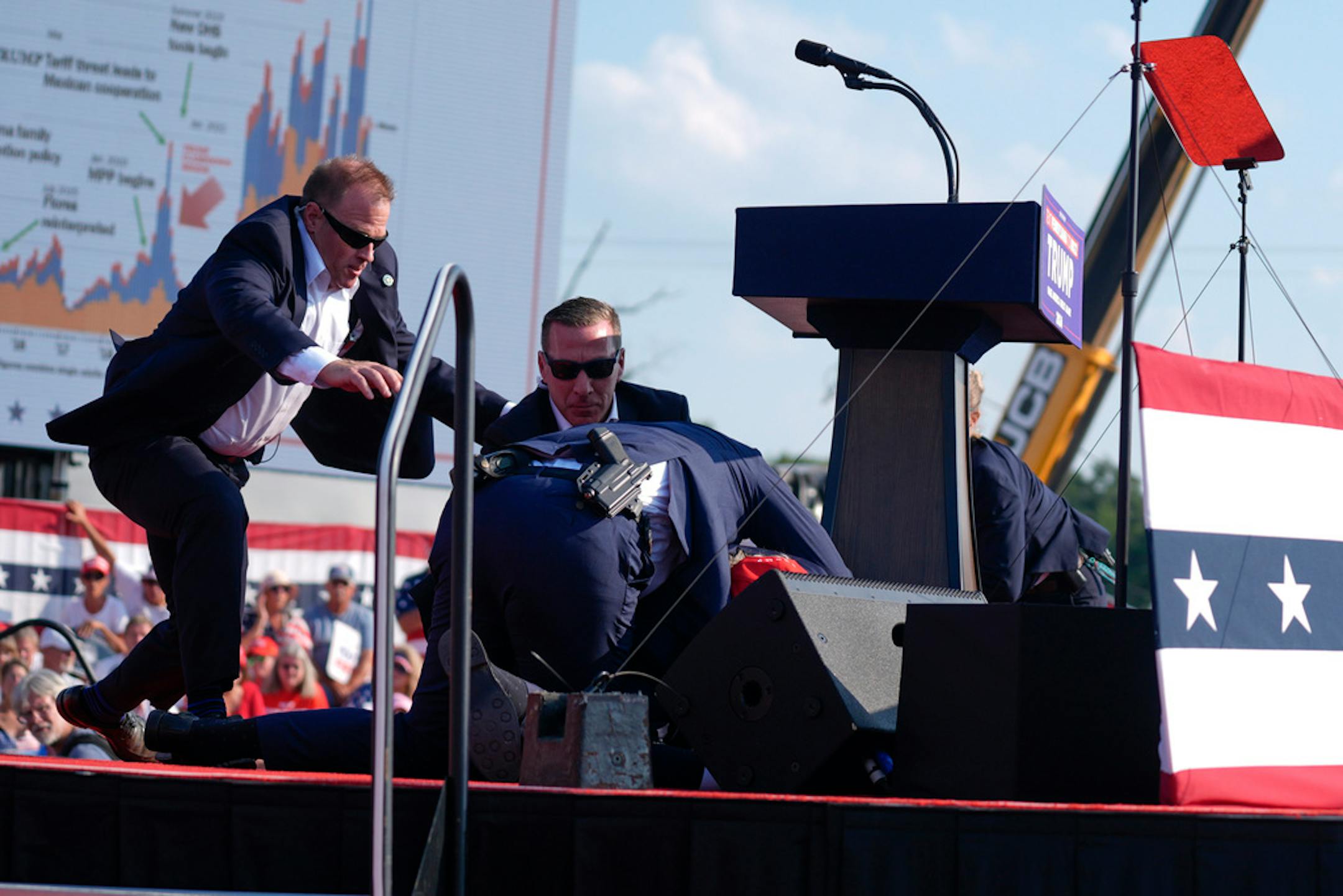
A report on the assassination attempt against Donald Trump this summer in Butler, Pa., comes to an alarming conclusion about the Secret Service’s shortcomings. In the absence of “fundamental reform,” it says, “another Butler can and will happen.” Will that sobering assessment help to prompt real changes, and fast?
The 52-page report was written by a bipartisan panel appointed under the Department of Homeland Security. This inquiry into the Butler shooting included 58 interviews and 7,000 documents. It goes through, in detail, the failures on the ground. The roof from which the gunman fired had been deemed part of the “outer perimeter,” traditionally staffed by state and local police, not the Secret Service. Communication between these agencies was a muddle.
The report also makes broader criticisms of the Secret Service’s culture, including “a pattern of undertraining,” an attitude of “doing more with less” (which is “inconsistent” with its no-fail mission), “an overreliance on assigning personnel based on categories (former, candidate, nominee)” instead of individual risk assessments, and a lack of auditing and “continuous improvement” mechanisms.
The panel says new money would help, “but an influx of funds, without more, will not address the problems.” It has recommendations for better communications and planning, while suggesting new leadership recruited from outside the agency. The report also argues that the Secret Service should shed responsibility for investigating financial crimes, so it can be “hyperfocused” on its most vital task.
“There is simply no excuse to need to ‘do more with less’ concerning protection of national leaders,” the panel says. “Unless and until those responsibilities are fulfilled, no resources (funds or time) should be allocated to other missions that are not centrally related to the protective function.” After Butler, that’s an idea that should be taken seriously.


