

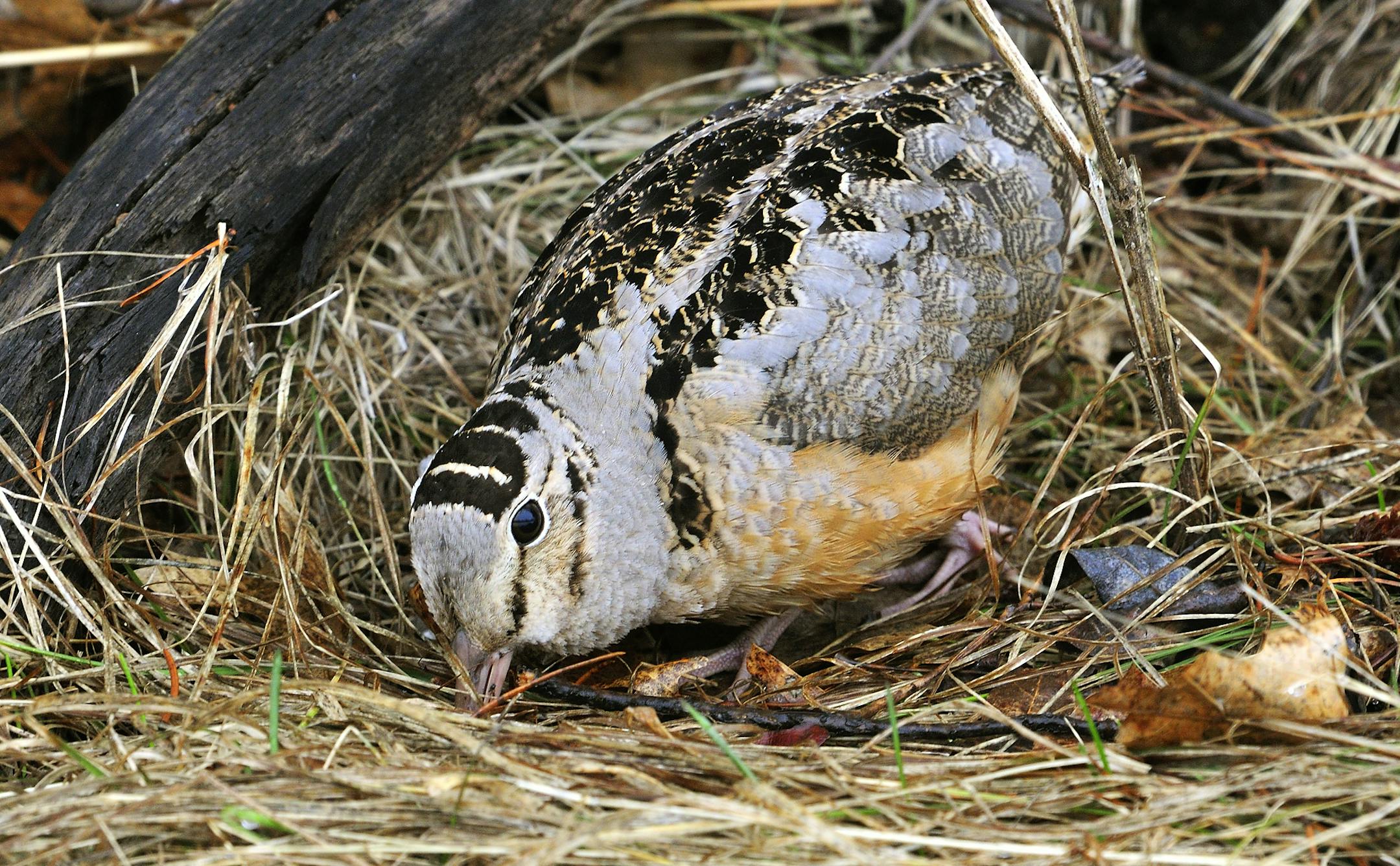
Brainerd, Minn. – They are arriving, hidden by the night — dropping into aspen and alder thickets, one by one, until their numbers suggest they entered en masse. Unseen by most and so well hidden, these creatures are masters of camouflage in varying shades of brown, black, white and salmon.
It is woodcock of which I write. Woodcock flights now are filtering in from the north, sent and guided by instincts man has yet to understand. Their numbers will peak in this area during the next few weeks.
This fall, because of low ruffed grouse populations, hunters may want to concentrate on woodcock instead. After all, the habitat preferred by both birds often overlaps. During the past cyclic grouse low, I hunted woodcock almost exclusively during October, taking the occasional grouse that presented itself.
Hunting action can be very fast when migrating or "flight" woodcock are in. However, the birds have a "here today, gone tomorrow" reputation, which adds to their already secretive existence.
I remember hunting an aspen thicket so thick with flight woodcock that, at sunset, the end of legal shooting hours, I had to leash Ace, my German wire-haired pointer, to get him out of the woods. Even while on the leash, he pointed out two woodcock at the edge of a field. Then, against the afterglow of the setting sun, we sat quietly and watched bird after bird, silhouetted against the orange sky, twitter over the tops of the aspens and settle into a nearby meadow for the night.
Two days later they were gone, basking, I assumed, somewhere to the south. Only their characteristic "chalk mark" droppings were left to hint at their presence.
Biologically, woodcock or timberdoodles as they are often called, are curious little birds. Not much bigger than a robin and with a similar diet consisting mostly of earthworms, the woodcock is Minnesota's only migrating upland game bird. Of particular interest to hunters, fall migration peaks in mid-October.
Timberdoodles sport a 2½- to 3-inch bill, which is used to probe soft ground for earthworms. Their proportionately large eyes are set high and to the rear of their skulls, allowing the woodcock to detect danger from above and behind even while its bill is buried in soil. Even stranger, the woodcocks' brain is positioned upside down in its skull. Among naturalists, the bird is most noted for the male woodcock's unusual spring courtship flights, often called the "sky dance."


