

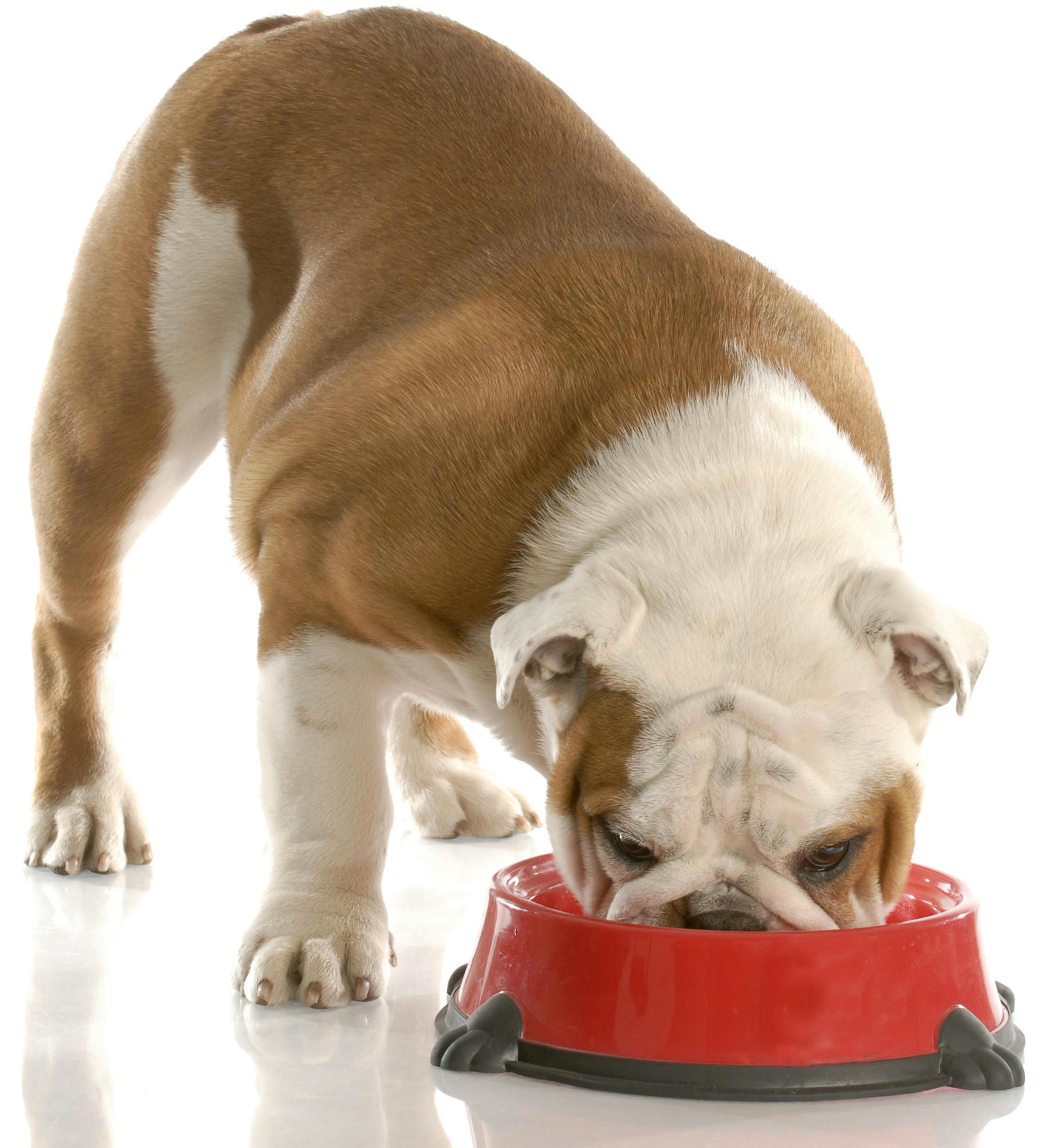
Molly, a spayed Labrador retriever, is absolutely crazy about her food. So crazy that she gulps her kibble so quickly that she sometimes chokes.
While it may sound extreme, there are plenty of dogs who eat like Molly — and not just because they're hungry. A dog's metabolic rate, the quality of food and competition from other dogs all factor into how a dog eats.
There can also be medical reasons for this behavior, including hyperthyroidism, a disease that causes an overproduction of the hormone thyroxine. Symptoms of hyperthyroidism can include ravenous appetite, weight loss and hyperactivity.
If your dog is a gulper, consider taking it to the vet for a thorough examination. If your dog has no physical problems, then look carefully at the type of food you are providing.
Dogs require a diet of about 70 percent protein. Contrary to what's in a lot of commercial dog food, they are not big grain eaters. Make sure the quality of the food is high and with little or no grain in the formula.
If you feed your dog in the company of other dogs, or even the family cat, try changing the feeding routine. Sometimes the presence of another pet causes a dog to bolt its food out of competition.
You also can slow the feeding process. Instead of putting food in a bowl, scatter kibble around the floor or place it single layer in a shallow pan. Doing that will require the dog to eat the kibble once piece at a time. (Don't expect to hear a lot of chewing, however. Dogs are carnivores, and their teeth are shaped to bite, tear and shred food, not grind it to a pulp.)
Another option is to buy a specialty food bowl, one with built-in separators that distribute the kibble into small compartments, forcing the dog to retrieve each piece. There are even toys (like Buster Cube and the Kong Wobbler) that dispense food slowly as a dog nuzzles or plays with them. These toys do more than just help dogs eat more slowly: They offer much needed mental stimulation.


