

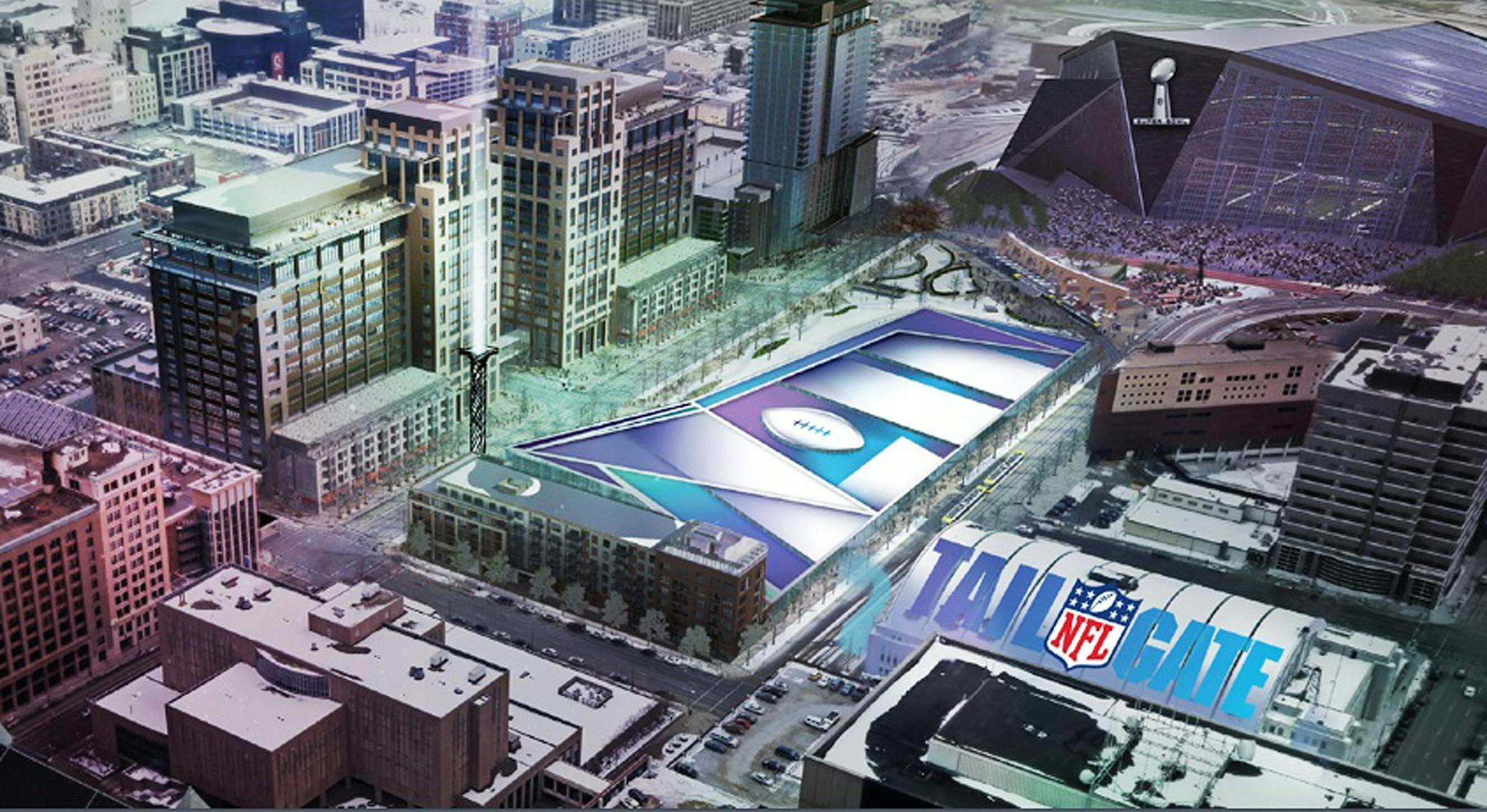
Now comes the hard part. Bidding to host a Super Bowl in the dead of a Minnesota winter takes more than a little chutzpah and maybe a touch of insanity, but the energy and audacity summoned by the Minneapolis-St. Paul delegation to win over skeptical NFL owners last week must now be rechanneled into delivering a memorable event come February 2018.
"We celebrate winter like no one else," said Richard Davis, the U.S. Bancorp CEO who helped lead the effort. He's right about that, of course, although the brutality of the winter just past left even the hardiest among us shaken to the core. Still, the Twin Cities, despite its climatic challenge, continues to grow, flourish and aspire, and surely that says something about the inner spirit of this place. Somewhere among the powdermilk biscuits and oddball accents there's an X-factor at work.
The Super Bowl is no longer just a football game, of course. It's a weeklong party for 100,000 guests and a chance to show off your city to more than 100 million viewers worldwide. In an age of hypercompetition for talent, investment and prosperity, mega-events like the Super Bowl hold incalculable value — not so much, perhaps, for New York, Miami or Silicon Valley, but certainly for lower-profile cities that hope for favorable notices and a larger mark on the national map.
"It's a huge opportunity, and we have to take full advantage," said Michael Langley, CEO at Greater MSP, the metro's business recruiter. The aim is to show a north-coast city that laughs at the cold and gives winter a big bearhug.
Our wintertime festivals will be, essentially, consolidated into the Super Bowl effort — at least that's the intent. Those include the St. Paul Winter Carnival, with its dazzling Ice Palace; the beautifully illumined City of Lakes Loppet in Minneapolis' Uptown district; the U.S. Pond Hockey Championships on Lake Nokomis, and the Red Bull Crashed Ice event on St. Paul's Cathedral Hill.
The Super Bowl aims also to take advantage of projects yet to be completed — most obviously the new Vikings stadium, with its dramatic see-through roof and gigantic glass pivot doors that open onto a two-block park called The Yard. The Yard, in turn, will be flanked by a lineup of new office, retail, residential and hotel structures, all linked by skyway to the stadium. A revamped and woodsy Nicollet Mall should be finished, too, by 2018, and fitted with an ice rink for skating, curling and broomball, as well as a halfpipe for snowboarding. A remodeled Target Center should also be available.
Other events will spread into St. Paul and Bloomington, although, given the weather, it might be wise to concentrate as much activity as possible in downtown Minneapolis. The stadium's central location is a prime benefit, as the next three Super Bowls should illustrate. Stadiums in Phoenix and Houston are 12 and 6 miles from downtown, respectively, and the 49ers' new venue is 45 miles from central San Francisco.
Host committee members should take notepads to each of those events.


