

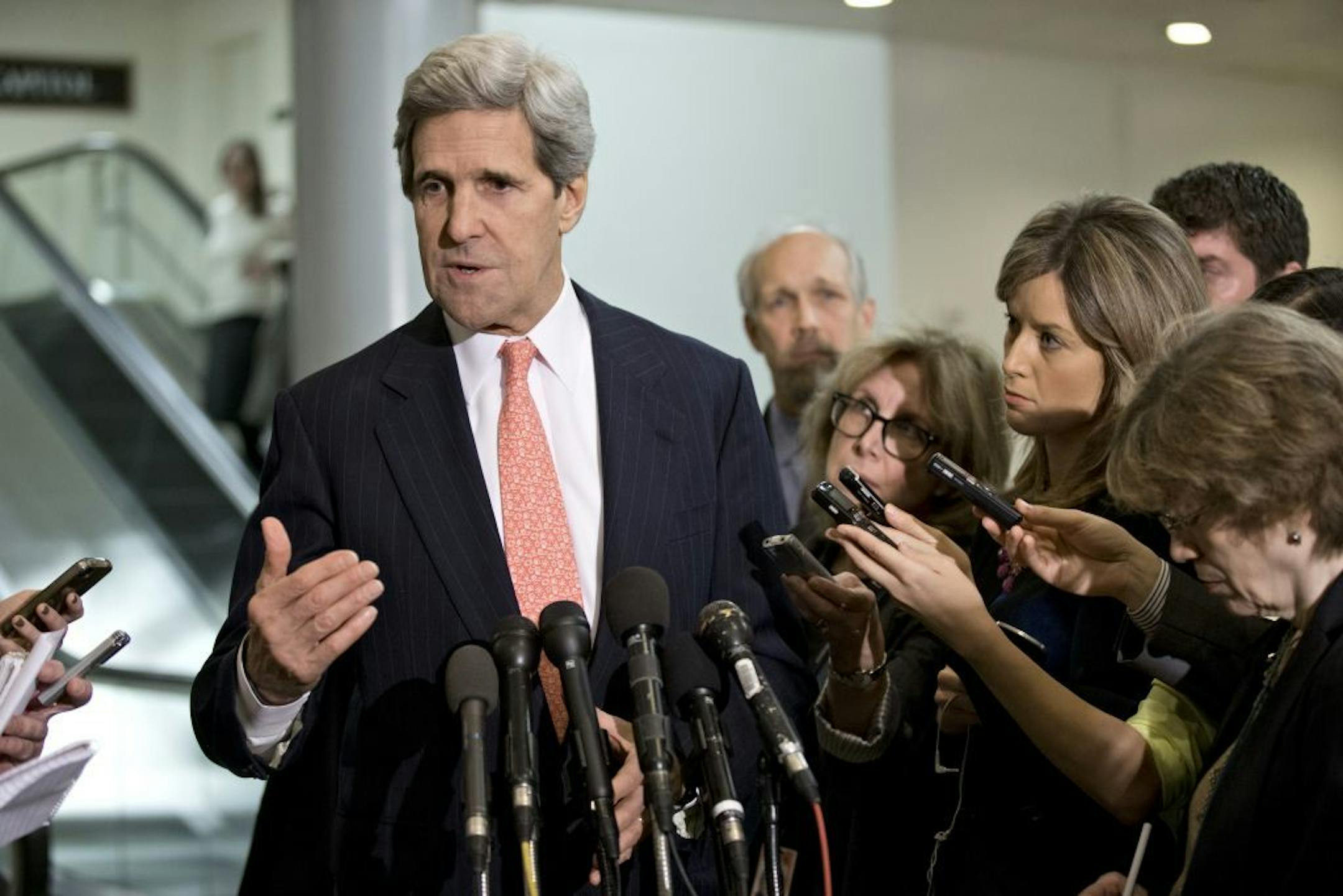
The men who fought in Vietnam, a war that symbolizes America's overreach and failures abroad, haven't ascended to the presidency in the way that the World War II generation did. But now, under President Obama, Vietnam veterans Chuck Hagel and John Kerry could get a chance to pull America back from its foreign entanglements.
Obama's nominations of these men, and the world's disenchantment with this president, signal that in his second term, the United States will have a less zealous mission in the world. The mantra isn't quite George McGovern's "come home, America," but we are not far from that Vietnam-era weariness of distant lands and causes. And who better than a president with a foreign pedigree and two combat veterans from the Vietnam War at the helm of the Pentagon and the State Department to give this retrenchment a sense of legitimacy?
All three men would disavow the charge that they are "declinists" who believe that American power is past its zenith, but there is an unmistakable pessimism at the heart of their worldview: We are flat broke, with pressing priorities at home. Foreign engagements begin well and end in futility. We don't know enough about the inner workings of these distant places to help more than harm. And besides, our embrace can suffocate those whose causes we might take up.
Syria burns, but we should hold steady and aloof, Obama's approach has made clear, because we have no way of divining the motivations of the rebellion - or the kind of society the rebels would build if and when the Assad regime falls. The law of unintended consequences haunts our deeds; we know well that American blood and treasure can be wasted at the altar of ideology.
The United States isn't that exceptional to begin with, this triumvirate believes. Hagel and Kerry have forthrightly said so on many occasions,while Obama has had to be more circumspect. In his first campaign for the presidency, he drew a distinction between good wars of necessity and bad wars of choice. But there is no mistaking the worldview of the politician who rose, unexpectedly, amid economic distress, to the height of political power.
The French have a fitting expression for the Obama phenomenon that broke out abroad, like a fever, in 2008: trompe l'oeil, a trick of the eye. Weary of the assertive nationalism of George W. Bush, Europeans and the Arab world welcomed Obama as a break with the "war on terror" and the American sense of embattled certitude. But the crowds in Paris and Berlin, not to mention Karachi and Cairo, mistook the animating passion of the candidate they had fallen for; they thought of him as a cosmopolitan man at home in the world. While he had lived in Jakarta as a boy, and had a Kenyan father and an Indonesian stepfather, he cut his teeth as a politician in the most American of cities: Chicago.
To the extent that the ideology of such a nimble man can be divined, the mission of his presidency has been the redistributive state at home. His legacy, as he sees it, will be his signature legislation, Obamacare. Yes, Osama bin Laden was killed on his watch, but the rescue of General Motors seems closer to his heart.
Two years or so into his presidency, the world caught on: Underneath the exotic name and the speeches referring to American follies abroad was a president who holds the foreign world at bay. The spell of his stirring speech in Cairo, in June 2009, has been broken. Instead of being taken in by Obama's magic, Muslims are burning him in effigy in Karachi. His approval rating among Pakistanis is as bleak as that of Bush.


