

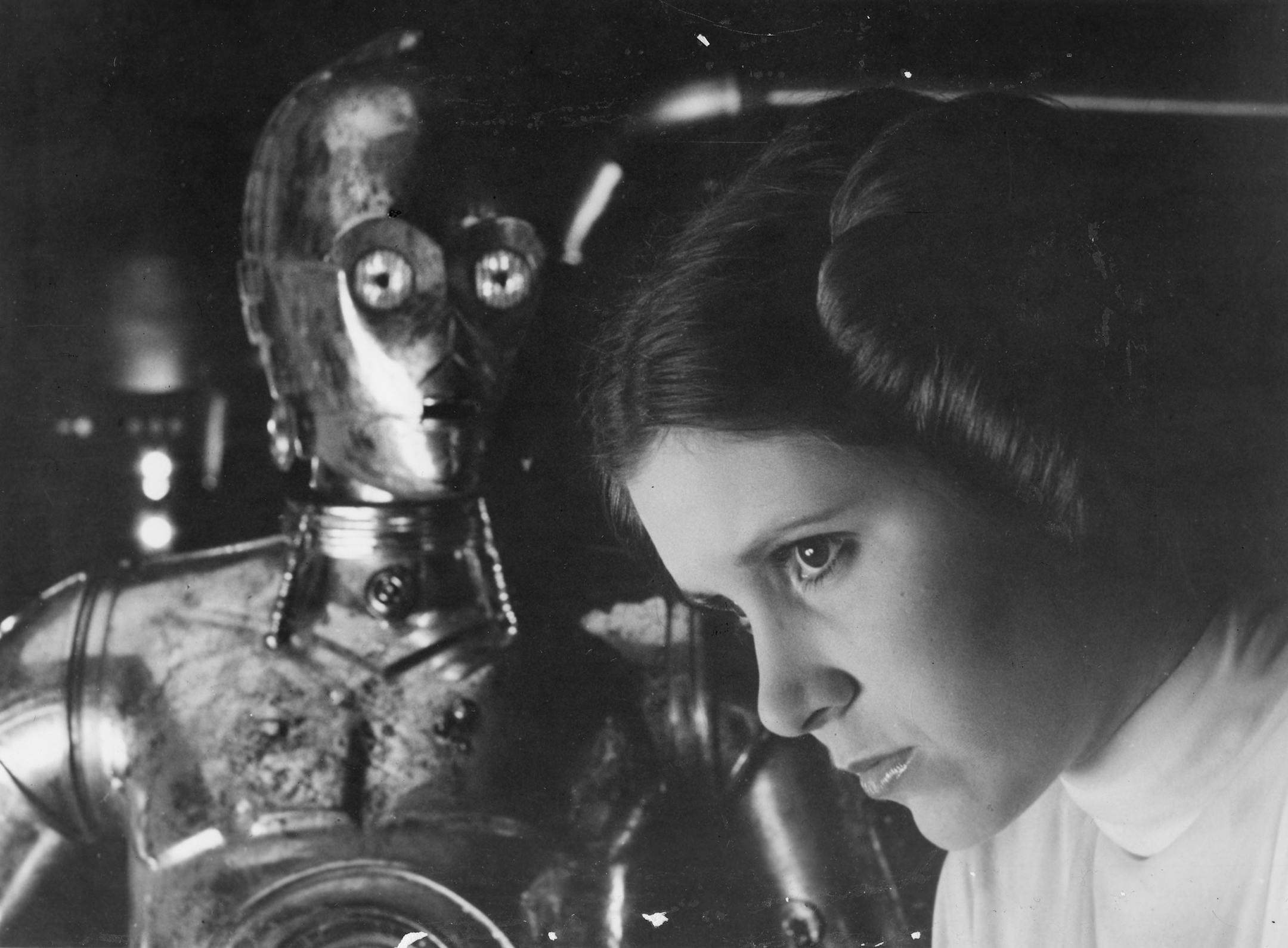
It doesn't seem capitalistically feasible to imagine a world without "Star Wars" in it, selling us stuff like the now faded "Star Wars" pillowcase in one of the upstairs bedrooms, or the long-broken lightsabers littering the nether regions of the basement closet.
But there was a time before a long time ago. This was before 1977 B.C. (Before Chewbacca). George Lucas, hot off his semi-autobiographical 1973 nostalgia reverie "American Graffiti," was struggling with a script called "Adventures of the Starkiller" featuring a swashbuckling accessory known in early drafts as "a lazer sword." The new/old word combo "lightsaber" sounded better, I think we can agree. That script adjustment was one stroke of luck among thousands that made "Star Wars" blow up like a Death Star.
The summer before "Star Wars" opened, if you were 15 (disclosure: I was) and you wanted to see something with ray guns (disclosure: I did), you saw "Logan's Run." The 1976 release was shot, in part, inside a newfangled suburban Dallas mall, the spaciest-looking retail emporium around. It took place in the 23rd century and starred Michael York as the law enforcement "sandman," a member of a hermetically sealed society built on hedonistic pleasure but also on the ritual of killing off all citizens at the age of 30.
This was pretty racy for a PG-rated picture. I saw "Logan's Run" twice. Back then, if I liked a movie, I saw it three or four times. I saw "Star Wars" four times. This meant I was something of an outlier regarding the movie that changed everything.
A medium hit in its day, "Logan's Run" was the latest in a long, increasingly wearying line of late 1960s-70s dystopian diversions, among them: "Planet of the Apes, "The Omega Man" and "Soylent Green." In that decade, if a futuristic fantasy ended with one man (a man, always; the women were incidental and primarily decorative) fighting back against a hopeless totalitarian mess in a world suffering from poor air quality, then I was a satisfied customer. Happy enough endings were to be expected in a moviegoing era marked by astonishing freedom as well as free-floating lyrical disillusionment.
Then "Star Wars" came along: plenty of calculation but no cynicism, no dread, no dystopia.
Writer-director Lucas wanted to do an update on the "Flash Gordon" serials he saw on TV in Modesto, Calif., as a kid. The rights, as controlled by King Features, were too pricey, said Lucas' partner, Gary Kurtz.
"They wanted too much money, too much control, so starting over and creating from scratch was the answer," Kurtz told Los Angeles Times writer Geoff Boucher.


