

Considering the electorate's appetite for turmoil this year, it's odd that Wisconsin Gov. Scott Walker flopped so quickly in his presidential bid. His record, as he plausibly claimed, made him a likely choice "if people are looking for someone who is truly going to … wreak havoc."
Maybe Walker's style is too Midwestern-mild for the militant moment. But to eavesdrop this winter as Wisconsin has marked the five-year anniversary of Walker's revolution there is to be reminded that havoc is just what befell entrenched political forces in Madison, but also that considerable savings followed for taxpayers.
Wisconsin, an old drollery has it, is just like Minnesota — only with conservatives. It's characteristic of Walker's wild ride that his approval ratings in the Badger state this winter are in the dumpster, struggling to reach 40 percent. Yet candidate Walker's boast was quite true that in five years he's won three bruising gubernatorial elections (one an extraordinary 2012 recall contest). Republicans who swept to control of both legislative houses behind Walker in 2010 also have maintained those majorities, despite unprecedented recall elections challenging 13 state senators.
The state Supreme Court was swept into the Walker whirlpool, too, battling through its own overheated elections and in an actual physical altercation between two court members back in 2011. And all this followed the spectacle of a weekslong "occupation" of the State Capitol by many thousands of public employees, during which 14 Democratic senators temporarily fled the state to prevent a lawmaking quorum.
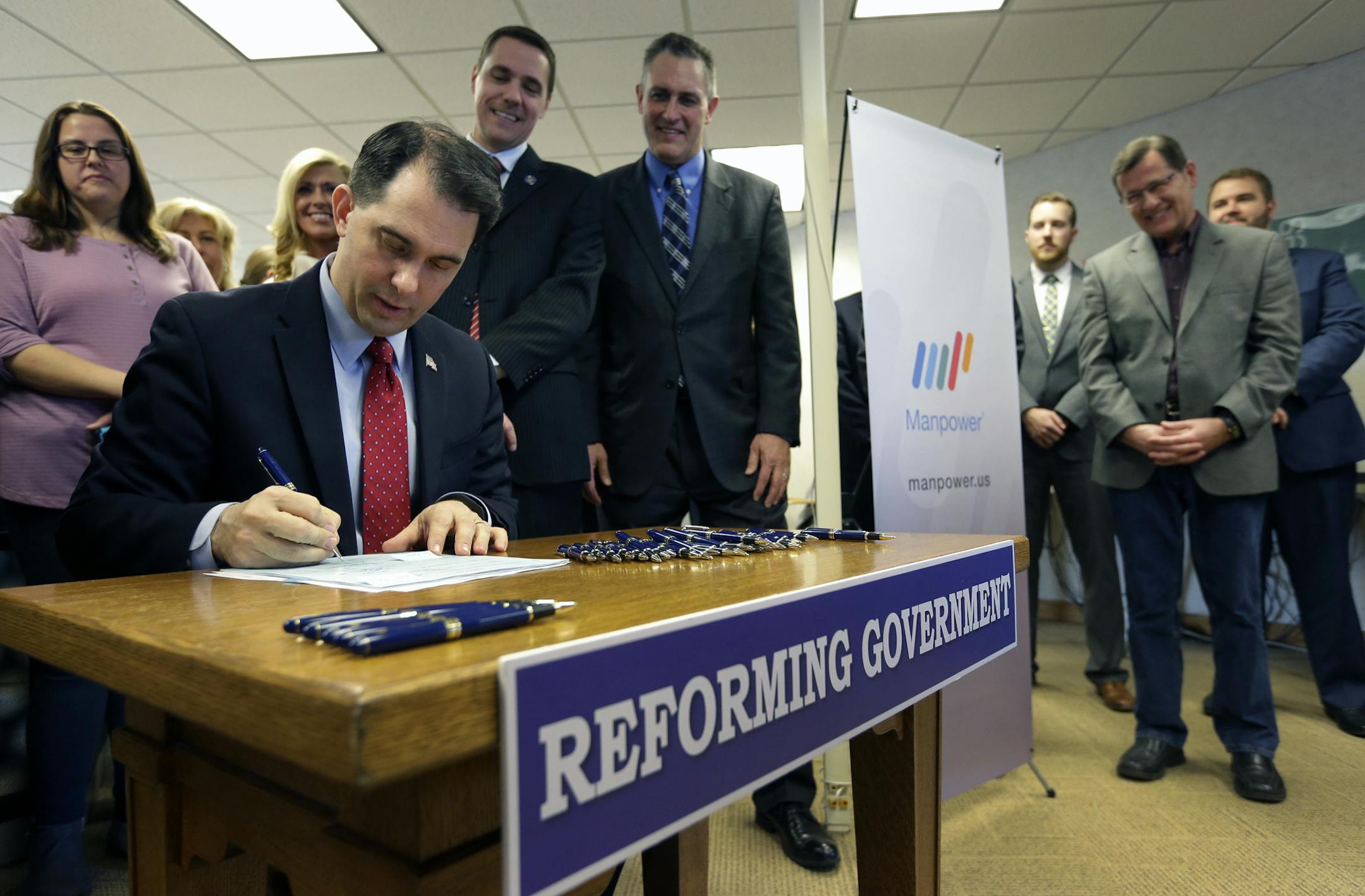
The main cause of the melodrama was what Walker himself dubbed "the bomb" — legislation known as "Act 10" that largely eliminated collective bargaining for most Wisconsin public employees. Signed into law in March 2011, the measure is what most enrages Walker's enemies, but may also have helped him weather the storm.
"The election dynamic," says Todd Berry, president of the nonpartisan Wisconsin Taxpayers Alliance, "is that there's a segment, not hard-core … conservatives, who thought there had to be some kind of change in this area." Particularly regarding schools, he adds, "there seemed to be a broad middle made up of people who aren't Walker supporters, but supported this particular move. They'd heard enough from [school] districts over the years that they didn't have flexibility in hiring and firing and promoting, that their budgets were unbalanced … ."
Meanwhile, University of Wisconsin-Madison political scientist Katherine Cramer, author of "The Politics of Resentment," a study of Walker's rise, recently told Wisconsin Public Television that Walker has shown "genius — I mean, it worked very well" in exploiting "rural consciousness" in outstate Wisconsin where many blame urban elites for causing and ignoring rural economic distress while disrespecting their "way of life" and "values."
Whatever the political formula of Walkerism, Act 10 appears to have delivered on some of its proponents' central promises — and on some of its opponents' main fears.


