

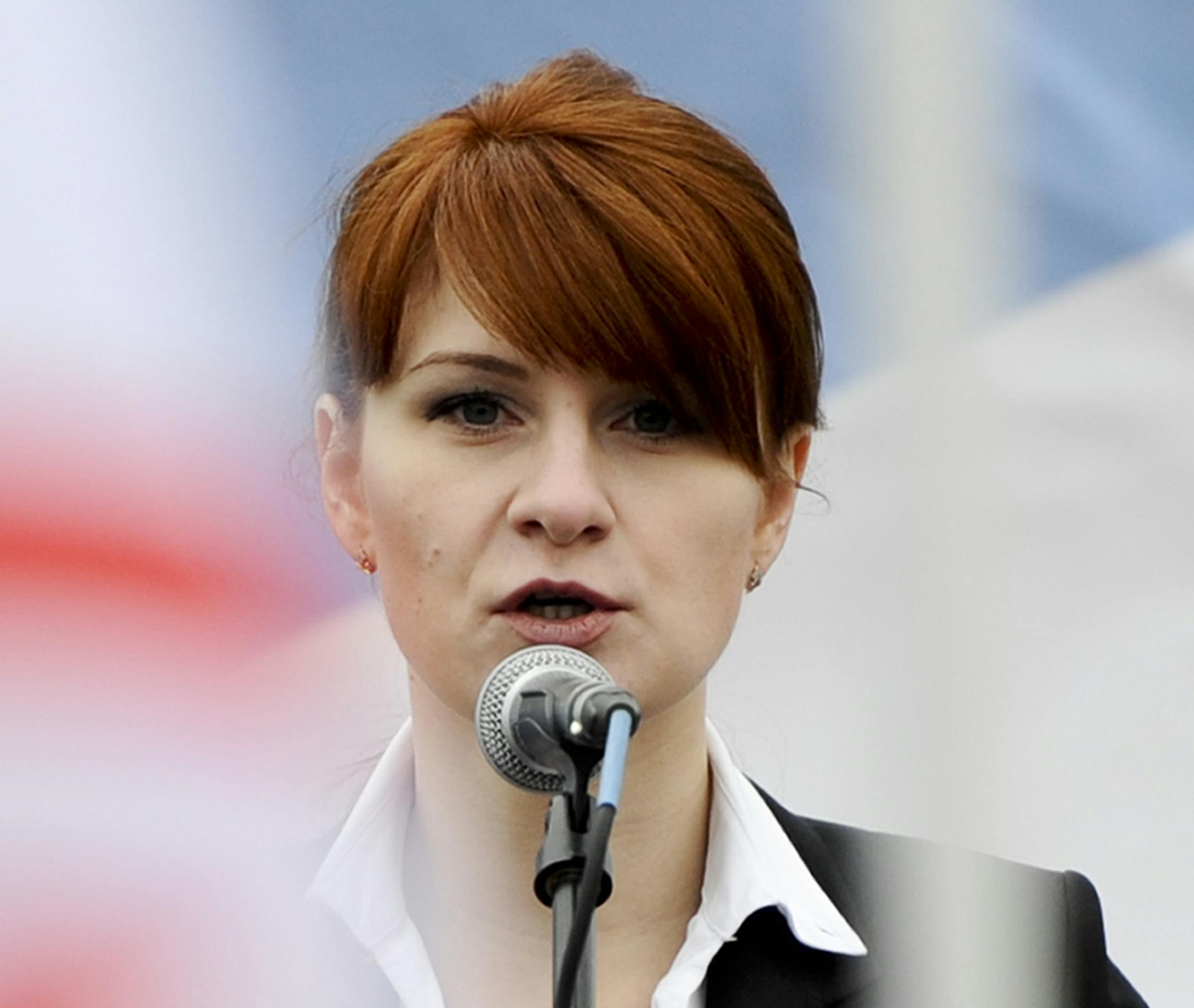
Maria Butina was no spy. No trained Russian agent would appear on videos chatting up U.S. governors or brazenly posing as a reporter to question a presidential candidate, as Butina did during her quixotic mission to infiltrate conservative power centers.
So her usefulness to investigators under her new cooperation agreement may be limited. But her improbable success in getting close to influential Washington politicos could offer U.S. authorities useful insights into how the Russians might employ low-cost, long-odds tactics to make secret inroads and gather intelligence, several law-enforcement experts said.
"In this situation, where you are connected to a foreign agent, there may be interest within the FBI or others to learn more about her tradecraft, to study how she was run," said Ryan Fayhee, a former espionage prosecutor in the National Security Division of the Justice Department. "There's all sorts of cooperation you can bring. It doesn't necessarily mean another case."
Among other things, investigators are sure to be interested in the names of the people who gave financial and logistical support to Butina as she tried to build a Kremlin back-channel to sway U.S. politics and policy, former investigators said.
Butina, 30, admitted to conspiring to act as an unregistered foreign agent from 2015 through 2017. The charges were filed by the Justice Department's national security unit and U.S. prosecutors in Washington, not the special counsel investigating Russian election interference.
She took direction from Alexander Torshin, who was deputy governor of Russia's central bank until a few months ago, prosecutors say. Her primary U.S. contact was a GOP consultant, unidentified in court filings, who has been subsequently identified as Paul Erickson, a longtime conservative operative who managed Pat Buchanan's 1992 presidential campaign.
"We do not know where this trail will lead, but it could reach far and wide," said Adam Lurie, a former senior Justice Department lawyer now at the Linklaters law firm. "Ms. Butina's cooperation agreement requires her to tell the DOJ anything she knows about potential criminal conduct involving anyone. It already sounds like she has information against individuals in Russia and the United States, and she is now likely to give the DOJ even more."
A former law enforcement official specializing in counterintelligence cases cautioned that while Butina appeared highly enthusiastic, she likely had no training as a spy, as evidenced by the sloppiness of some of her work. Her alleged Russian handler, Torshin, also didn't show much discipline in his communications, this person said.


