

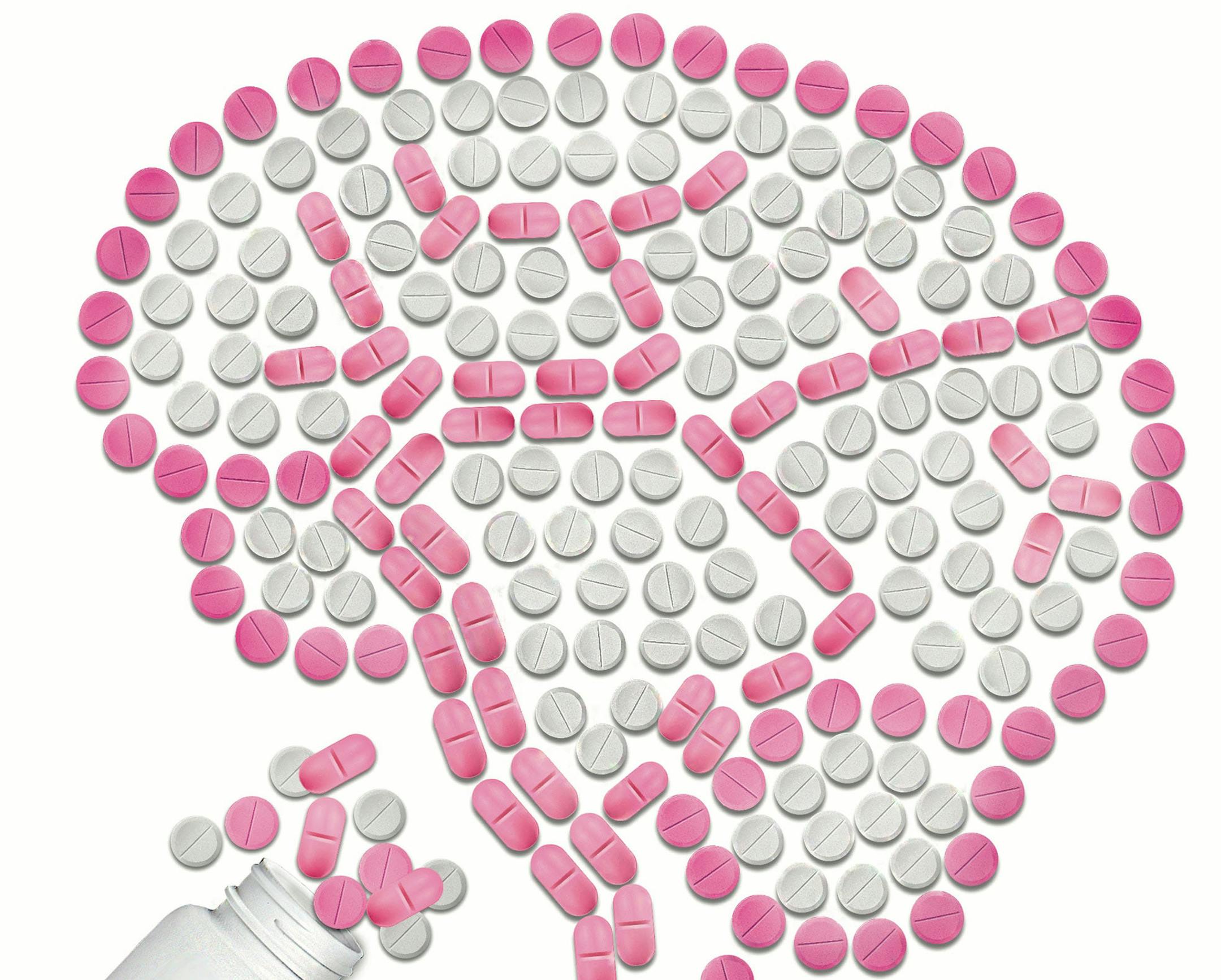
None of us has the brain we were born with. Brains grow and adapt. This process, called neuroplasticity, doesn't end when you step out of the classroom. Even habits — reaching for cookies when stressed, keeping your head down during staff meetings — cut "trails" in the brain throughout life that can be hard to overcome.
When it comes to drug habits, the effect on the brain can be dramatic. "These are things we can see under the microscope," said Ellen Unterwald, director of the Center for Substance Abuse Research at Temple University. "There are actually structural changes to neurons in different brain regions, and those are different for different drugs of abuse. They each have their own signature."
As the national opioid crisis continues, neuroscientists like Unterwald are beginning to peel back the mystery of opioid addiction in the brain. Their findings are shedding light on how best to deal with addiction, and are even helping doctors spot people who may be more likely to get hooked in the first place.
No one — even those who have never taken a prescription painkiller or used heroin — is truly opioid-free. Fact is, opioids occur naturally. Experiences like runner's high and the beneficial effects of acupuncture depend on opioids made in the brain, such as endorphins, that help us enjoy good feelings, Unterwald said.
Subtle differences in how individual brains sense and respond to pleasure may help explain a range of behaviors, from overeating to the likelihood of opioid abuse.
"Certainly more than half the risk [for opioid abuse] is genetic," said Henry Kranzler, director of the Center for the Studies of Addiction at the University of Pennsylvania. "Risk is not about character. It's about genetics and environmental exposure."
Substance-abuse disorders are "genetically complex," Kranzler said. "There are many different genes — we're not even sure how many — that contribute to risk."
Last year, Kranzler and colleagues identified a gene variant in black children associated with a lower sensitivity to prescription pain medication. The team is now looking to see whether the same genetic pattern could explain how older black Americans respond to prescription opioids after hip or knee replacement. The long-term goal of this research, said Kranzler, is to customize pain management, making it more effective and safer.


