

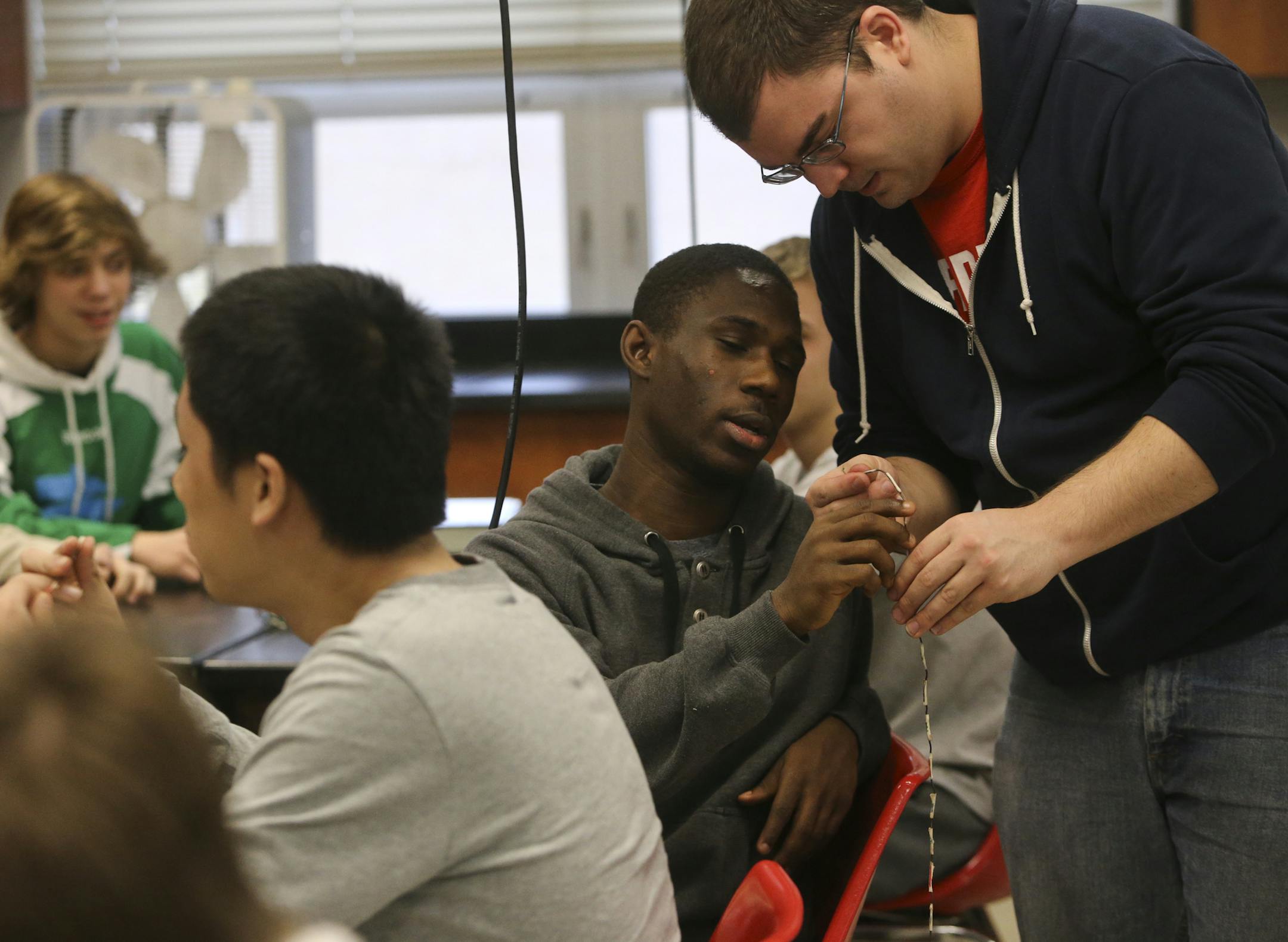
It's big bragging rights for the state's biggest school district.
While the Twin Cities' other large districts struggled to lessen the disparity between white and minority students' proficiency in reading, math and other core subjects, Anoka-Hennepin surpassed goals set by the state. In math, the proficiency gap between white students and minority students dropped from about 22 percentage points in 2011 to 17 points in 2013. In science, it ticked down from 25 points in 2011 to 23 in 2013.
Shrinking the "achievement gap" is a formidable goal dissected and analyzed at the highest levels of government and education.
But how do you tackle it in the classroom?
Coon Rapids High School, like the rest of the district, has seen steady improvements. In some cases, the improvements are dramatic. Black students at Coon Rapids High increased their science proficiency from 20 percent in 2012 to 55 percent in 2013. The gap between black and white students was just 3.4 percent.
Principal Annette Ziegler spoke recently with the Star Tribune about the ways the school is trying to make headway. It's also improving the classroom experience for all students, she said. The strategy includes a number of steps:
1. Eliminate prerequisites for honors and advanced-level classes.
If the goal is to attract more students to try advanced placement and honors courses, why tell them "no" when they try to enroll? Realizing that prerequisites and GPA requirements were deterring kids from trying more-challenging courses, administration eliminated them about five years ago.
"Why set up walls? Why put them in a box?" Ziegler asked.


