

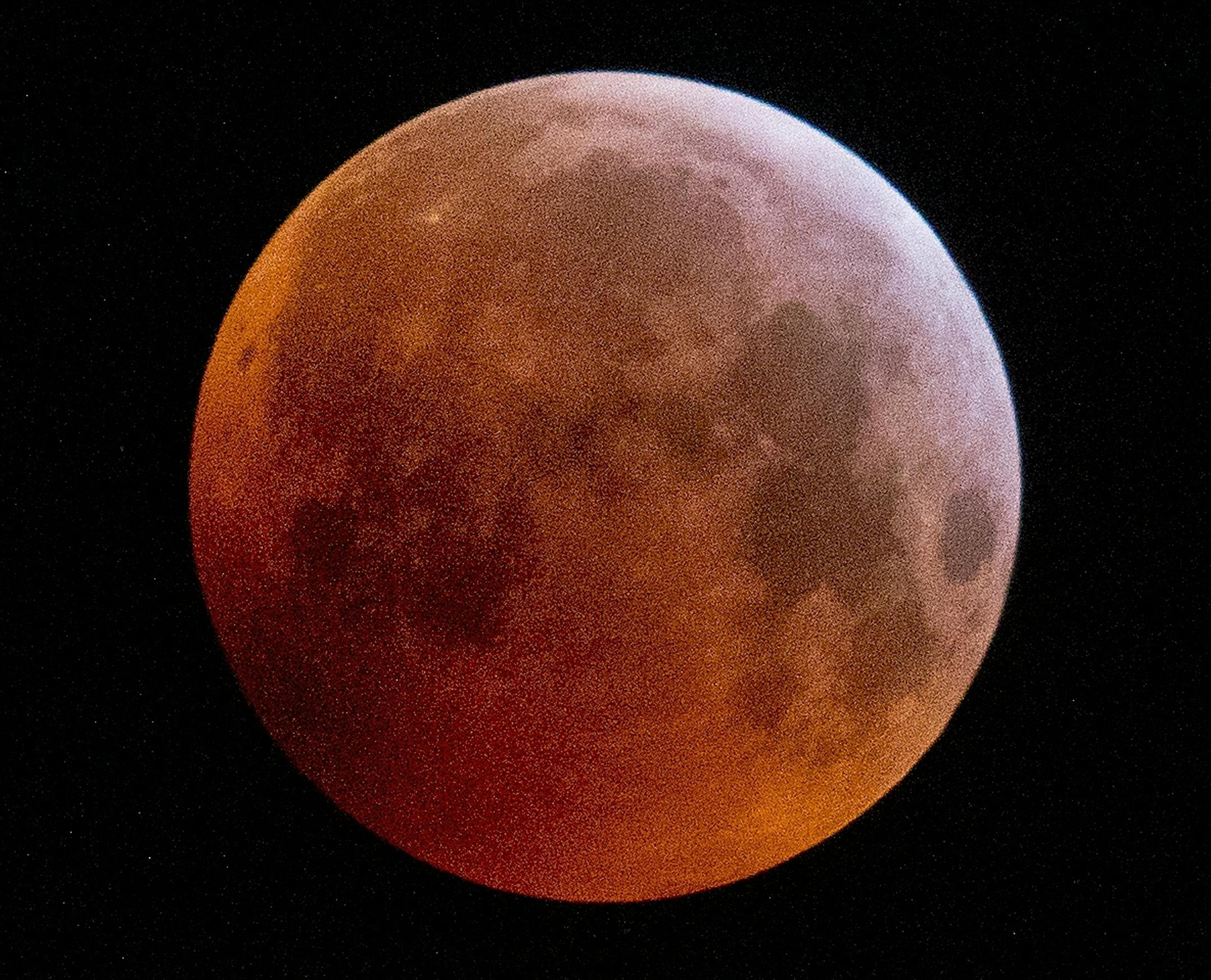
Minnesotans who set their alarms for 5 a.m. on March 3 will have a rare astronomical treat: a total lunar eclipse.
But don’t oversleep. Astronomers predict the lunar eclipse, expected to be visible in east Asia, Australia, the Pacific and the Americas, will last about an hour.
Those who wake early that day will see a yellow sun rising above blue skies while a red moon sets on a darkened western horizon. Though lunar eclipses happen more often than solar eclipses, astronomers predict this total lunar eclipse will not be visible in the Americas again until June 2029.
“The ancients had no idea the physics and what was going on. They just saw the moon turning ... this orange ruddy [color]. That’s where the ‘Blood Moon’ comes from,” said John Zimitsch, vice president of the Minnesota Astronomical Society. “Look up. Put down your cellphone. You can go online and you’re going to be able to see pictures, but seeing astronomical events in person is a wonderful thing.”
Lunar eclipses occur several times a year when the Earth blocks sunlight’s path to the moon. But there are fewer total eclipses that create a “Blood Moon” appearance. Officials at the National Aeronautics and Space Administration report that March 2025 was the last total lunar eclipse visible to the Americas. The last one before that was three years earlier.
For Minnesotans hoping to catch a glimpse of the ruddy moon, astronomers advise them to:
- Scout it out. Verify where the moon is located the night beforehand. That will help guide where you should look during the eclipse.
- Get in the open. When viewing the eclipse, find a spot with few obstacles to the west, where the moon will set.
- Add perspective. If you plan to take pictures with your phone, some of the most impressive images should include the moon and the horizon to add scale to the satellite’s appearance.
- Just look at the sky. Put your cellphones down and look up! The experience is different in person.
“There’s something inside of us that draws us to these astronomical events. Maybe it’s just primitive,” Zimitsch said. “And no-one’s using photoshop or AI when you’re actually looking at it. It’s real.”


