

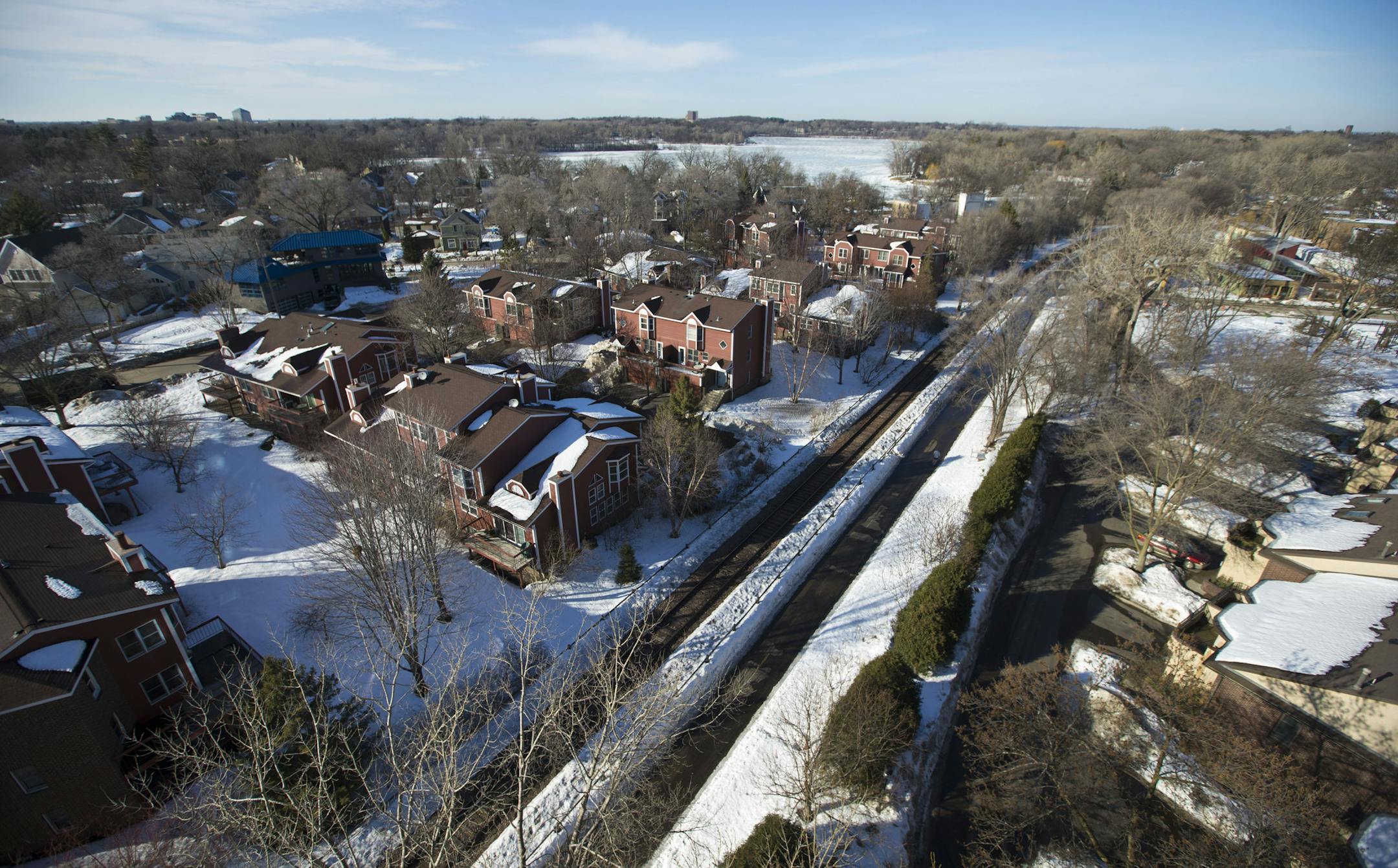
Minneapolis officials long insisted they wouldn't stomach a light-rail line next to freight tracks in a part of the city popular with bicyclists, hikers and canoeists.
But with no palatable alternatives and time running out for action, they agreed to just that.
The Southwest Corridor light-rail deal accepted this week by city negotiators and Mayor Betsy Hodges sacrifices the interests of a small and well-connected group of opponents for promises to make the line more accessible and appealing to other Minneapolis residents. The City Council is expected to vote on it in late August.
Final approval would keep the Southwest project, the most expensive transit venture in the Twin Cities at $1.6 billion, on track to win federal approval this fall to advance in competition for funding. The nearly 16-mile line would run from downtown Minneapolis to Eden Prairie.
The deal emerged from six closed-door sessions — some of them heated — between city officials and regional transit planners that got off to a slow start when the city advanced a transportation agenda beyond the scope of the Southwest project.
A participant said the turning point came when retired U.S. Magistrate Judge Arthur Boylan, who was mediating the talks, suggested the city agree to scrap a light-rail tunnel planned north of a water channel in the Kenilworth corridor and use the savings to restore a Minneapolis station and improve access and amenities to other stations. A light-rail tunnel would still be built south of the channel.
It wasn't an entirely new idea. Suburban officials, who were at odds with Minneapolis on the project, had raised it in the spring.
Funding the extras


