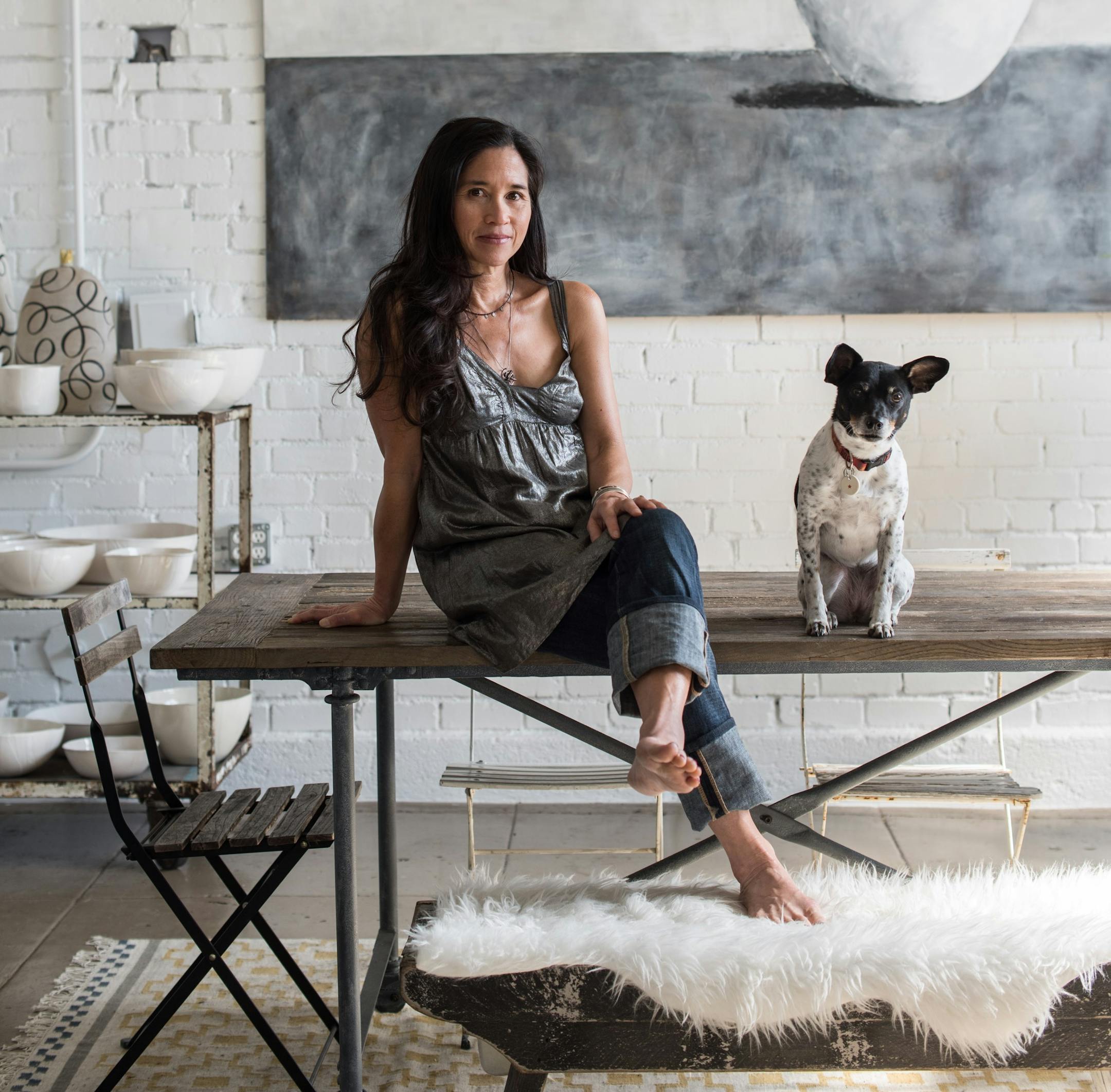
In 1994, Rae Dunn took a ceramics class in San Francisco and figured out almost immediately that she loved everything about working with clay. In particular, she developed a fondness for stamping words onto her pottery pieces as a way to express herself.
"I am a very quiet and super-shy person," says Dunn, now 60 and living in Berkeley. "I pretty much have always distilled what I had to say out loud down to using the least amount of words possible." She started inscribing plates, bowls, mugs and vases with verbs like "dream," "focus" and "begin" — monosyllabic aspirations for her own life.
Nearly three decades later, that small act of self-expression has exploded into a major business with a cult following. "Dunn hunters" stalk the stores that sell Dunn's products, namely T.J. Maxx, HomeGoods and Marshalls, looking to amass as much as they can, sometimes to resell at a markup. Former employees of those chains have described fights breaking out over the pieces.
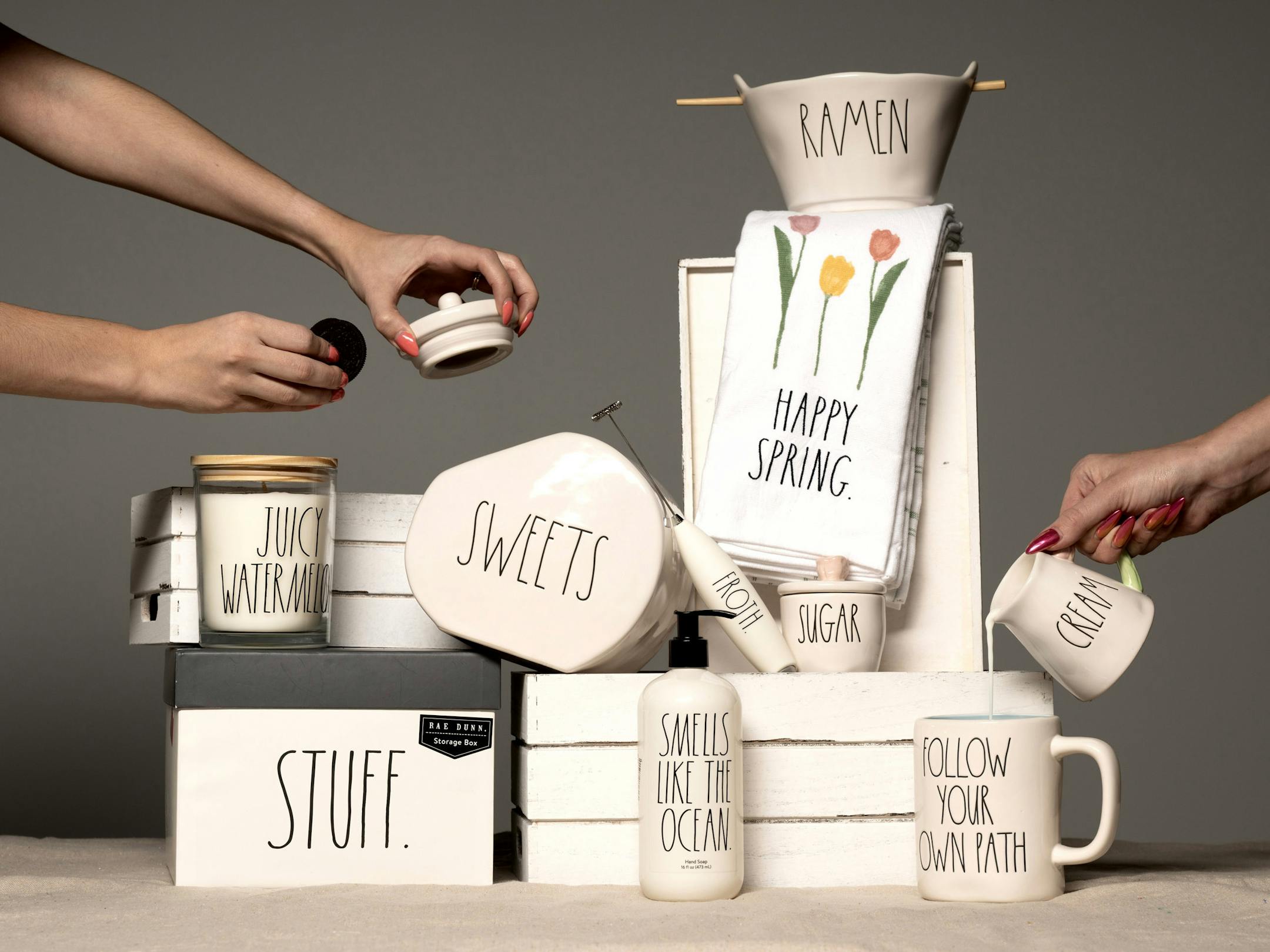
Dunn finds it all a bit overwhelming and says she never anticipated this outcome when she agreed to license her art to a company called Magenta back in 2003. The products distributed by that corporation still feature words, often tied to their literal function. A bowl and plate set, for example, reads "soup" and "sandwich." Dishes proclaim "eat," "devour" and "taste."
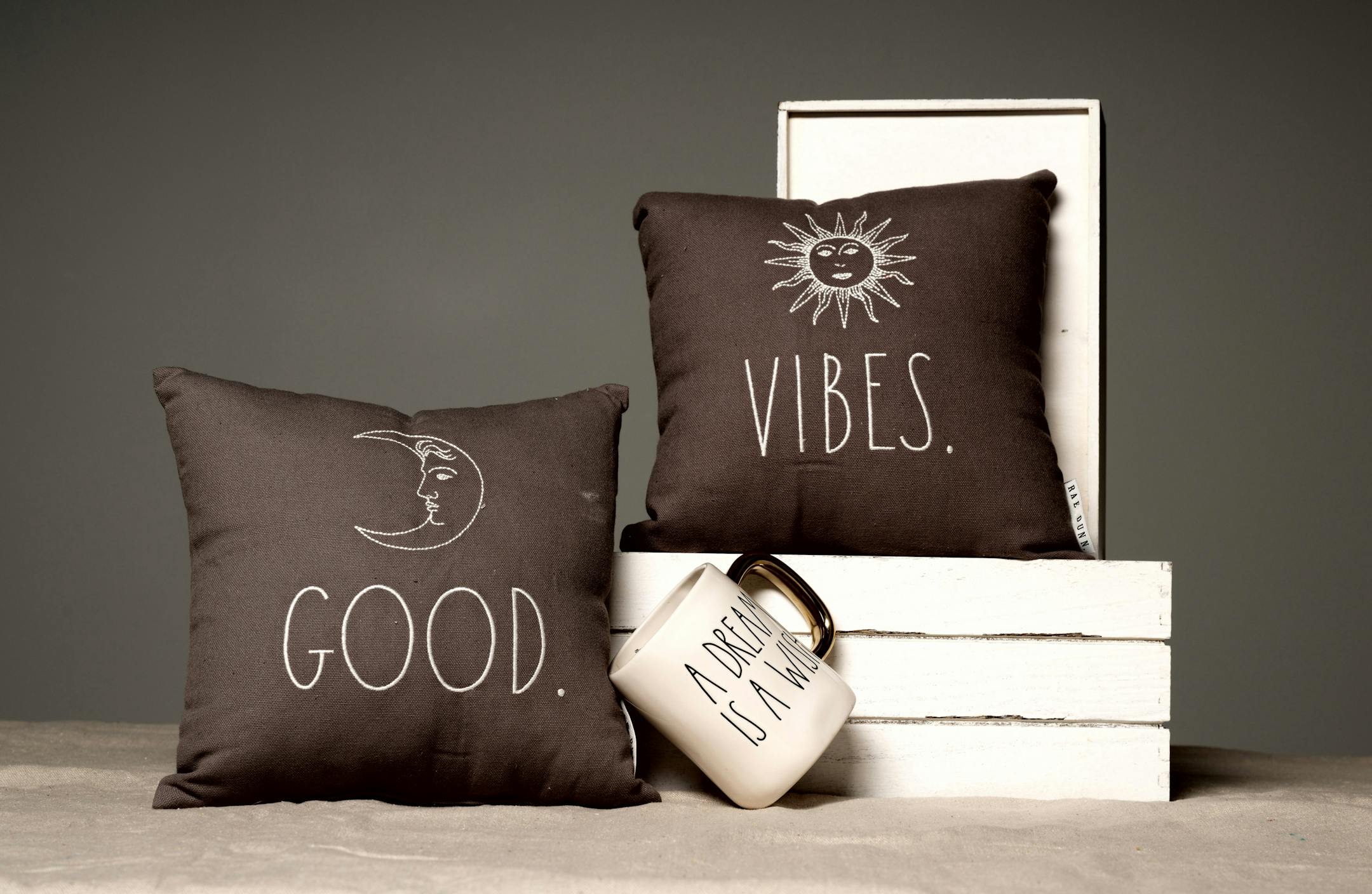
While the Rae Dunn craze is especially intense, the brand is just one part of a larger category of home decor whose popularity has persisted since the early 2000s. You know the stuff. We're talking about the "Gather" sign above your friend's dining table. The "Live, laugh, love" decal on your aunt's wall. The "Lake life" throw pillows at the Airbnb you rented last summer. Other fads have come and gone, but consumers can't seem to get enough of this one. Surely, no one needs a "Family" sign to know that they are, in fact, in the family room. So, the question is why?
Kelly Ray, a Rae Dunn collector in Alabama, says the messages on some of her favorite pieces got her through hard days when she was dealing with fertility issues. She particularly likes items with religious sayings, such as "amen" or "grace." "Those things kind of helped me every morning when I made my coffee," says Ray, 34, who just had her second child. "I could look at it, and it was just encouraging."
This type of merchandise, known in the retail industry as "word art" or "sentiments," has been around for so long now that it doesn't qualify as a trend, says Tom Mirabile, founder of Springboard Futures, a trend-forecasting company for retailers and manufacturers. It's "so much more than wall art or dish towels," he says. "It's usually a strong reflection of our culture."
Not long after Dunn licensed her work to Magenta, American shoppers started gravitating toward decor with "sweet, saccharine" sayings — including the ubiquitous "Live, laugh, love" — Mirabile says. The motto's origins have been traced to a 1904 poem, but in more recent history, Mirabile estimates its popularity peaked around 2008, when millions lost jobs and homes because of the Great Recession. Google searches for "live laugh love" were at their highest between 2007 and 2012. "It started around the time when we needed to center ourselves on intangibles, on things that delivered value other than monetary value," Mirabile explains.