

Several winters ago I was fortunate enough to have a great gray owl take up a brief residency on my property south of Brainerd.
For about two weeks, the owl would appear nearly every day after 3 p.m. and begin to pursue voles, a small mouse-like animal. The big bird of prey liked hunting over one of my deer food plots, which was covered by about 2 feet of snow at the time. Its favorite perch was a dead tree snag, about 6 feet tall, along the western edge of the plot.
Voles were plentiful that winter. The small mammals would travel beneath the deep white powder, hidden from view as they feasted on oats in my food plot.
Most afternoons I donned a pair of snowshoes, slung my tripod-mounted camera and lens over my shoulder, and trudged through the snow in an effort to photograph the big bird. A relatively tame bird, great gray owls often allow humans to come close. That was the case with "my" owl. And each day the large raptor became more and more tolerant of me.
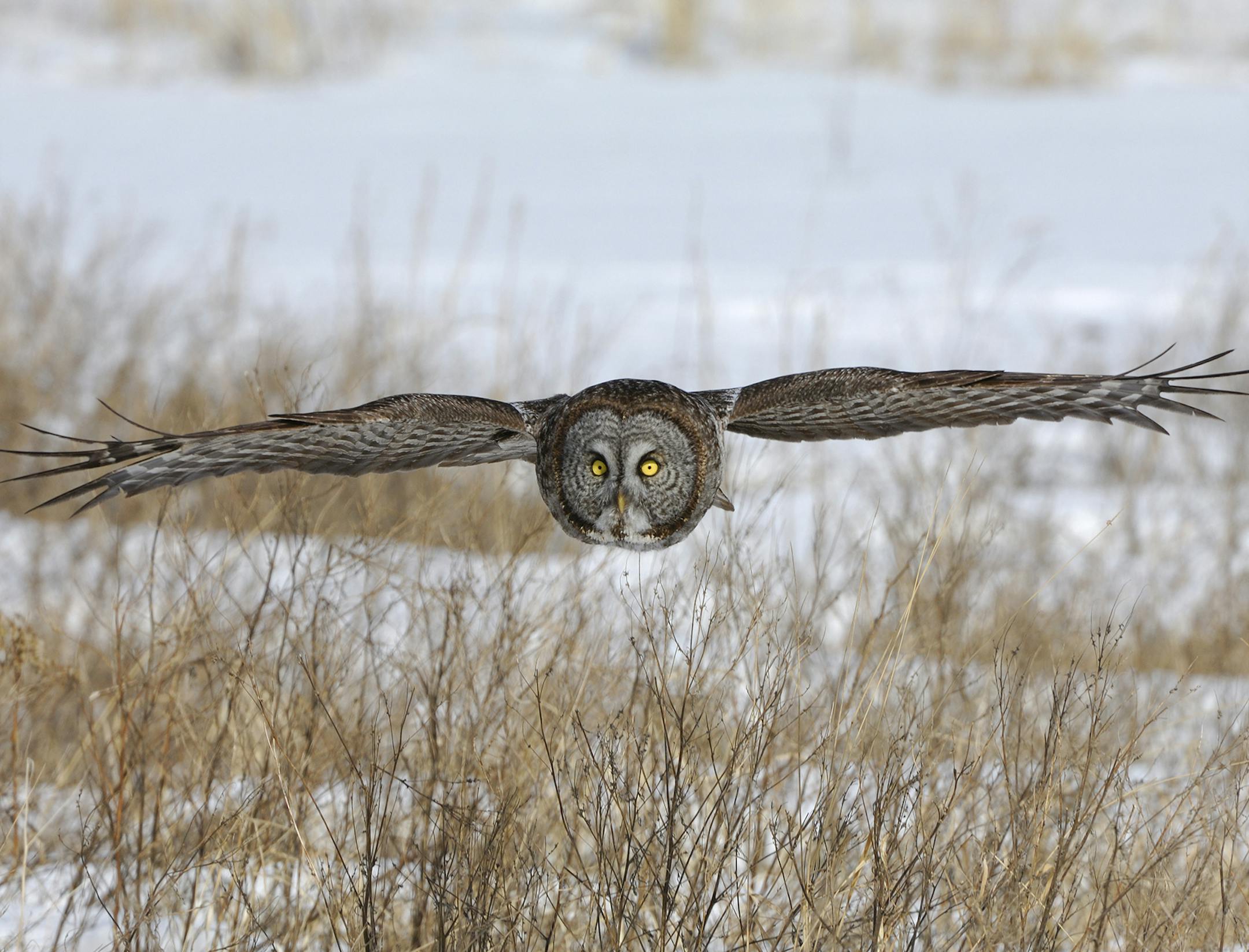
I could envision the photo I wanted: The big bird flying toward me low along the snow. So I devised a plan one clear, cold afternoon.
I arrived to the food plot before the owl to set up and wait for the bird's arrival. Once my photography gear was in place, I adjusted the shutter speed and aperture on my camera, set my lens to auto focus, and waited in the cold for the owl to appear.
Luck was on my side.
About 15 minutes later, I spotted the great gray owl flying in my direction. Its destination was the tree snag, protruding from the snow just a few feet to my right. I peered through the viewfinder of my camera, centered the owl as best I could and squeezed the shutter button.


