

This story actually began about 20 years ago, when I planted several red splendor crabapple trees in my yard on a summer day.
My plan was to attract birds and other wildlife, which I hoped would feed on the fruit that would eventually sprout from the new additions to my yard.
As is usually the case with planting new trees, they struggled for a year or two. Then, with plenty of TLC in the form of fertilizing and pruning, a few pink blossoms eventually appeared on several of the trees.
About three years later, tiny red fruit sprouted midsummer. That fall the few mature crabapples were quickly consumed by a flock of migrating robins, much to my delight.
Fast forward to this winter: My crabapple trees are now roughly 18 feet tall, sporting thousands of small red apples about a half inch in diameter. Over the years they have provided food for a wide variety of birds and other wildlife.
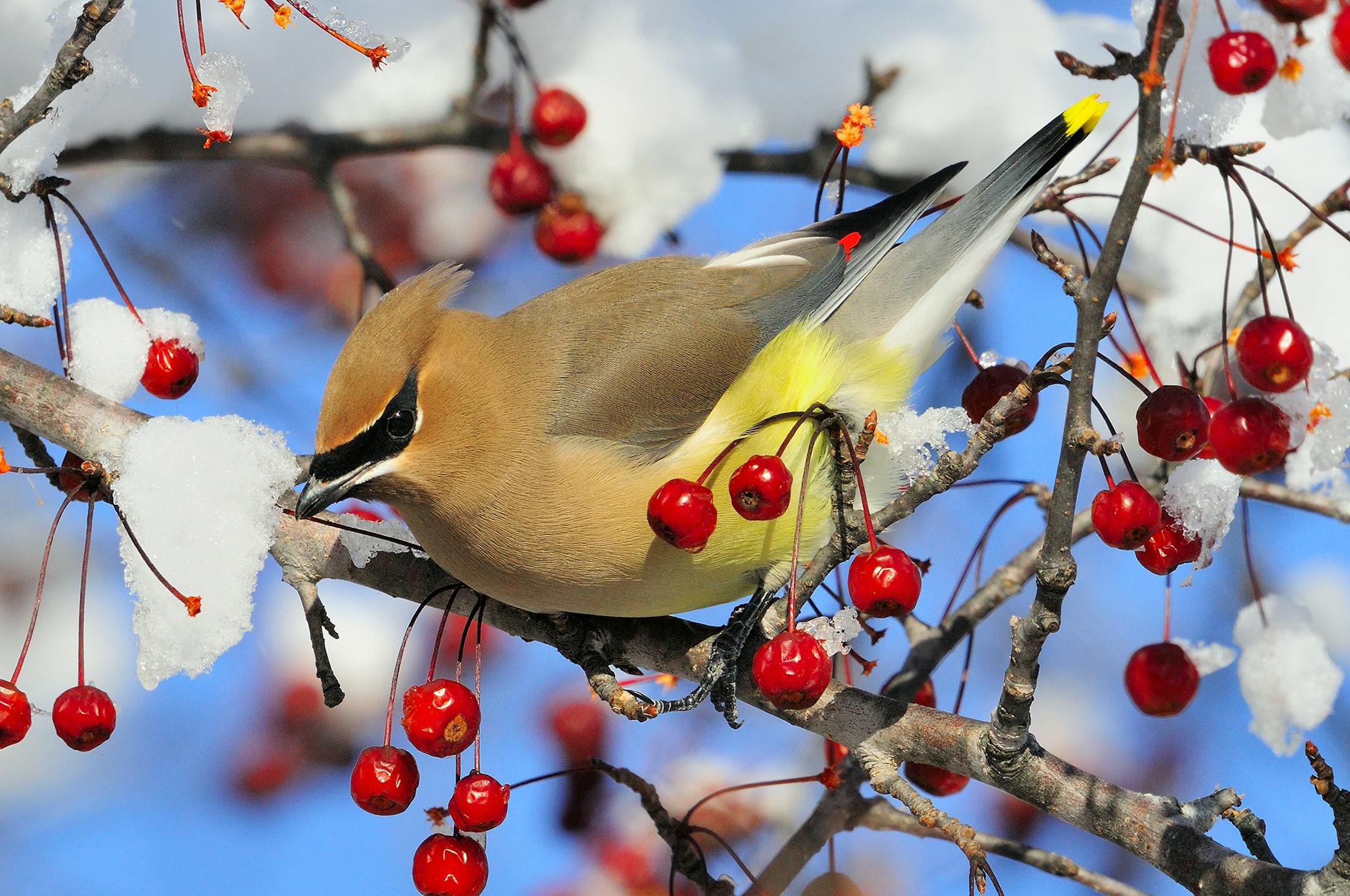
Earlier this winter, following a heavy snowfall and during the subsequent blast of arctic air, I glanced out my window and noticed a flock of cedar waxwings were finding my crabapples to their liking. The birds, maybe a dozen or so, fed feverishly on the colorful fruit. The waxwings probably spent the prior day hunkered down and hiding from the storm. Now they were hungry.
I quickly gathered my photography gear, bundled up against the subzero temperatures and stepped outside. The sky was cobalt blue, the air crisp and clear — ideal conditions for photography.
Cedar waxwings are relatively tame birds, especially during winter when they are hungry. As I approached the feeding flock, they paid me no mind, a photographer's dream come true.


