

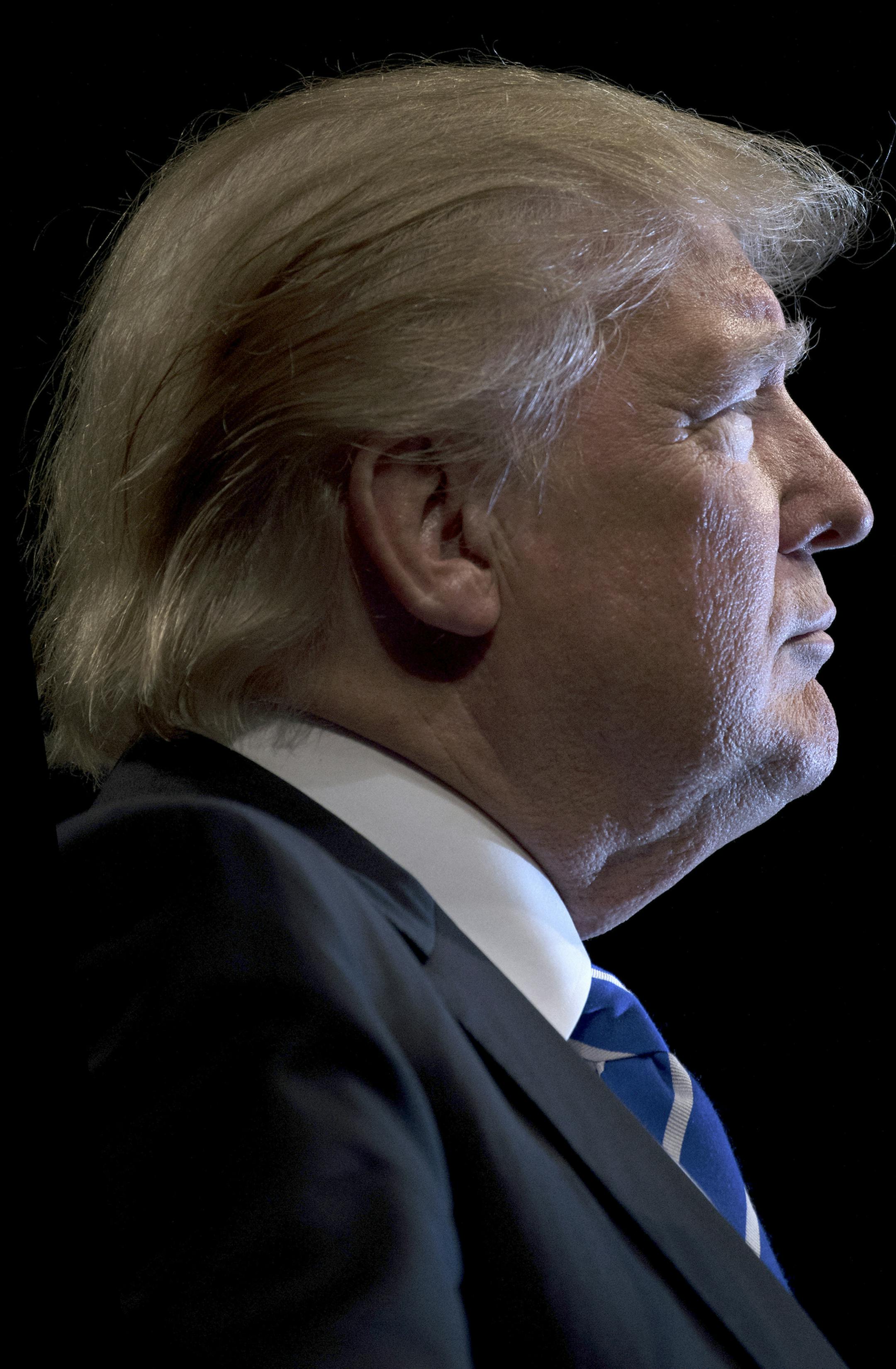
It was a bold, headline-grabbing promise. Donald Trump vowed last week that immediately after his inauguration, he'd call Congress into special session to repeal the Affordable Care Act.
The only problem is that he wouldn't be able to do that. When the new president is inaugurated on Jan. 20, Congress will already be 17 days into a new session. The president can call an extraordinary session only for a Congress that has left the Capitol for the year.
"A lot of people who have lived in Washington their entire lives don't understand how Congress works," said Tripp Baird, who served as floor assistant to Trent Lott when he was the Senate Republican leader. "I wouldn't hold that against anyone."
Perhaps. But Trump's vow underscored a fundamental problem he would have as president. Nothing in his long experience as a businessman — the essential selling point of his campaign — compares to governing.
In business, he led companies run by his own family, operated by people he'd hired, and worked with stakeholders all aiming at the same thing, a profit. When he did work with a board of directors, he chafed, writing in his 1990 book, "Trump: Surviving at the Top," that he "personally didn't like answering to a board of directors." In the White House, he'd face a Congress with its own agenda and base of power, a nation full of stakeholders with goals that often would compete with his and an operating system built to work on consensus, not autocratic rule.
It would be — according to those who have worked for him, studied him and worked the levers of power in Washington — a potentially jarring new environment that would test his skills as a CEO and negotiator.
For starters, Trump would take office as the least popular president in modern history, according to a battery of polls. Many Americans, including a large swath of his own Republican Party, think he's not fit to hold office. He also has a fractious relationship with congressional leaders, chiefly House Speaker Paul Ryan, R-Wis.
Some Trump priorities might find support among Republicans, including his call to repeal President Obama's signature health care law. But he almost certainly would not have a 60-vote filibuster-proof majority in the Senate, making it difficult to land much legislation, including his signature campaign promise to build a wall on the southern border with Mexico.


