

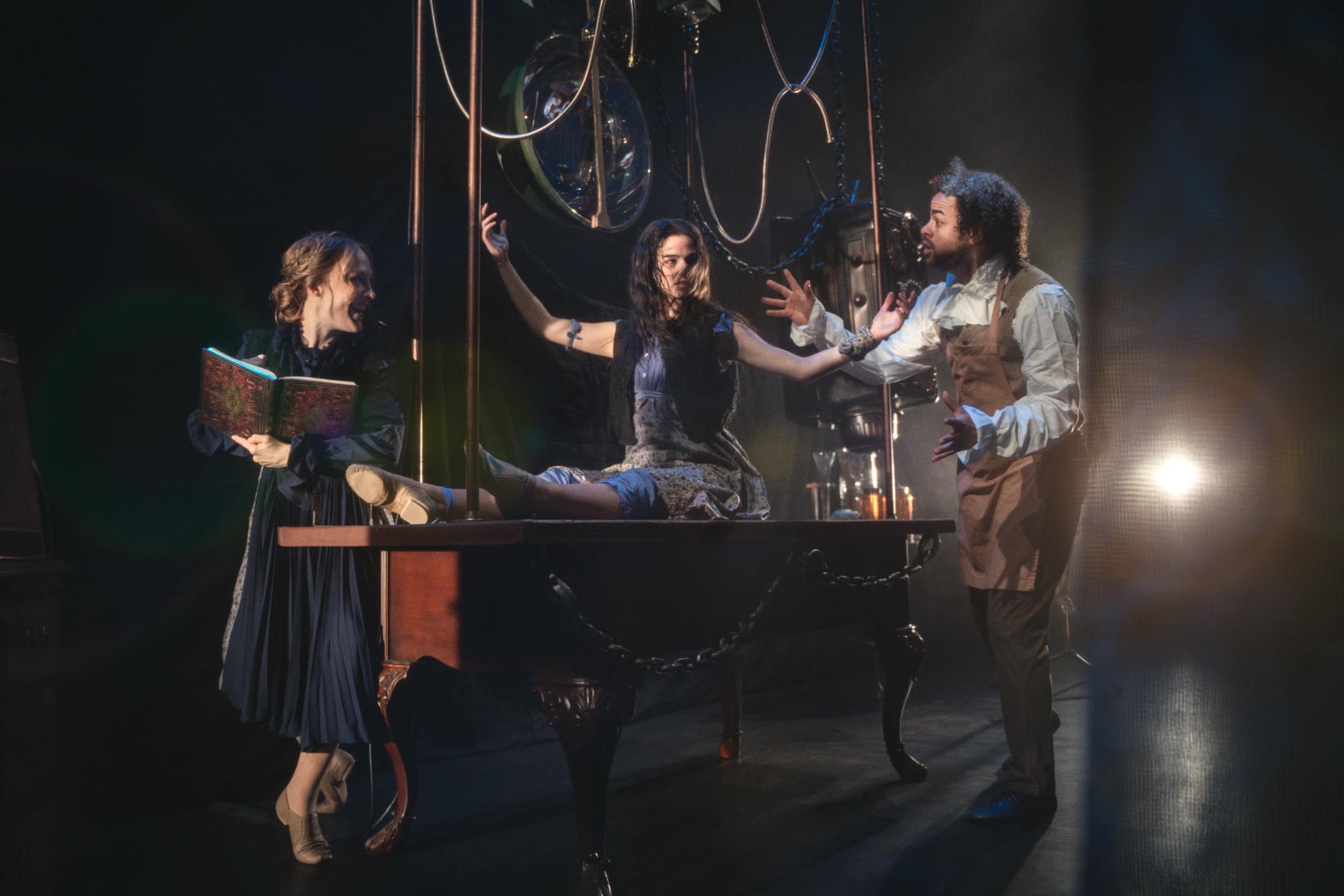
Dancers use leotards and pirouettes all the time but in Collide Theatrical Dance Company's "Mary Shelley's Frankenstein," Renee Guittar will have something you don't often see: kneepads.
"I'm wanting the freedom to fall down on my knees when I need to. I will go from a movement that's very high up to very low," said Guittar, who plays what's sometimes called Frankenstein's monster but which Collide refers to as the Creature. "The amount of pressure I'm putting on my knees, it's a little protection. And the costume designer is making them look like bandages."
Guittar said she doesn't strictly need the kneepads but co-director Regina Peluso is glad she has them.
"It's incredibly athletic and she's doing a lot of stunt choreography. She's basically throwing herself around the stage for an hour and 15 minutes," Peluso said.
The choreography was designed collaboratively but all the artists involved agree that the Creature — assembled by Frankenstein from the body parts of dead people — should arrive unformed, like a baby does.
"In the beginning, I said, 'I'm really thinking of this as much more animalistic,'" said Peluso. "The Creature has a great arc in the show. She starts barely being able to walk, then learns how to move — like everyone does — right before she dies."
Peluso hopes the movement will be startling for audiences and teases that, since the Creature's arms and legs came from different people, one leg may not move the same way another does — an idea that will be amplified by a chorus of dancers who channel the unformed Creature.
"It all starts out with erratic movements. My arm might reach out without me realizing it and I have to pull it back in. Or I look at my hands and it's like, 'These aren't the hands I'm used to seeing.' It's difficult for her to walk or to move predictably," Guittar said.


