

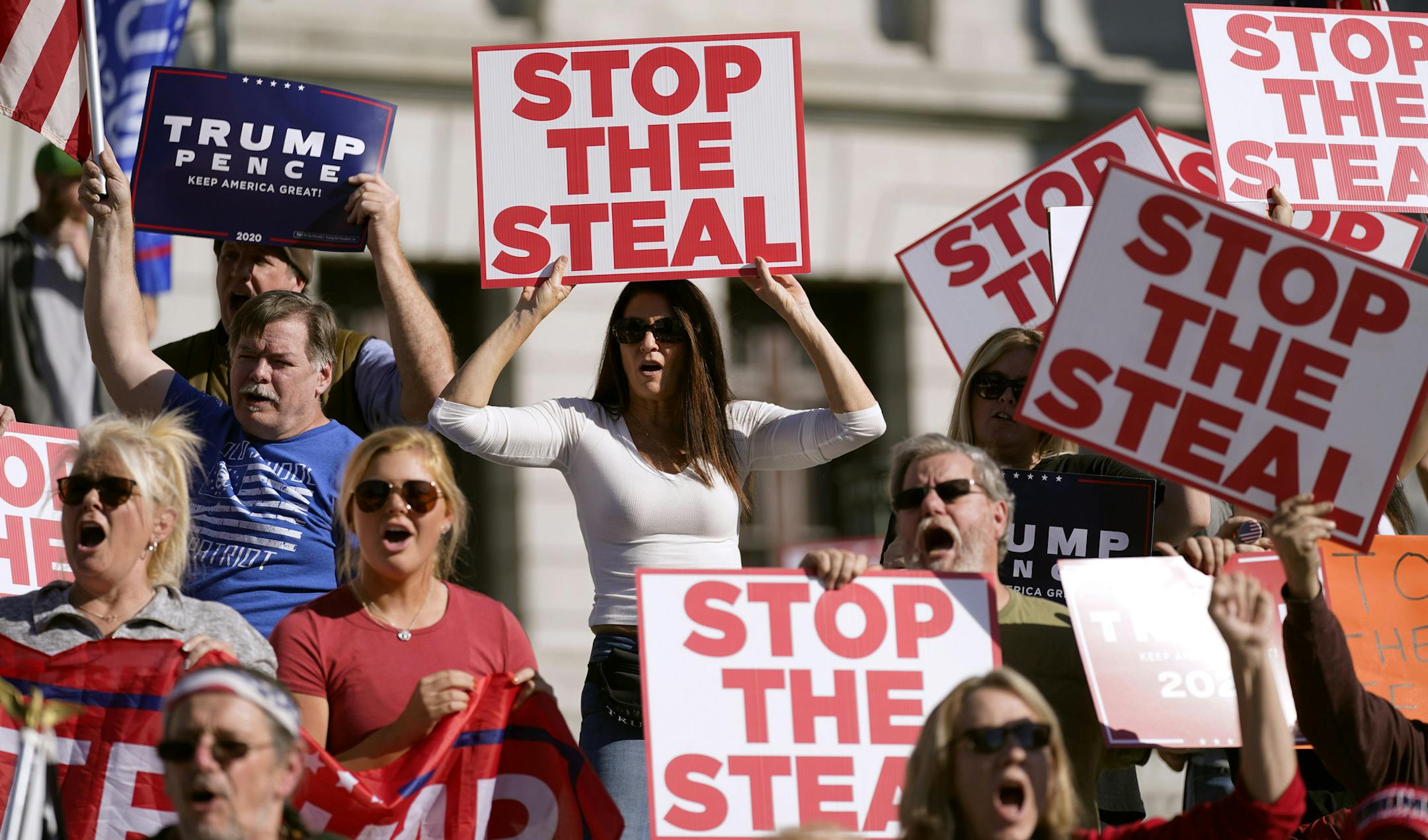
There have been few surprises this past month in how Donald Trump has dealt with the reality of his electoral defeat.
Anyone familiar with his career could have predicted that he would claim to have been cheated out of victory. Anyone watching how he wielded power (or, more often, didn't) as president could have predicted that his efforts to challenge the election results would be embarrassing, ridiculous and dismissed with prejudice in court.
And anyone watching how the Republican Party dealt with his ascent could have predicted that its leaders would mostly avoid directly rebuking him, relying instead on the inertial forces of American democracy, the conscientiousness of judges and local officialdom, and Trump's own incompetence to turn back his final power grab.
So far, so predictable. But speaking as a cynical observer of the Trump era, one feature of November did crack my jaded shell a bit: the sheer scale of the belief among conservatives that the election was really stolen, measured not just in polling data but in conversations and arguments, online and in person, with people I would not have expected to embrace it.
The potency of this belief has already scrambled some of the conventional explanations for conspiratorial beliefs, particularly the conceit that the key problem is misinformation spreading downward from partisan news outlets and social media fraudsters to the easily deceived. As I watch the way certain fraud theories spread online, or watch conservatives abandon Fox News for Newsmax in search of validating narratives, it's clear that this is about demand as much as supply.
A strong belief spurs people to go out in search of evidence, a lot of so-called disinformation is collected and circulated sincerely rather than cynically, and the power of various authorities — Tucker Carlson's show or Facebook's algorithm — to change beliefs is relatively limited.
But what has struck me especially, is how the belief in a stolen election has spread among people I wouldn't have thought of as particularly Trumpy or super-partisan, who aren't cable news junkies or intensely online, who didn't even seem that invested in the election before it happened.
Others have taken note of the same phenomenon: At National Review, Michael Brendan Dougherty writes that "friends who I did not know were political are sending me little snippets of allegations of voter fraud and manipulation." At the American Mind, the pseudonymous Californian Peachy Keenan describes watching a passel of lukewarm Trump-supporter moms in her Catholic parish suddenly "get MAGAfied" by election conspiracy theories. (As a fraud believer herself, she thinks that's a good thing.)


