
How broke students are driving up poverty rates in small college towns

New data from the U.S. Census Bureau estimates how much students influence poverty rates.

December 17, 2017 at 5:39AM
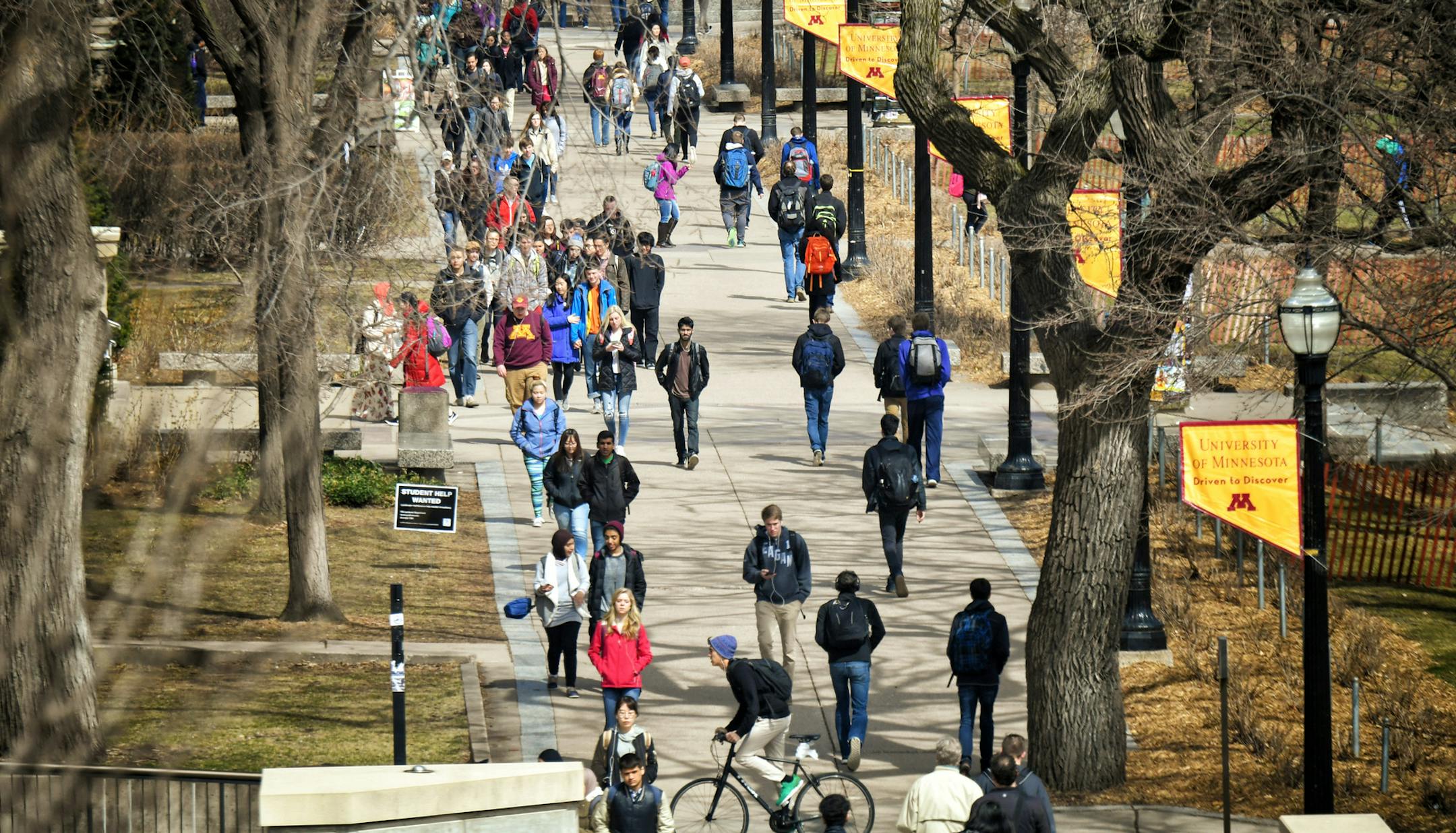
Students on the University of Minnesota campus.
Students on the University of Minnesota campus. (Star Tribune/The Minnesota Star Tribune)

Students struggling to make ends meet can be a significant reason why poverty rates tend to be higher in college towns than elsewhere.

New data from the American Community Survey estimates how much poverty stems from students in college towns.

This is most noticeable in smaller cities. For example, Mankato's poverty rate – currently at about 25 percent – would likely drop in half if students were excluded from the typical poverty rate calculations. But the Minneapolis rate would likely only fall by about 2 percentage points.

In Wisconsin, Whitewater would see a 20 percentage point drop in its poverty rate and Platteville's rate would drop about 15 percentage points, but Milwaukee's rate would barely budge.

The U.S. Census Bureau released this data earlier this month, but only included calculations for cities and counties with 10,000 or more people and where the poverty rate decline was statistically significant.

There are some notable college towns in Minnesota missing from this list, such as Northfield, Bemidji, Morris, St. Peter, St. Joseph and Marshall. (Morris, St. Joseph and St. Peter are too small to meet the population threshold to be included in the census study.)

Poverty rates don't include people living in group quarters, such as college dorms, nursing homes, jails and prisons. However, any students living in off-campus housing would be included.

In Minnesota, two small college towns – St. Joseph and Morris – have the highest poverty rates among cities with a population of 5,000 or more. In fact, most of the cities in the top 20 have at least one institution of higher education.

The new census data adjusting these poverty rates to exclude students sheds light for policymakers when deciding how to combat poverty. Student poverty is generally for a limited duration, unlike poverty in the general population.

Research by the Wisconsin HOPE Lab dating back to 2005 has documented the extent of food and housing insecurity among college students. A 2016 report found that 30 percent of students said they had been hungry but couldn't afford to eat, and that this was a consistent struggle.

That report and a larger study released earlier this year by the same researchers found that the problem is most severe at community colleges. The study found that two in three community college students are food insecure and about half struggled to pay for housing.

The report also showed that food and housing insecurity is prevalent everywhere, not just in places that also have high poverty rates in the general population.

about the writer

about the writer

MaryJo Webster

Data Editor

MaryJo Webster is the data editor for the Minnesota Star Tribune. She teams up with reporters to analyze data for stories across a wide range of topics and beats and also oversees a small team of other data journalists.

See Moreicon

More from No Section

See More
FILE -- A rent deposit slot at an apartment complex in Tucker, Ga., on July 21, 2020. As an eviction crisis has seemed increasingly likely this summer, everyone in the housing market has made the same plea to Washington: Send money — lots of it — that would keep renters in their homes and landlords afloat. (Melissa Golden/The New York Times) ORG XMIT: XNYT58
Melissa Golden/The New York Times

It’s too soon to tell how much the immigration crackdown is to blame.