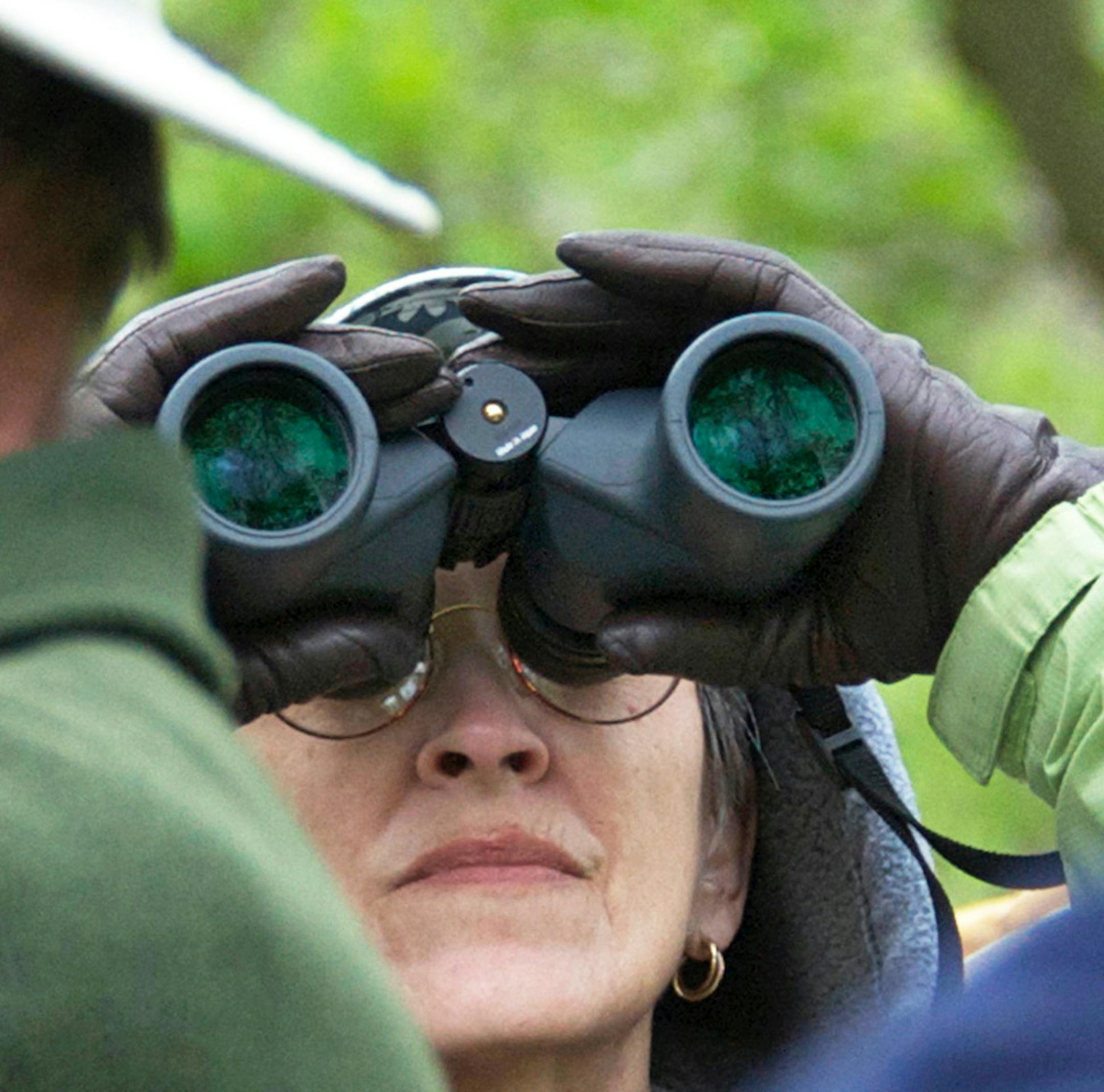
Years ago, before I bought an actual good pair of binoculars, I had a very cheap pair. I eventually disassembled them, a science project, so to speak.
These were my family's around-the-house binoculars, rarely used, not so good. The barrels were out of alignment. The two images that were delivered required your eyes or brain to work very hard at creating a single, usable image.
It took my eyes actual seconds to focus on reality when I put those "bins" down.
In the 1980s I signed on with Duluth birding guide Kim Eckert for a trip to Texas. That merited decent glass. I bought Bausch & Lomb 8x42 binoculars. I don't remember the price. They were high-end.
Geez, were they good. Sharp image, lightened shadows, no eyestrain. They're now the bins I keep near windows overlooking our backyard.
With new binoculars in hand, I could take that old pair apart. How do these things work? I was introduced to the world of prisms.
Those original bins were of Porro prism design, named for their Italian inventor, Ignazio Porro. In the mid-1800s he solved a big — literally — binocular problem.
For an image to be sharply magnified the light must travel a specific distance between entry and exit lenses. If the optics were to be usable, say, aboard a ship, this produced bins with very long barrels.