

Opinion editor’s note: Strib Voices publishes a mix of guest commentaries online and in print each day. To contribute, click here.
•••
I served as a prosecutor for almost 15 years and as a judge for a decade. Those were demanding jobs, but one thing I miss about the courtroom is that people are held accountable for dishonesty. Lying in a court of law under oath isn’t rewarded — it is perjury.
Accountability is far less common in our politics than it is in the courts. In fact, in the age of President Donald Trump, attacking journalists who ask you tough questions has become a tactic to avoid that very accountability.
Unfortunately, in a recent debate it became clear that Minneapolis mayoral candidate Omar Fateh, currently a state senator, had adopted a similar approach when he was pressed on ethics questions surrounding his decision to push legislation to fast-track approvals for the already fraud-ridden Housing Stabilization Services (HSS) program. At the time he introduced this bill, his wife was still the owner of a company that was a part of the HSS industry. The HSS program was so rife with fraud that the U.S. attorney for Minnesota determined that the “vast majority” of the program was fraudulent. Citing those concerns, Gov. Tim Walz took action to shut it down. Since then we have seen the first wave of indictments, with more expected soon.
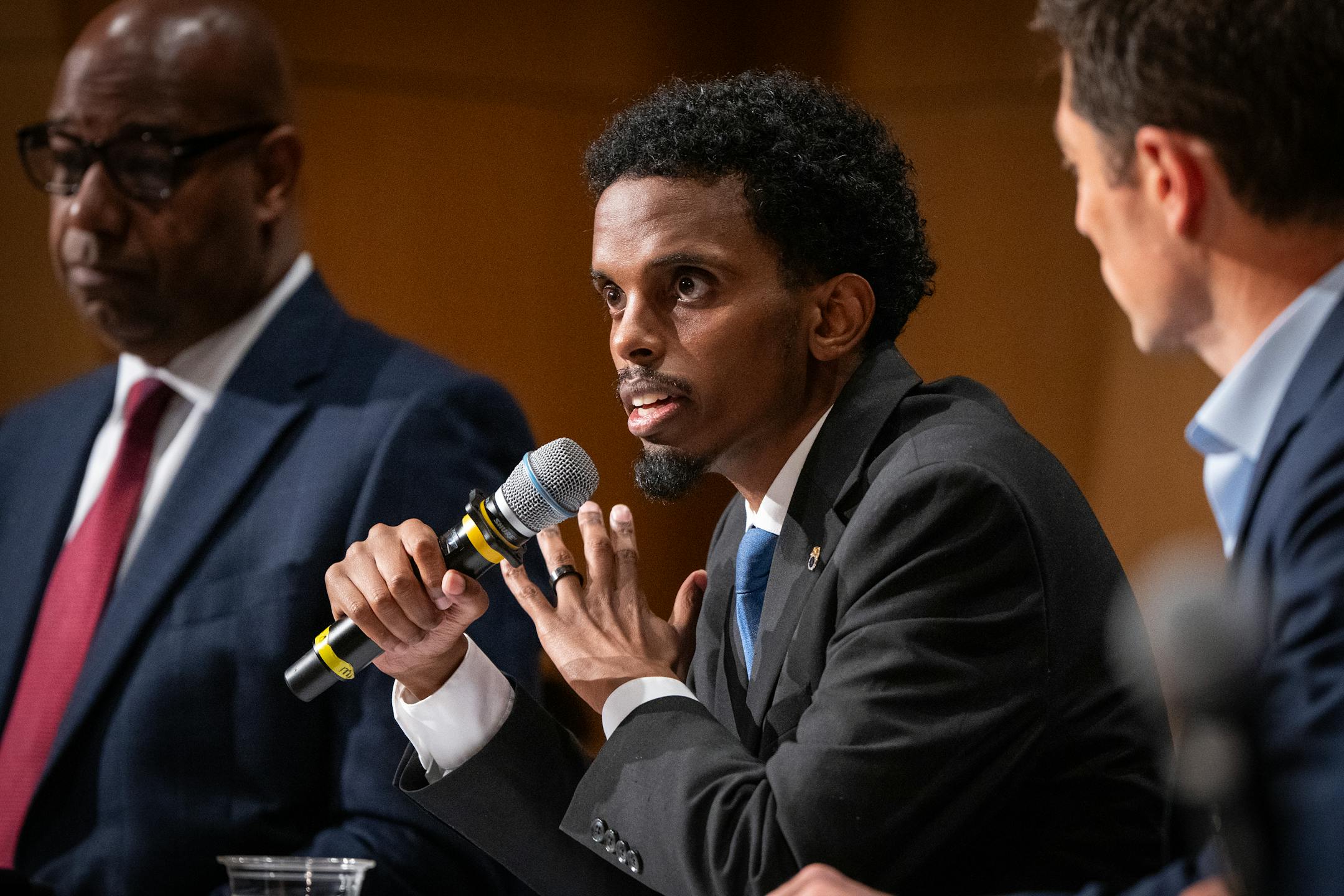
During the debate, Fateh was asked about a news story from KARE 11 that scrutinized his bill and his family connections to the program, and whether he or his family could have benefited from the program and his own bill. He began by attacking the journalism, calling it a “false story,” echoing Trump’s “fake news” attacks on members of the press who have tried to hold him accountable. This was particularly brazen considering that Fateh refused to talk to the journalist who did that story, nor could he identify a single inaccuracy in the reporting.
He didn’t stop at attacking the reporting. He went on to say that his bill was an “accountability bill” designed to rein in fraud in the program. That didn’t make sense to me — nothing about the bill would have introduced new verification requirements, fraud prevention mechanisms or any accountability measures. In fact, when Fateh introduced the bill he said the exact opposite — that his legislation was “a bill that will address a critical delay in access to housing stabilization services, also known as HSS” — and he complained that approvals for the program weren’t happening faster.
Much of the original reporting focused on the fact that Fateh wrote his bill to fast-track HSS approvals without disclosing that his wife owned an HSS company. Fateh says that his wife’s company did nothing wrong and never billed the HSS program. Personally, I think that still leaves several unanswered questions. But even if he had no family ties to the HSS program, I find it quite concerning that a top candidate for mayor tried to make it easier, not harder, for money to flow from a program that appears to have funded fraud instead of supporting those in need of housing assistance. The mayor writes and manages a multibillion-dollar city budget. Even if there had been no personal ethics questions involved, the decision to author this bill shows extraordinarily poor judgment.


