

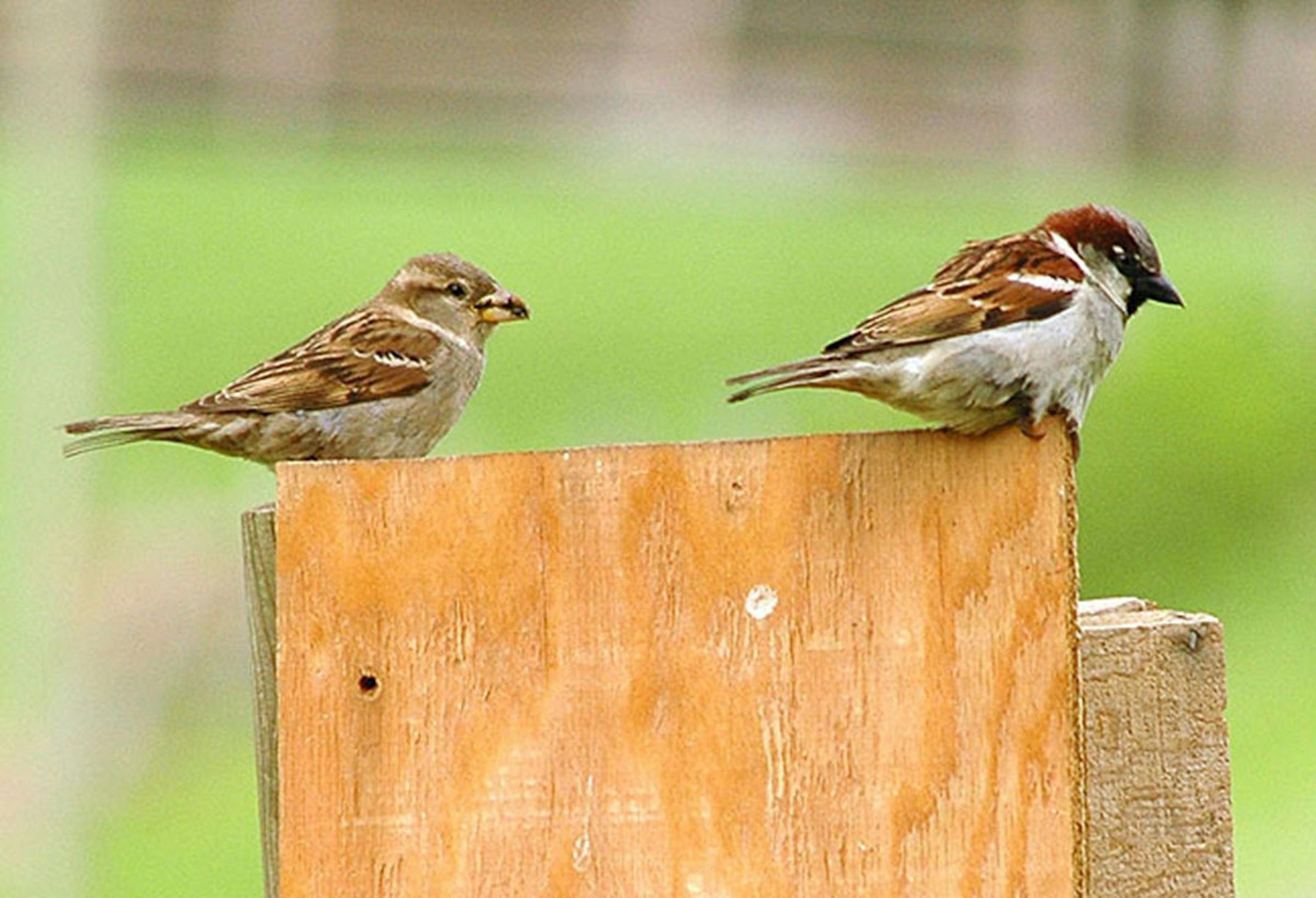
When I became interested in bluebirds and met bluebird aficionados, I quickly learned that house sparrows are regarded as feathered devils.
House sparrows usually are city birds or country birds, one or the other. They chirp endlessly in shrubs in city yards or hang around barns in small flocks.
They're not so much suburban. House sparrows have been at our feeders only twice in our 13 years in suburban Orono.
These birds are nonnative species, which is Strike One. Strike Two, they nest in cavities, aggressively competing for a limited natural resource.
The nesting boxes placed for native Eastern bluebirds are perfect for sparrows' tangled nests. Those so-called feathered devils can be ruthless in protecting a box or driving out occupants.
On the golf course where I tend bluebird boxes, sparrows are a problem only when my boxes are within a few hundred feet of an old barn. In the distant past it sheltered horses, today replaced by golf carts. Sparrows have long memories regardless of short lives.
The family to which house sparrows belong, the passer family, is worldwide. The full scientific name of our house sparrow is passer domesticus, a domestic bird. Eurasian and Northern African in origin, they are among species known as Old World birds.
Our native sparrows are New World birds. An example would be our white-throated sparrow.


