House on Gleason Lake was inspired by Japanese Golden Pavilion

A lakeshore house, inspired by Kyoto's Golden Pavilion, "speaks Japanese with a Midwestern accent."

March 16, 2013 at 8:25PM
Homegaze: Covered deck of Gleason Lake home inspired by Japanese pavilion
This architect-designed lake home blends Japanese and Prairie-style influences. (The Minnesota Star Tribune)

In the early 1980s, a young couple returned to Minnesota after living in Tokyo for several years.They wanted to build a home, in a beautiful setting, that reflected the aesthetic they'd come to appreciate in Japan.

"It's a magical place, especially Kyoto," said homeowner Carolyn Ruff. "We were taken with that respect for the environment, and with wabi-sabi and minimalism."

After a long search, the Ruffs found just the right spot: a wooded 1.3-acre lot in Plymouth with towering black oak trees and 250 feet of Gleason Lake shoreline, secluded yet just two minutes from Wayzata.

"It's on a private road, narrow, with a canopy of trees," Ruff said. "In the fall, it's like a golden tunnel."

To design a Japanese-inspired house that would make the most of their carefully chosen site, the Ruffs turned to architect Dewey Thorbeck, whose firm InterDesign had recently designed the Minnesota Zoo in Apple Valley. Thorbeck had never been to Japan, but was familiar with many of its design principles. "Frank Lloyd Wright was very influenced by the Japanese connection to nature, and that's a big part of my work," he said.

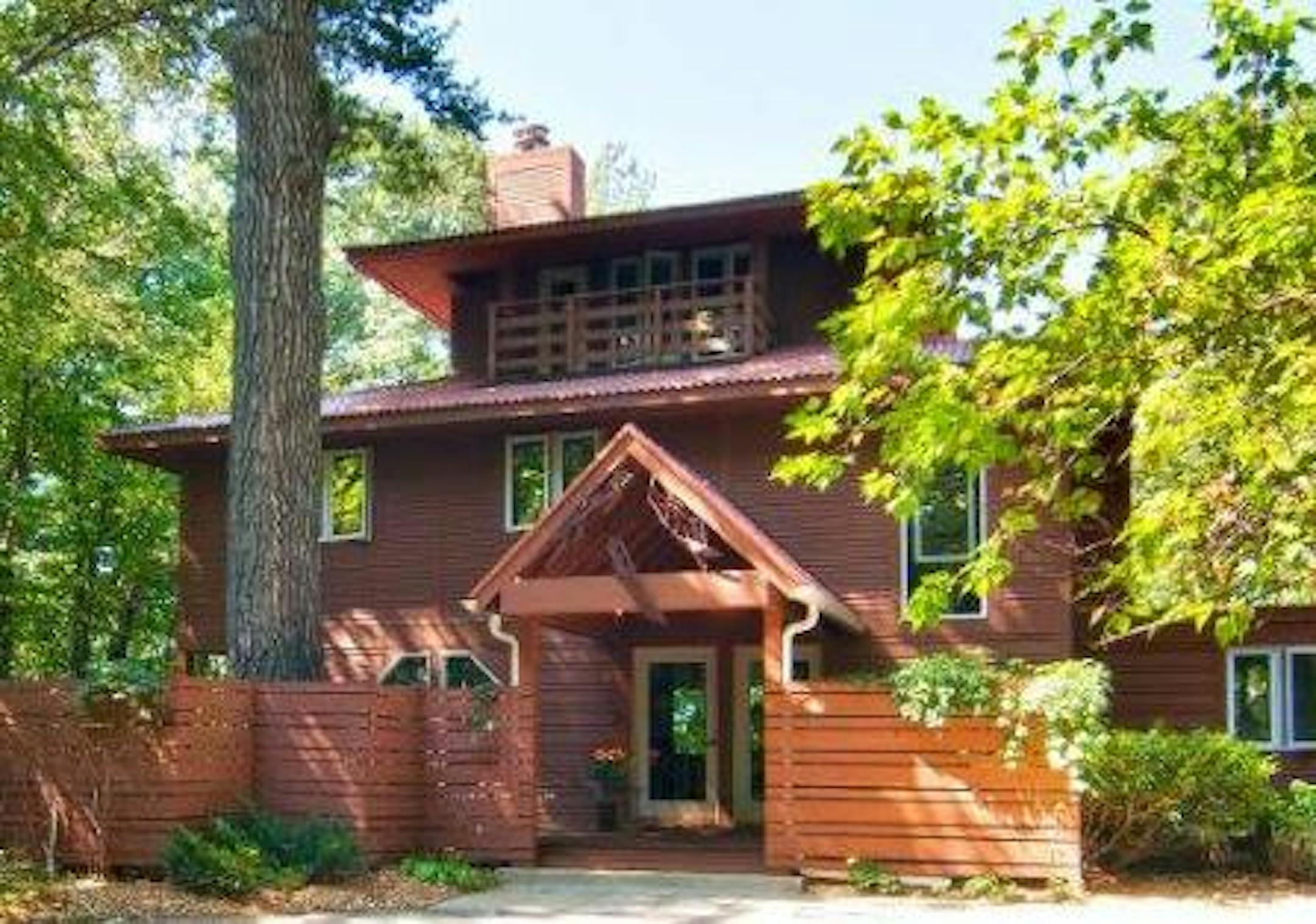
Thorbeck's design for the Ruffs' house drew inspiration from both Prairie-style and Japanese architecture, including Kinkaku-ji, a Zen temple in Kyoto often called the "Golden Pavilion" because of its gold-leaf finish. But instead of gold leaf, the Ruffs' house was clad in redwood, "for that warm feeling," Ruff said.

The home's basic four-square shape evokes a traditional Midwestern home, while its roofline suggests a pagoda, and the entry porch resembles the covered gates of a Japanese home. Thorbeck described it as a house that "speaks Japanese but with a Midwestern accent."

'Tatami room'

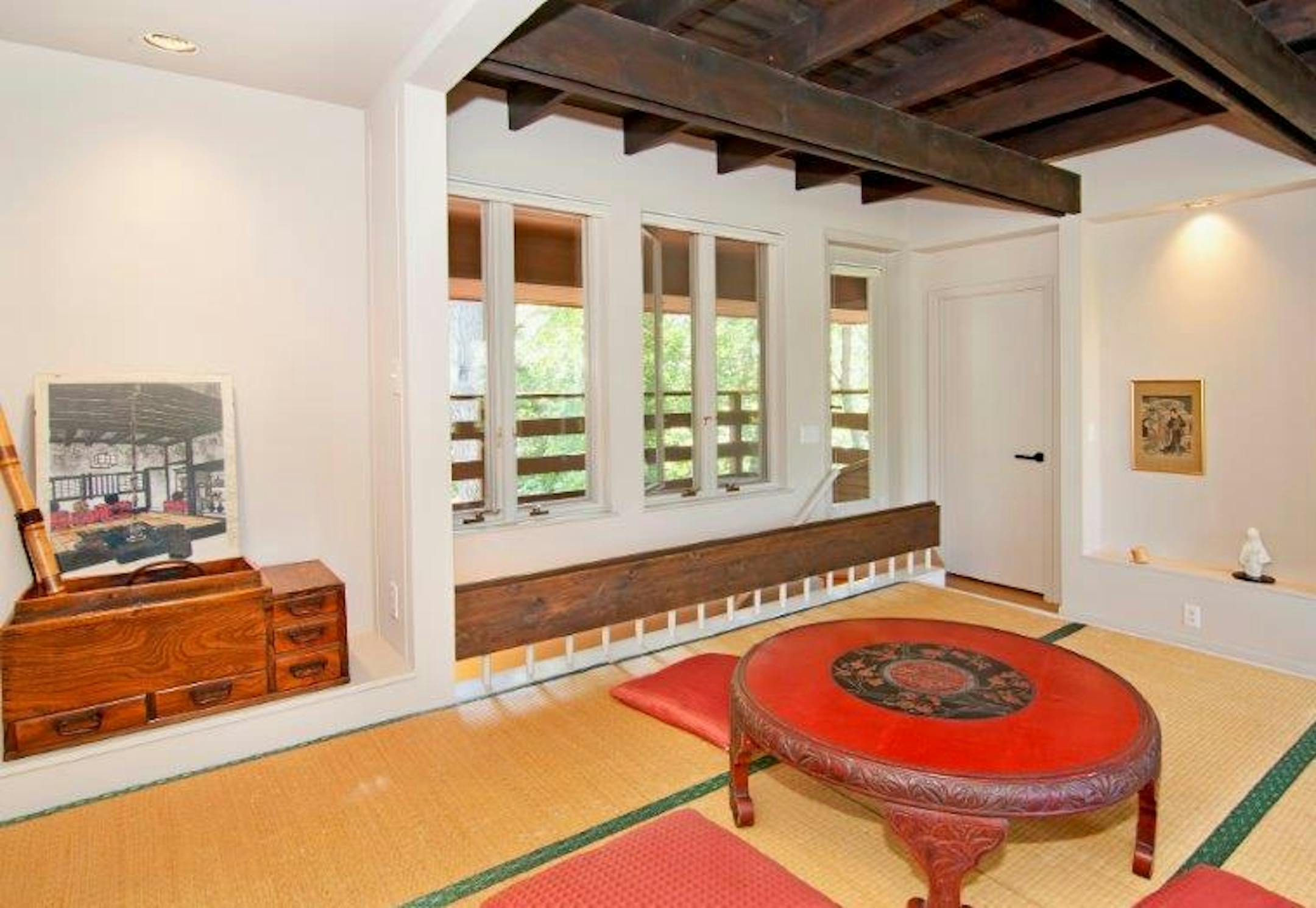
Inside, the house has a third-floor "tatami room," designed to incorporate the traditional floor mats made of woven rush grass that the Ruffs brought back from Japan. The room, which has views of the lake, is ideal for entertaining and meditation.
"We used it as a guest house, a little teahouse and also hosted sake parties there," Ruff said.

The home's design was ahead of its time in several ways. The house was carefully sited to preserve the black oak trees. "We kept every tree we could," Ruff said.

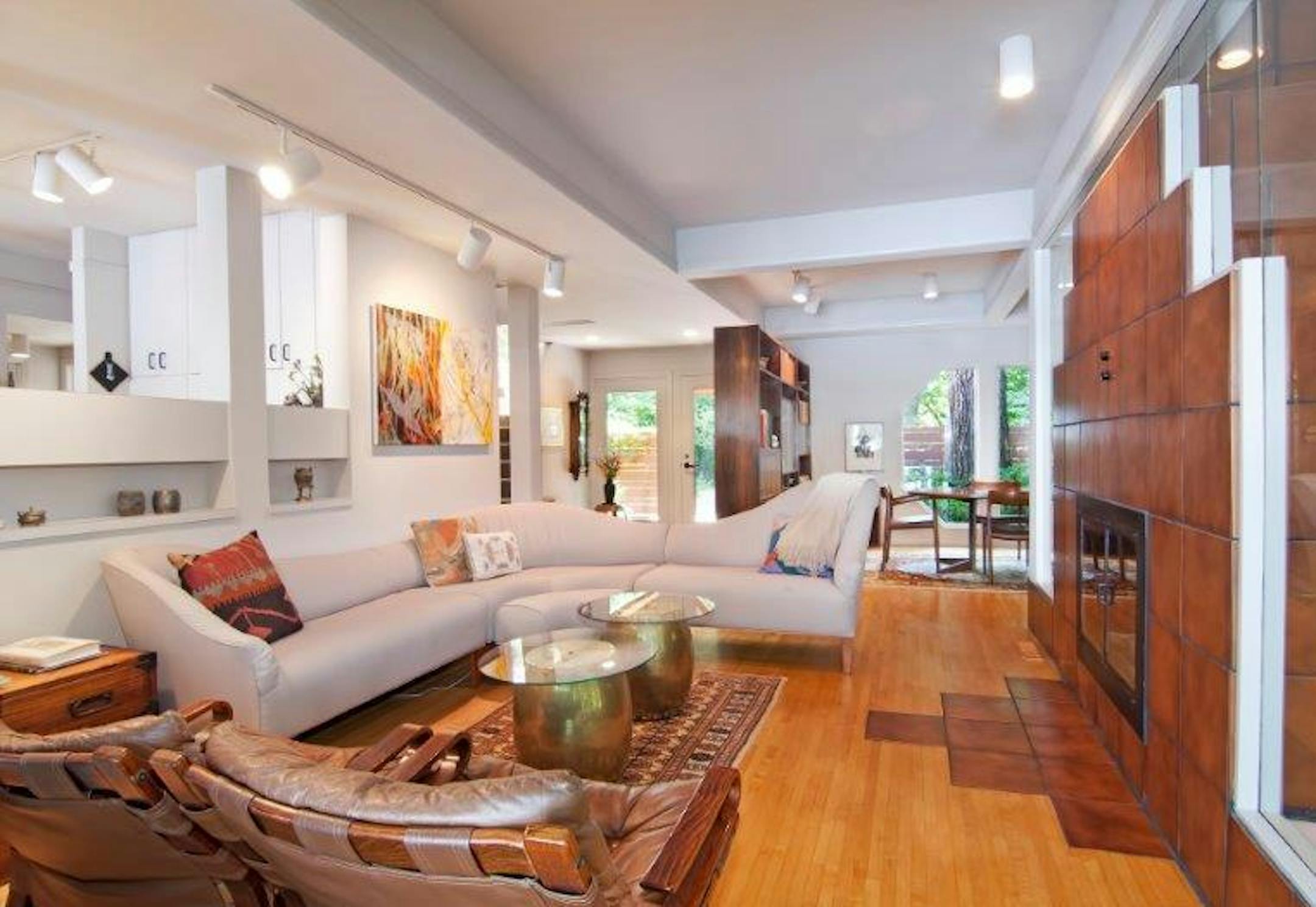
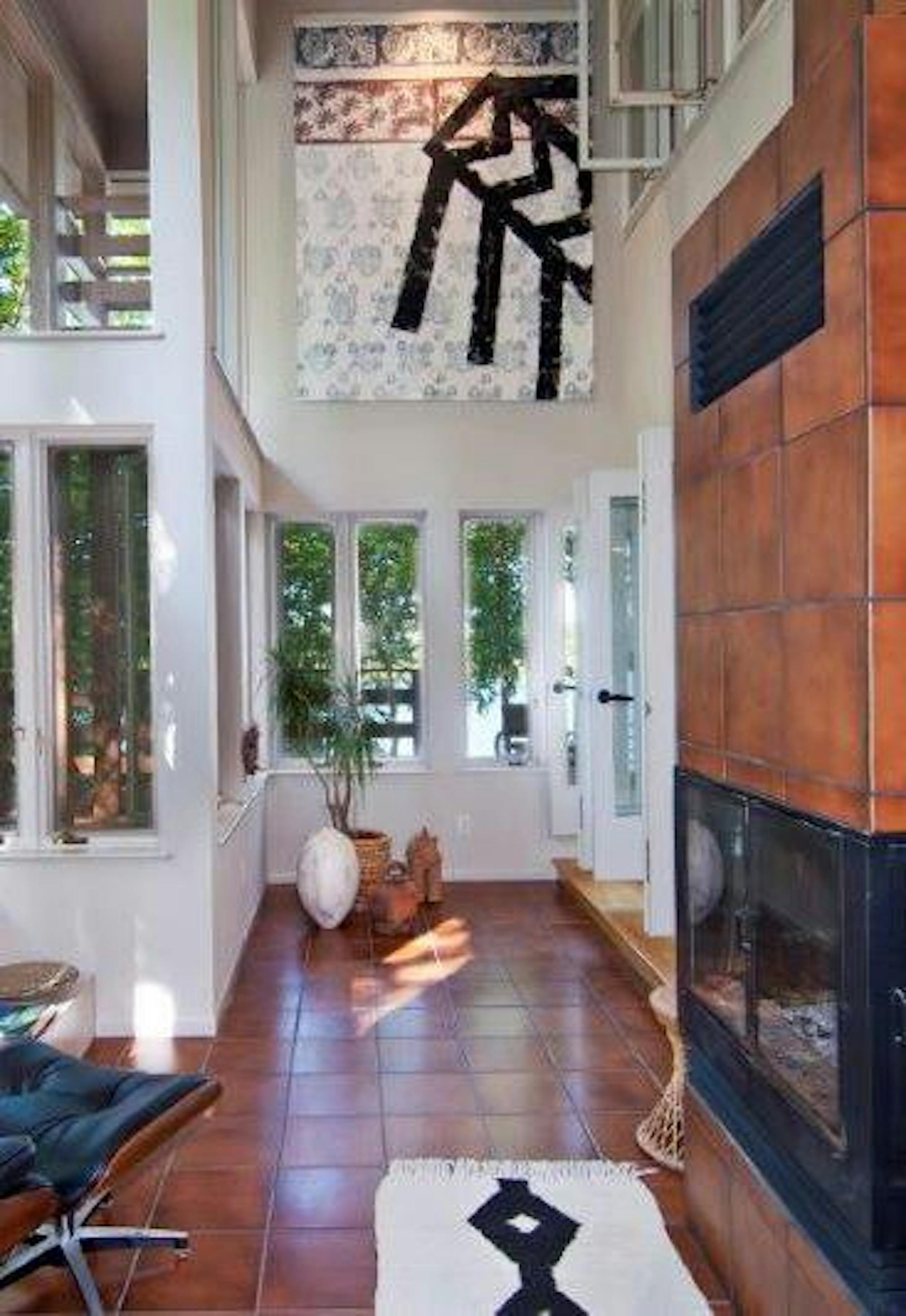
"Green" was still just a color, not yet a philosophy, when the house was built, yet Thorbeck incorporated passive-solar design features, including a south-facing solarium with glass walls, a fireplace and a tile floor over a 4-inch concrete pad. On winter days, the sun heats the room and helps heat the entire house. Overhangs help shade the home in summer.

The 3,400-square-foot house also embodied the "Not So Big House" philosophy, 15 years before architect/author Sarah Susanka published her first book and made that term a household word.

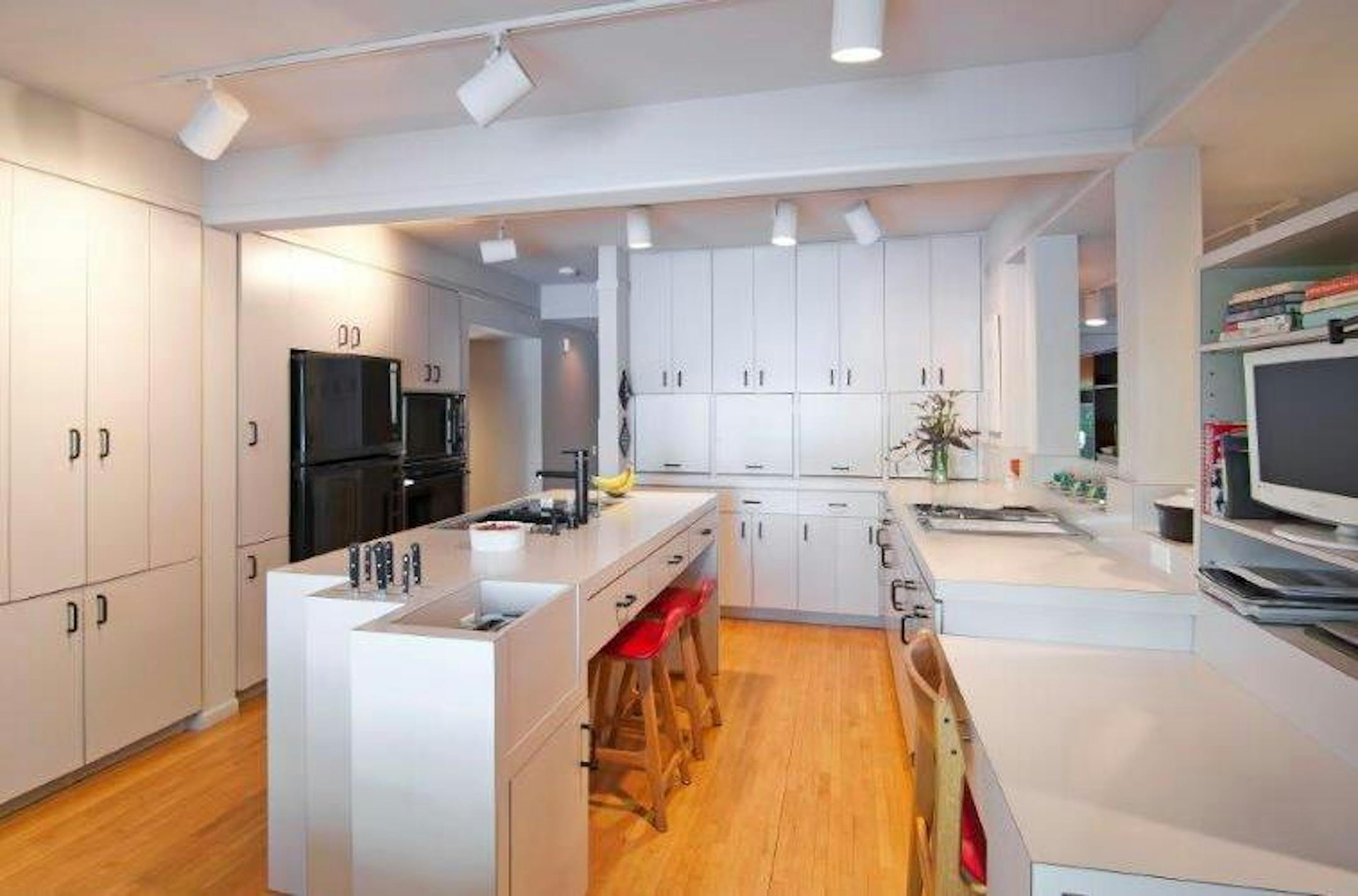
Thorbeck used an open floor plan, human-scale spaces, interesting cutouts and built-ins to create a "less-is-more" dwelling. "Every room, every square inch accounts for something," he said.

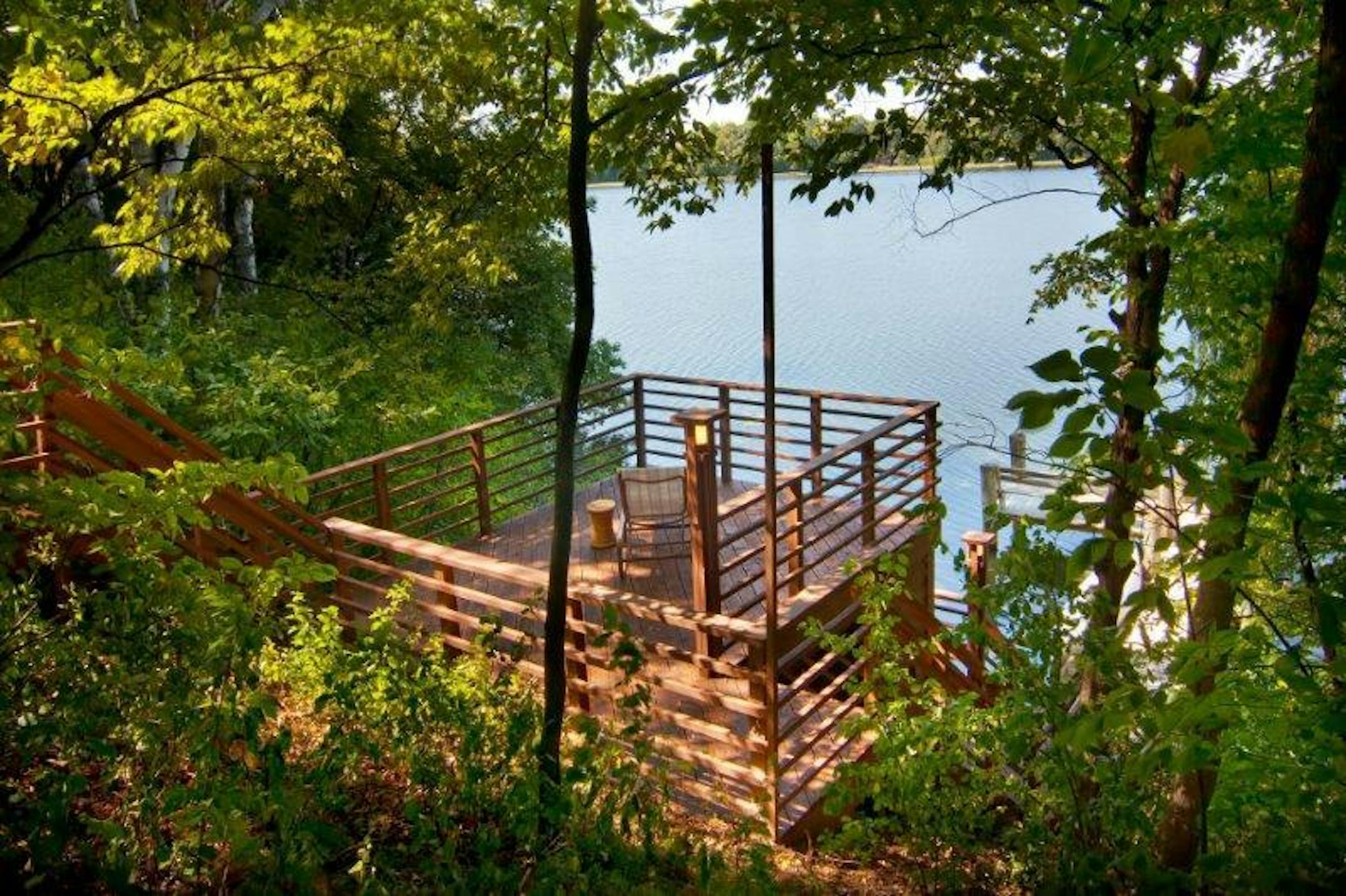
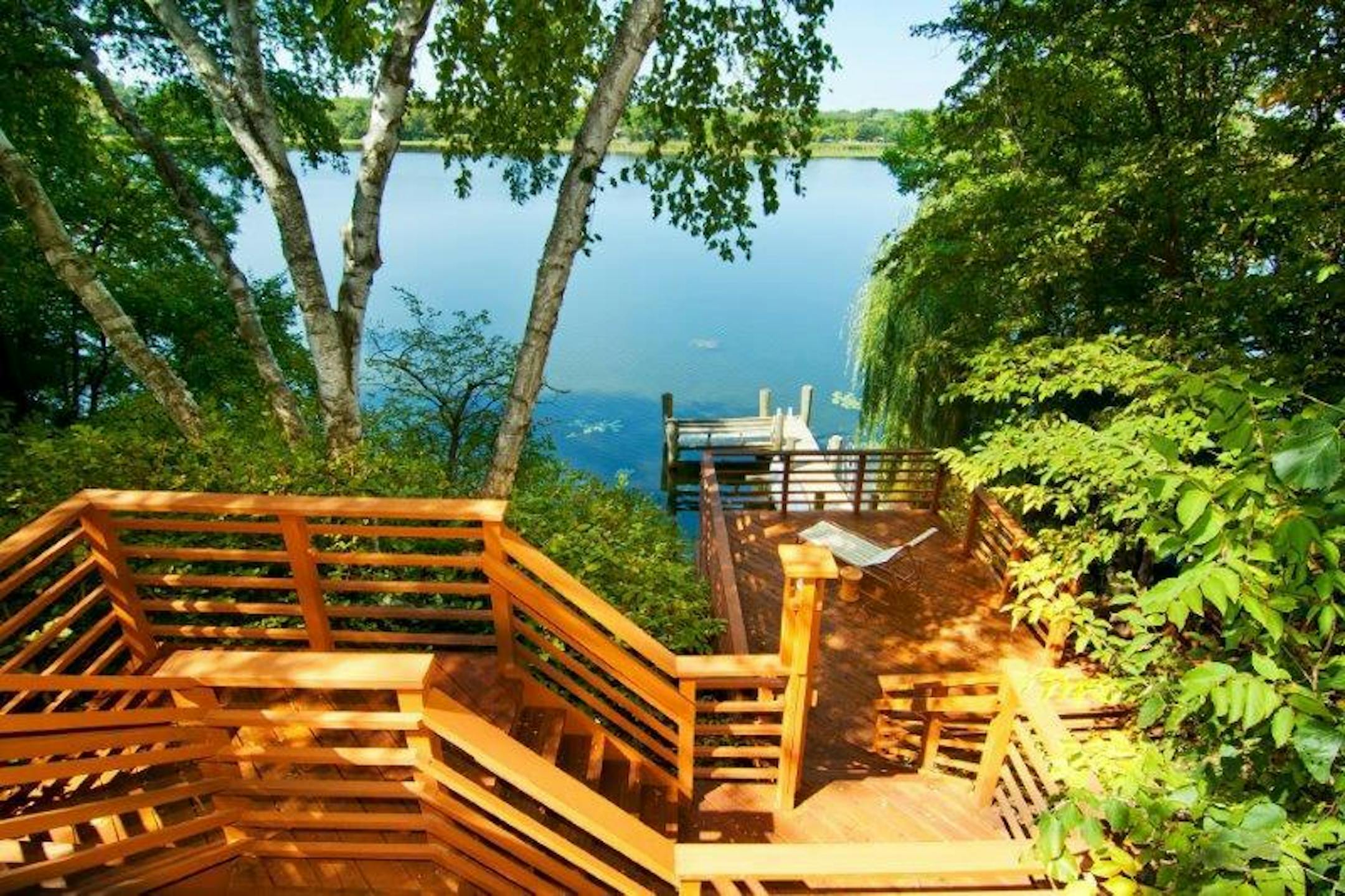
The Ruffs raised their children in the home, enjoying water-skiing and tubing on the lake, and the tiered deck that overlooks it. After living there for three decades, Ruff still loves her home. "The tatami room is very meditative for me," she said. She especially enjoys the solarium in winter, "with the big open picture windows and window seat, looking through the birch trees out to the lake." But now that she's a widowed empty-nester, she's ready for a new chapter.

And Thorbeck, who's still a practicing architect (www.thorbeck.com), adjunct professor at the University of Minnesota's School of Architecture, and director of the Center for Rural Design, is pleased that the home he designed for the Ruff family has stood the test of time.

"I feel really good about how it's aged," he said. "It looks and feels as good today as when it was built."

Kim Palmer • 612-673-4784

Meredith Howell of Coldwell Banker Burnet has the listing, 952-476-3692.

Homegazing: Solarium of Gleason Lake home inspired by Japanese pavilion
A detail of the home’s solarium, which blends Japanese and Prairie-style influences. (The Minnesota Star Tribune)
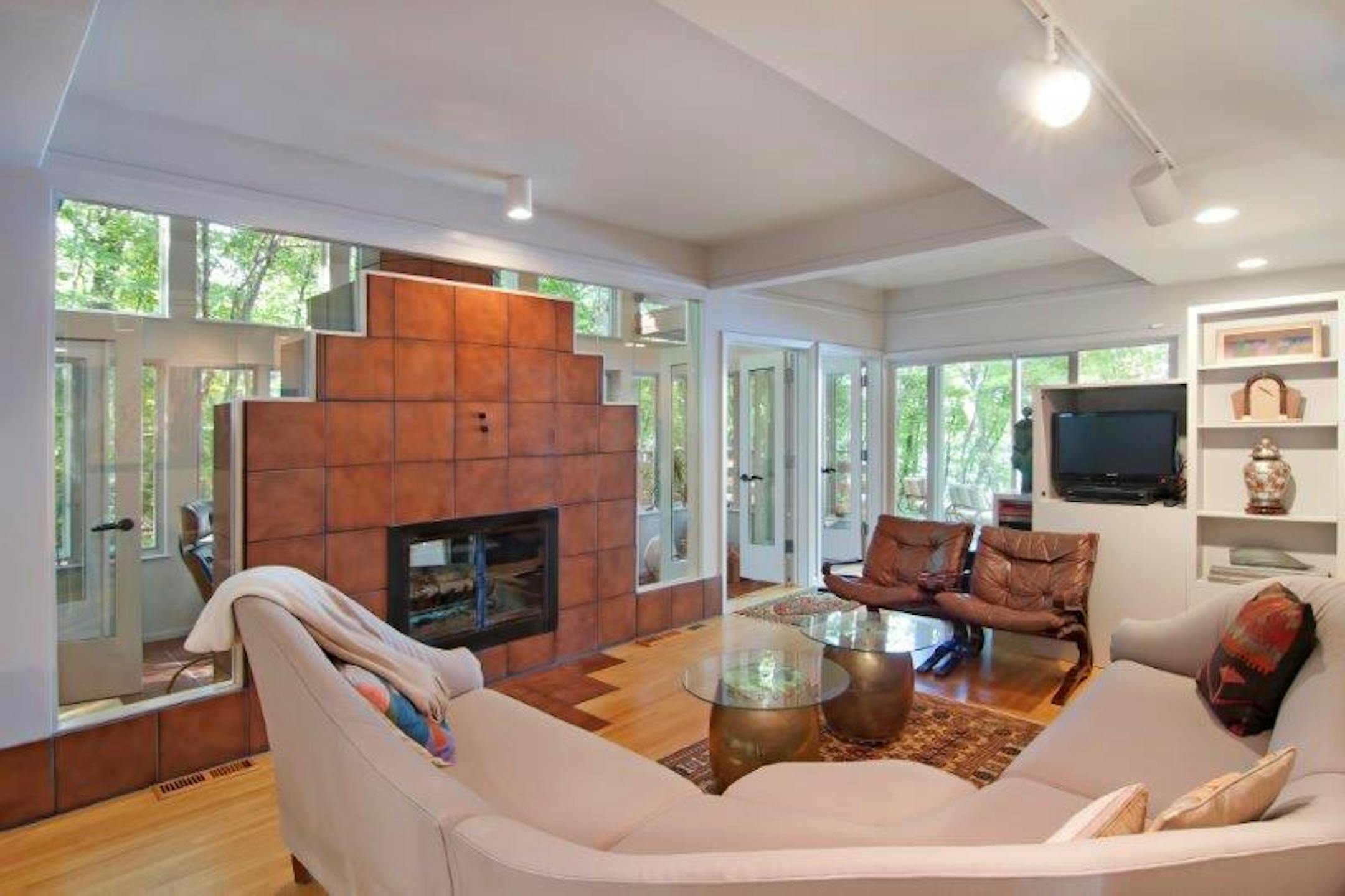
Homegazing: Living room of Gleason Lake home inspired by Japanese pavilion
Living room of Gleason Lake home inspired by Japanese pavilion (The Minnesota Star Tribune)
Homegazing: Deck of Gleason Lake home inspired by Japanese pavilion
Deck of Gleason Lake home inspired by Japanese pavilion (The Minnesota Star Tribune)
Homegazing: Kitchen of Gleason Lake home inspired by Japanese pavilion
Kitchen of Gleason Lake home inspired by Japanese pavilion (The Minnesota Star Tribune)
Homegazing: Another view of living room of Gleason Lake home inspired by Japanese pavilion
Another view of living room of Gleason Lake home inspired by Japanese pavilion (The Minnesota Star Tribune)
Homegazing: Tatami room of Gleason Lake home inspired by Japanese pavilion
A “tatami room” on the third floor can be used for entertaining, meditation or as a guest room. (The Minnesota Star Tribune)
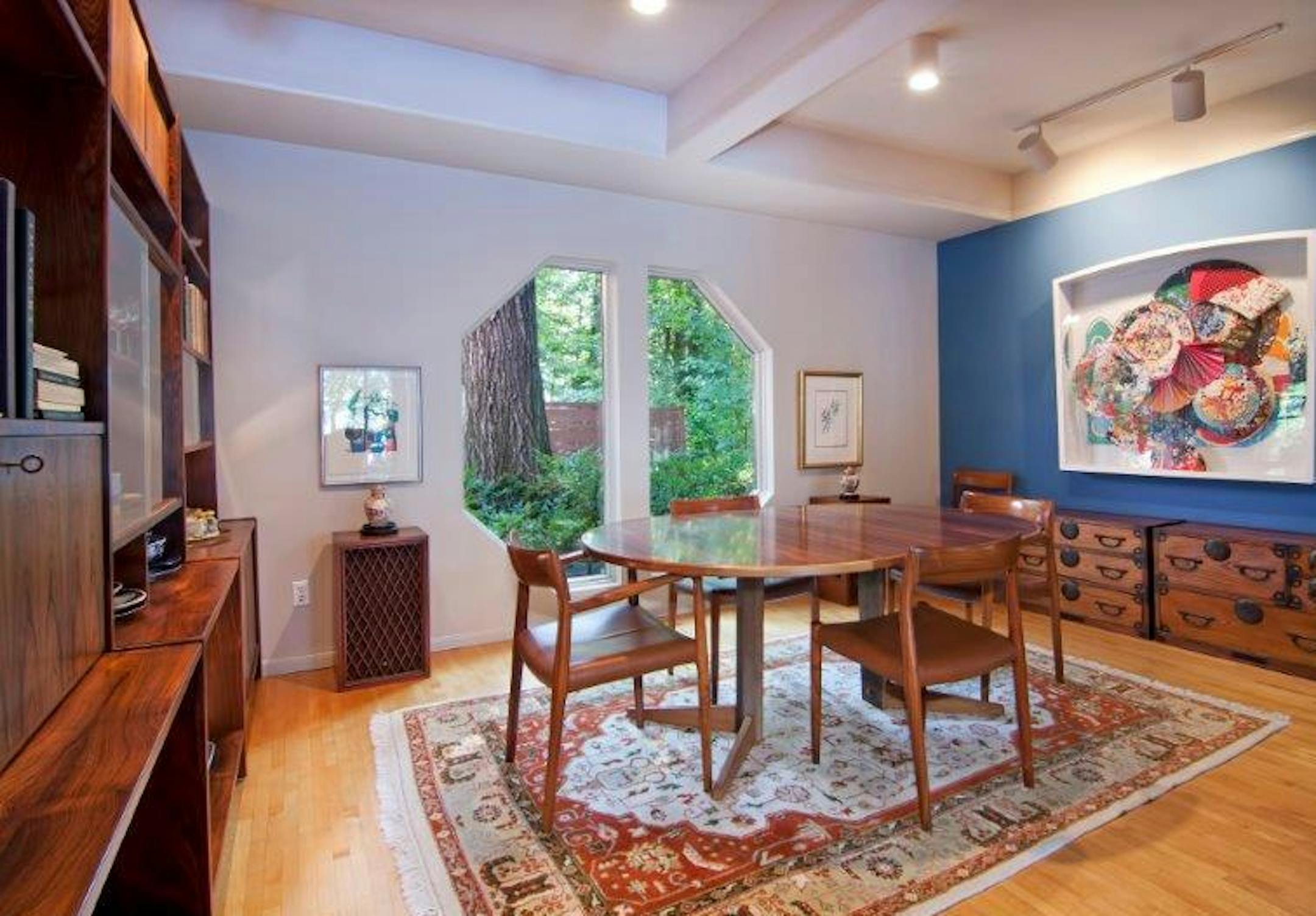
Homegazing: Dining room of Gleason Lake home inspired by Japanese pavilion
Dining room of Gleason Lake home inspired by Japanese pavilion (The Minnesota Star Tribune)
Homegazing: Back deck of Gleason Lake home inspired by Japanese pavilion
Back deck of Gleason Lake home inspired by Japanese pavilion (The Minnesota Star Tribune)
Homegaze: Front of Gleason Lake home inspired by Japanese pavilion
The home is surrounded by towering black oaks and set on Gleason Lake. (The Minnesota Star Tribune)
about the writer

about the writer

Kim Palmer

Reporter, Editor

Kim Palmer is editor/reporter for the Homes section of the Star Tribune. Previous coverage areas include city government, real estate and arts and entertainment 

See Moreicon