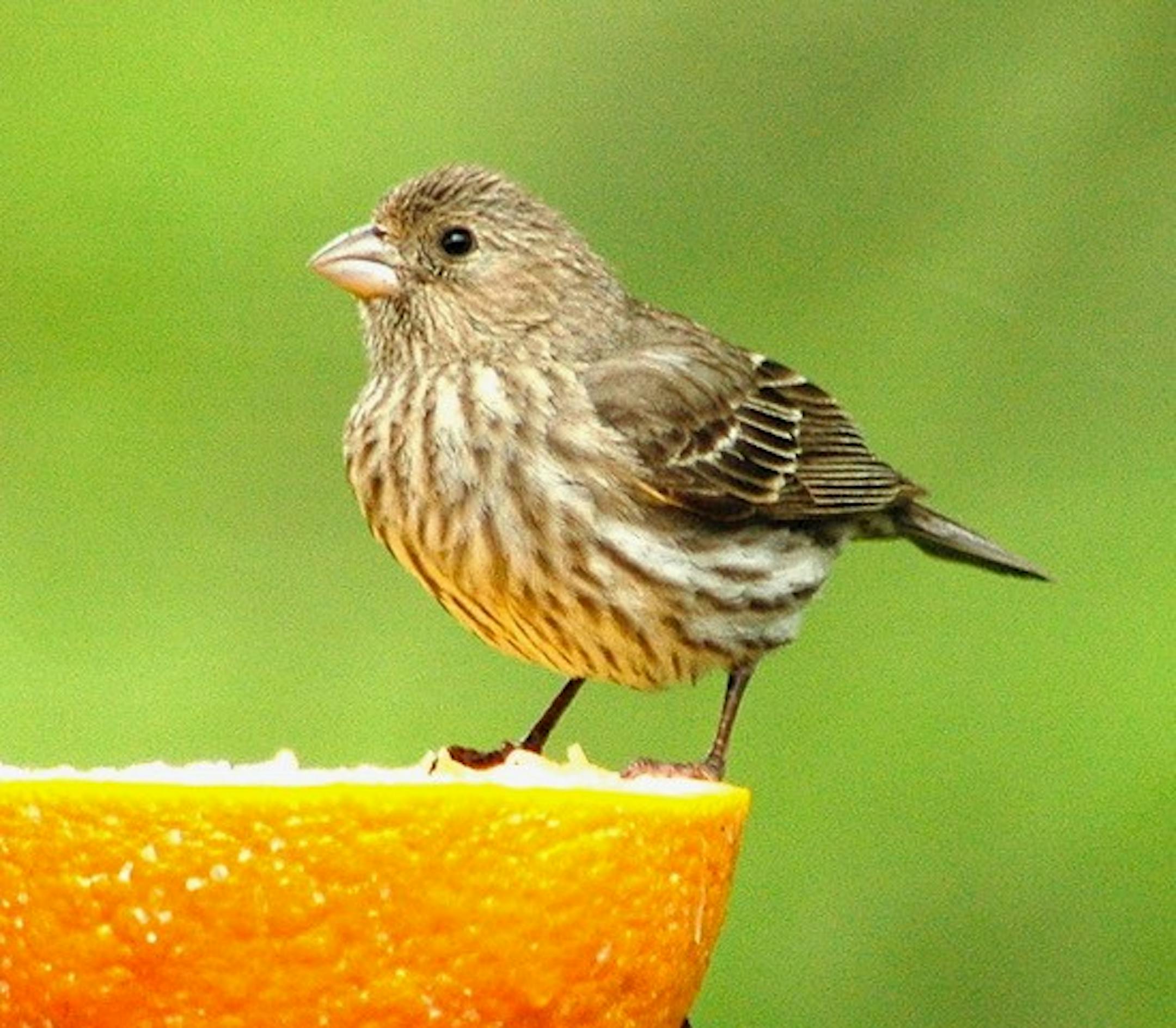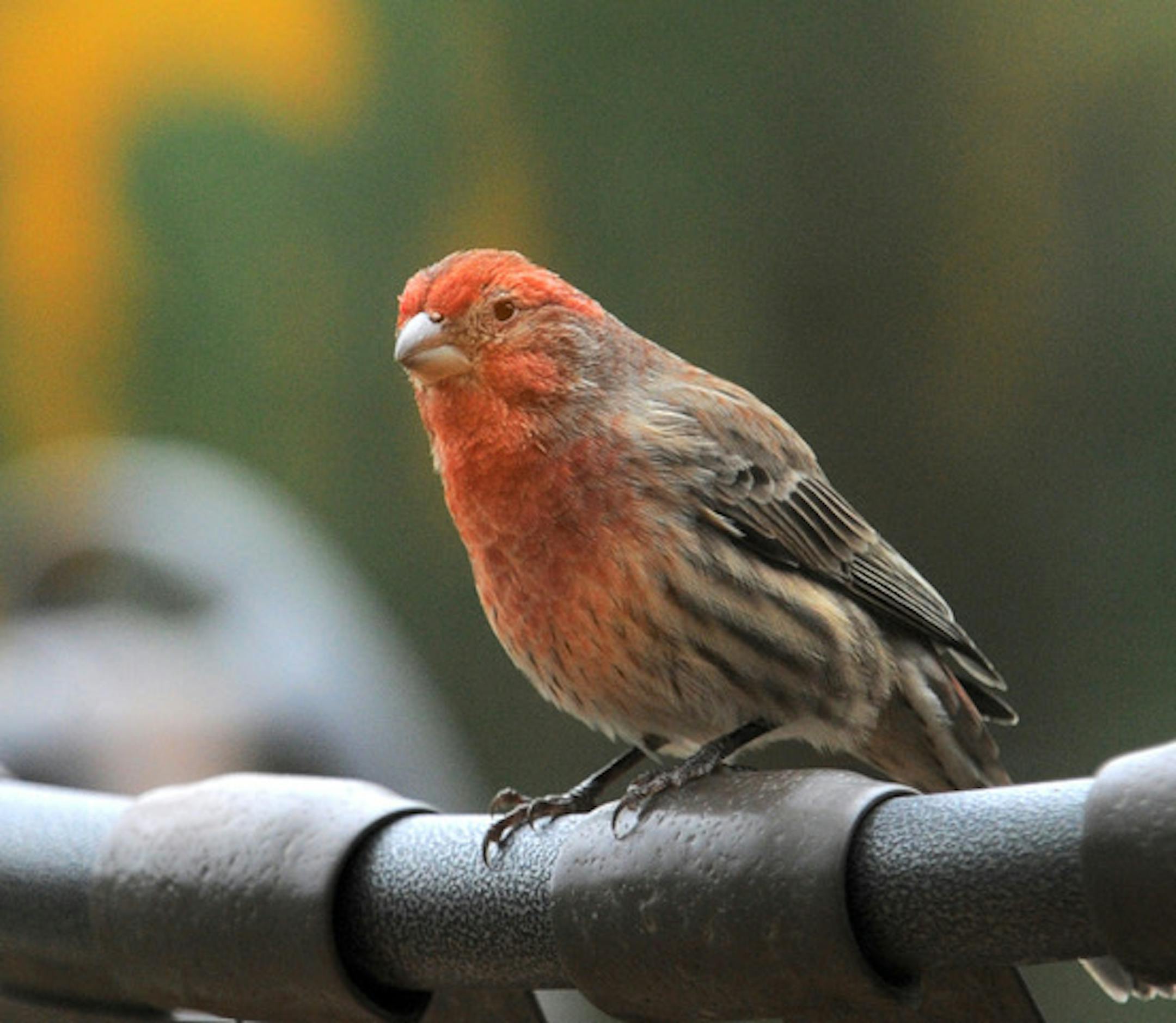
House finches are the perfect urban bird. They would willingly trade an empty lot filled with grasses and bushes and trees for a nice new house with a bird feeder.
They are fond (understatement) of feeders, and nest readily around and on buildings. They have nested in the hanging flower pots on front porches, for instance.
There is a native population on the West Coast, finches comfortable in open undisturbed desert as well as cities. And there is an introduced population in the eastern half of the country.
A small number of house finches was set free on Long Island in 1940. That population, readily adapting to city life and bird feeders, spread east, eventually arriving here.
Minnesota's first house finch was recorded in 1980 at a feeder in Minnetonka, according to Robert Janssen's book "Birds in Minnesota."
By the 1990s house finches had been seen in each of our 87 counties. Janssen calls it the most rapid statewide invasion of any species known in Minnesota. The birds are semi-migratory, numbers decreasing in winter.
House finches also are among many bird species whose feathers are randomly colored red, orange, and yellow by what they eat.
The key to color is plants containing the chemical carotenoid, a yellow, orange, or red fat-soluble pigment. These also give color to ripe tomatoes and autumn leaves, among other plant products.