

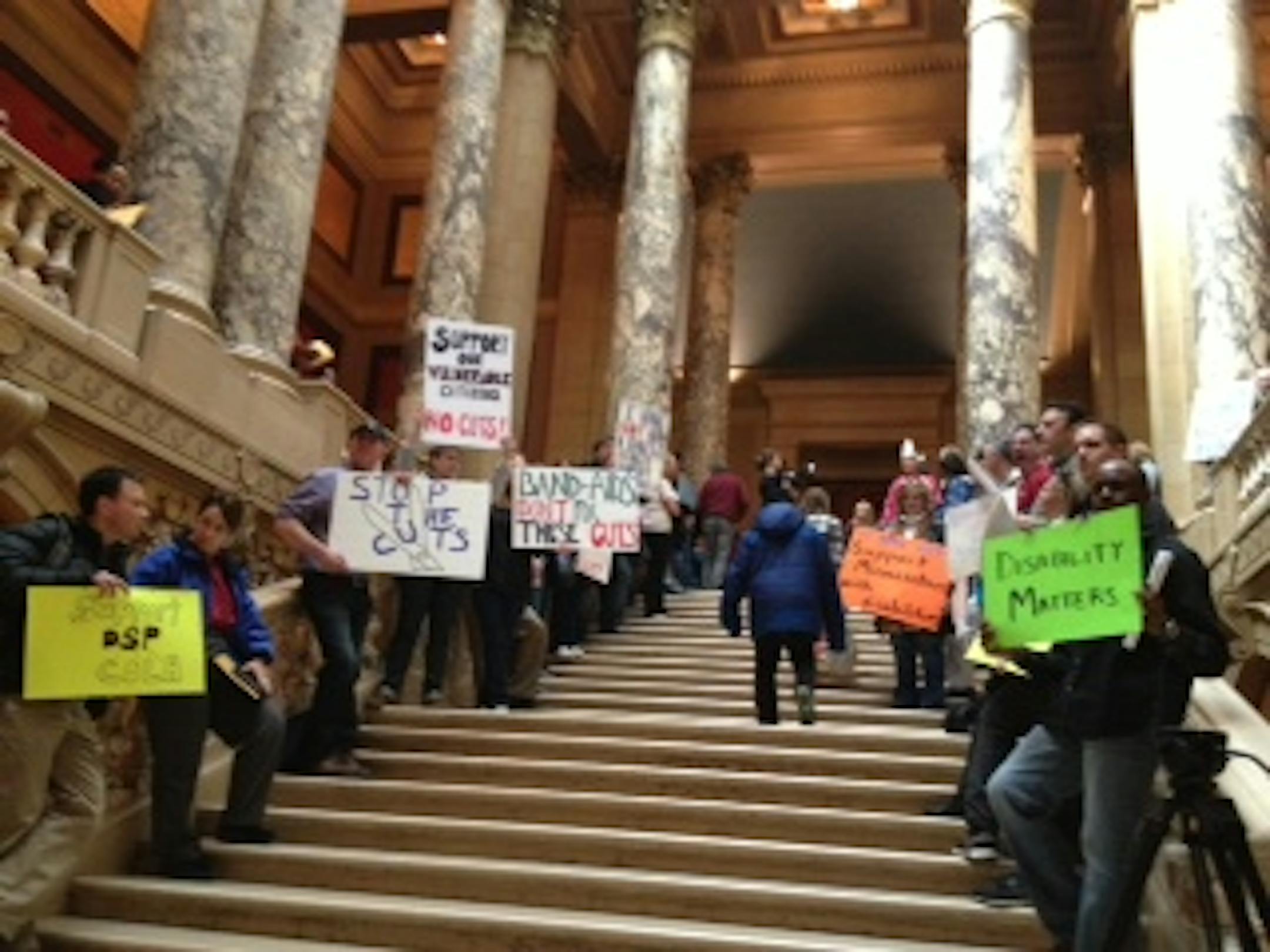
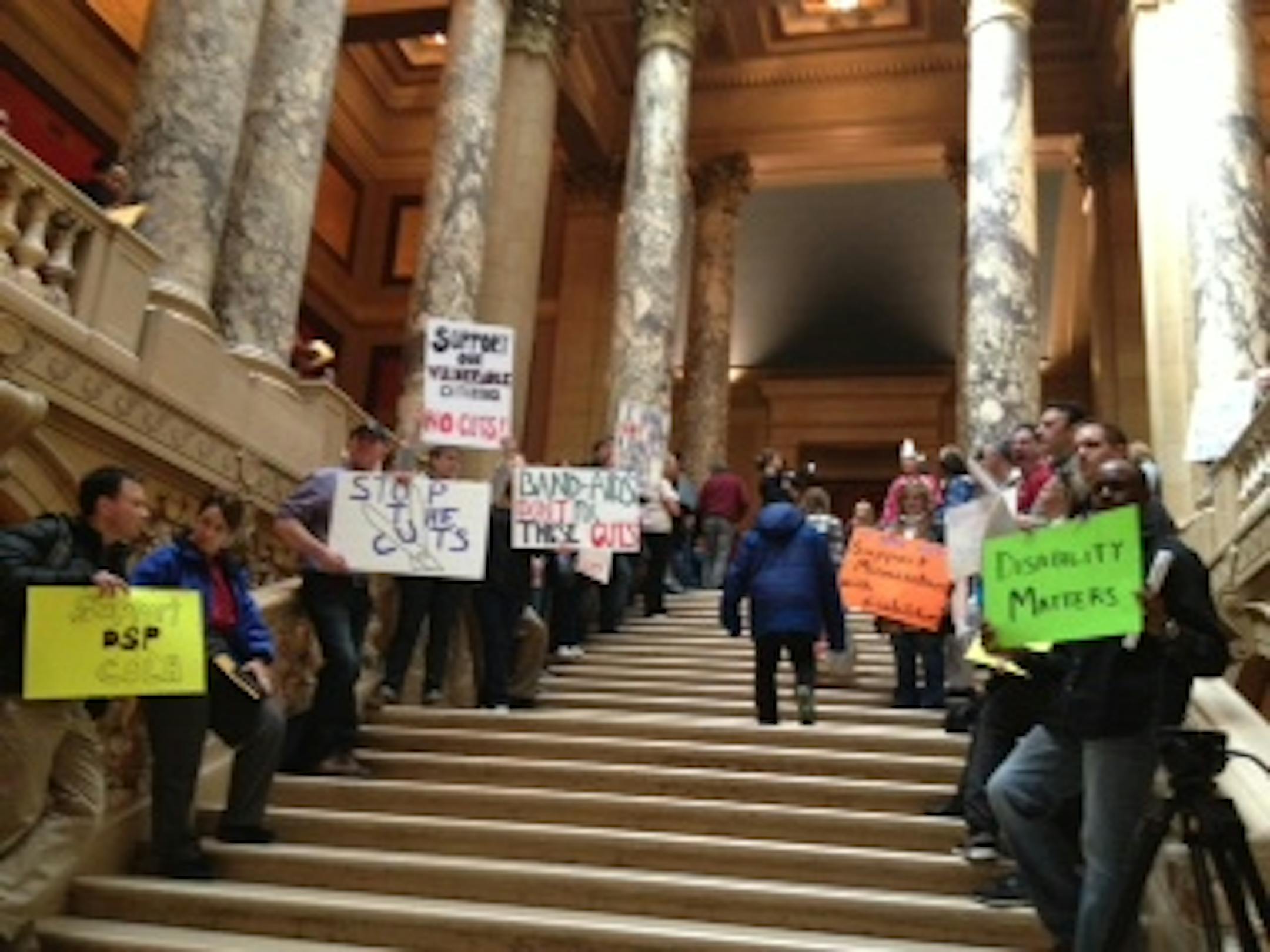
After a wave of protests this week, House Democrats pledged that the sharp cuts they plan to make to the Health and Human Services budget won't fall on the state's caregivers.
In a statement Thursday, House Health and Human Services Chairman Tom Huntley, DFL-Duluth, and other House members pledged that long-term care workers would not see a reduction in their funding over the next two-year budget cycles. Instead, "in all likelihood," caregivers -- who earn an average of $11.41 an hour in Minnesota -- will see their first pay raise in five years.
"This is good news for our nursing homes and caregivers," state Rep. Patti Fritz, DFL-Faribault, said in the statement. "Caregivers and care facilities are under-funded throughout the state and our long-term care workers have not received a wage increase in four years. We believe increasing funding for nursing homes is the right thing to do and we are pleased that we are able to announce the support of House DFL leadership in this effort today."
The Health and Human Services budget was cut by more than $1 billion over the past two years, and advocates had hoped for an easing of the budget woes under the new Democratic majority in the Legislature. Gov. Mark Dayton's HHS budget proposal had included a $170 million in increase in funding for the agencies that care for some of the oldest, poorest and sickest people in Minnesota.
But when the House and Senate set their budget targets, they included $150 million in cuts for HHS. House Speaker Paul Thissen noted that the health and human services budget is one of the fastest-growing parts of the state budget, and it should be possible to trim that budget without hurting services.
Thursday's statement noted that the omnibus HHS bill now under debate should be able to cut $150 million by keeping "downward pressure on rising healthcare costs" without hurting the social safety net.
"Our work isn't done yet, and finding $150 million in reductions will not be easy given the deep cuts we have seen over the past decade," Fritz's statement continued. "However, I am optimistic about the progress we are making and know that many legislators - hopefully in both parties - are interested in building a budget that is balanced and that protects middle class families and the most vulnerable Minnesotans from being squeezed any further."


