

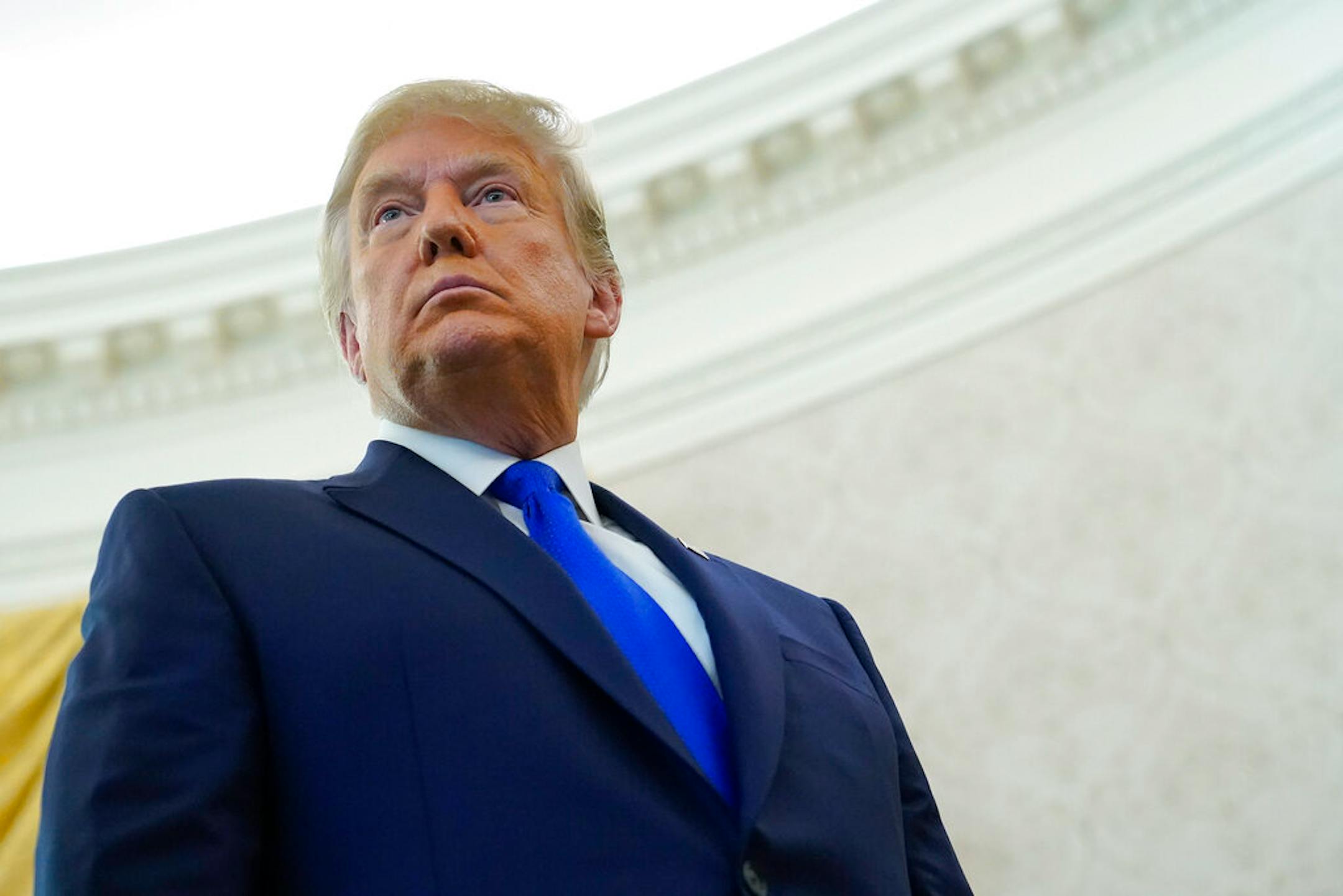
WASHINGTON — The Democratic-controlled House on Tuesday approved a wide-ranging defense policy bill, even as President Donald Trump renewed his threat to veto the bill unless lawmakers clamp down on social media companies he claims were biased against him during the election.
Trump tweeted Tuesday that he will veto "the very weak National Defense Authorization Act," or NDAA, unless it repeals so-called Section 230, a part of the communications code that shields Twitter, Facebook and other tech giants from content liability. Trump also wants Congress to strip out a provision of the bill that allows renaming of military bases that now honor Confederate leaders.
Congressional leaders vowed to move ahead on the hugely popular bill — which affirms automatic 3% pay raises for U.S. troops and authorizes other military programs — despite the veto threat.
The House approved the bill, 335-78, more than the two-thirds required to override a potential veto. The measure now goes to the Senate.
Wyoming Rep. Liz Cheney, a member of the House Republican leadership, urged Trump not to follow through on his veto threat, but added that if he does veto it, "We should override."
If Trump vetoes the bill, "we will come back to vote to override," said Rep. Adam Smith, D-Wash., the chairman of the House Armed Services Committee.
But with Trump pressuring Republicans to stand with him, it was unclear until the final tally whether the bill would receive the two-thirds support needed to override a veto. The House Freedom Caucus, a bloc of roughly three-dozen conservatives, backed Trump's position Tuesday and opposed the bill.
"We stand with the president," said Rep. Andy Biggs, R-Ariz., the group's chairman. "This particular NDAA bill is filled with flaws and problems," including limitations on troop withdrawals ordered by Trump in Afghanistan and Germany, Biggs said.

