2:29
2:29Spring is astir in the usual ways in St. Paul. Songbirds are chirping, tulips are emerging, and the hot mix asphalt plant is cranking away again.
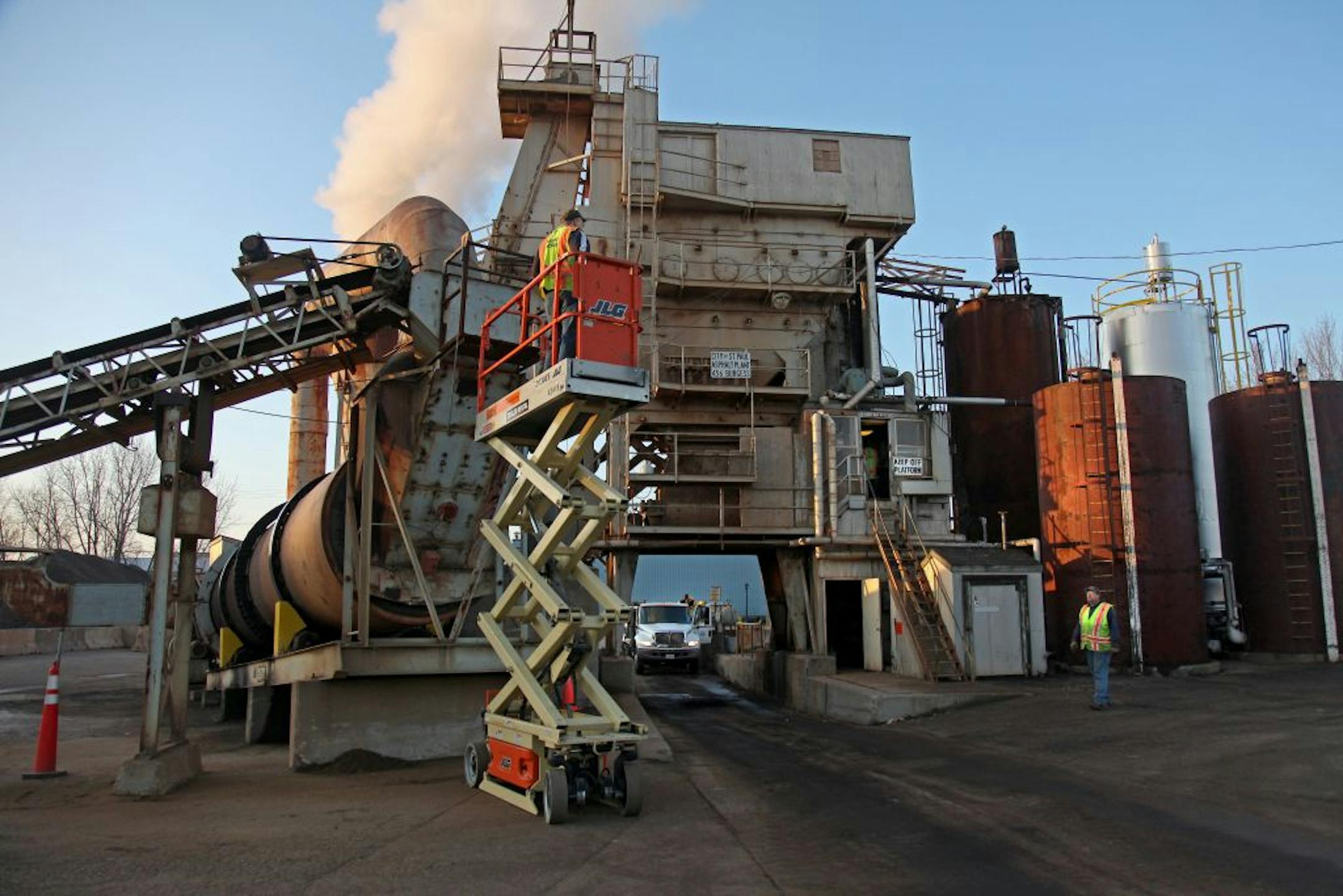
For the 50th time in as many years, the now-rickety plant in the Frogtown neighborhood, which opens each March, is heartening street crews -- and motorists -- around the region, because the "hot mix" the plant cranks out is better at patching potholes than anything that's available in the winter.
"It's worth our while to take an hour in the morning to drive down and get the good stuff," said Mark Thompson, street superintendent in Elk River, one of many cities around southeastern Minnesota that buy asphalt from St. Paul.
Like Girl Scout cookies and maple syrup, St. Paul's hot mix asphalt is symbolic of winter's end. The "cold mix" that's available in winter is only a temporary fix for the potholes that plague city streets. Hot mix bonds better to the surrounding pavement; its availability means smoother streets are on their way, even after a mild winter like this one.
'It's always fresh'
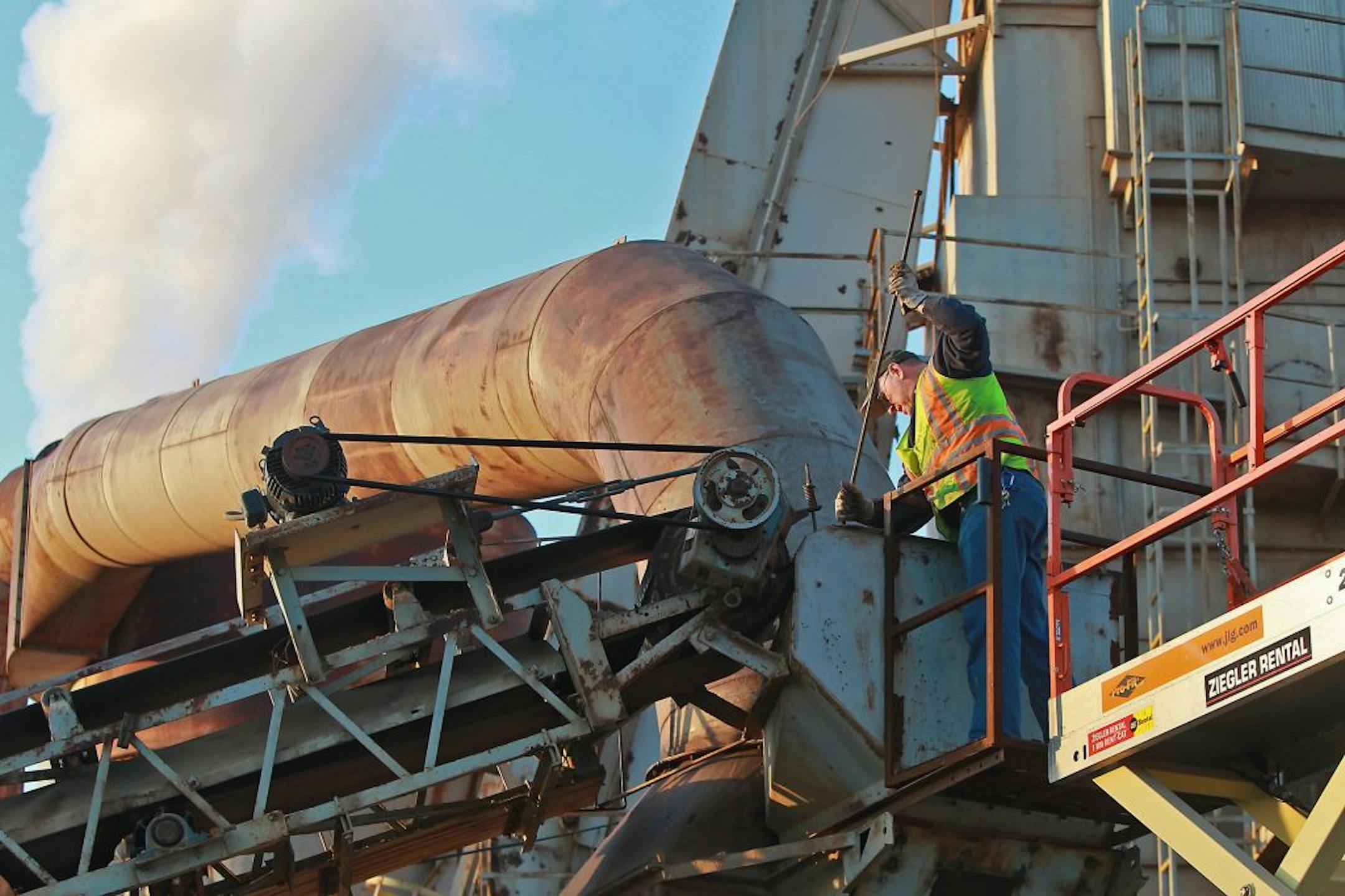
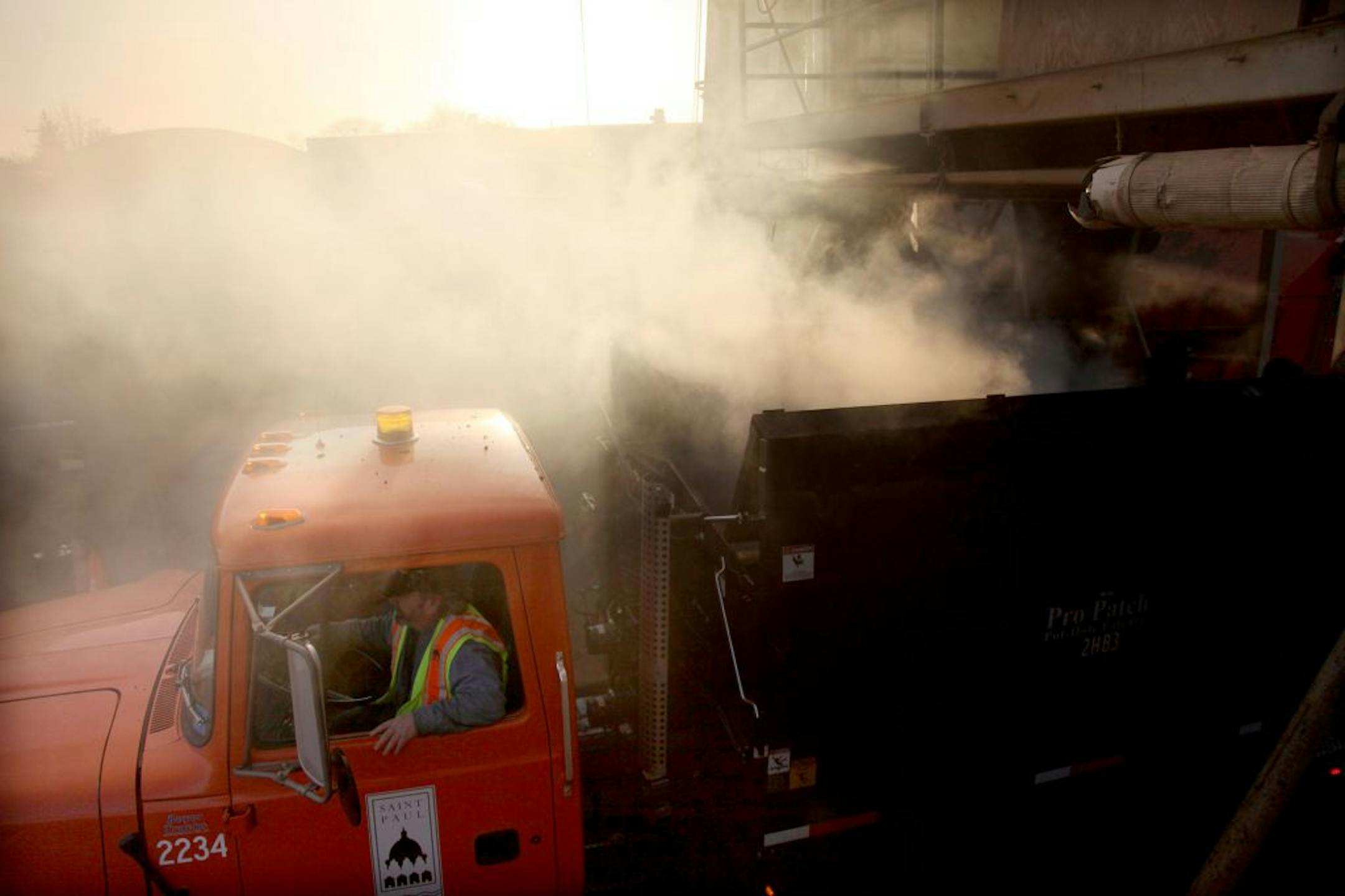
On a recent cool but sunny morning, a steady stream of trucks from Elk River, Anoka, Northfield and other cities lined up under a hopper at the city-owned and -operated St. Paul plant. Huge doses of 335-degree black asphalt dropped into their boxes, shrouding the trucks and the plant with steam. The St. Paul plant can make about 200 tons of asphalt an hour, and it has to be applied the day it's made, while it's still pliable.
Another advantage the St. Paul plant claims: "It's always fresh," said operator Mike McComas.
There is likely to be less call for pothole remedies this year, after a couple of really bumpy spring thaws. The formula for a bad pothole year includes a wet fall and a snowy winter, but the Twin Cities has received only about half its normal precipitation since August.