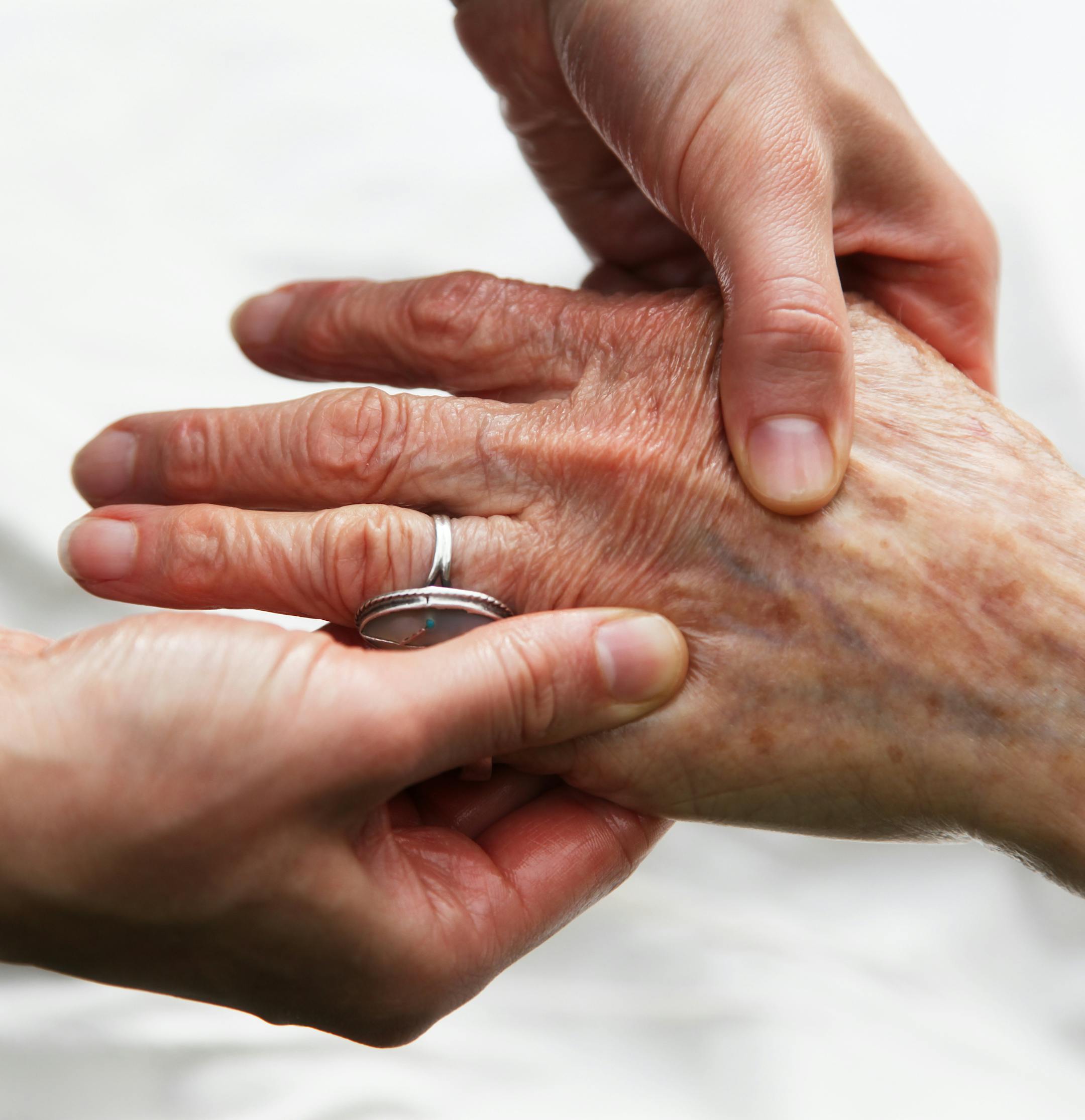
In 1998, Cindy Spence watched in horror as her hospitalized, cancer-stricken father-in-law was denied the massage he desperately requested. Then and there, the Texas woman's career path became clear.
"He entered a pain-filled and despondent state in which the only thought that gave him any pleasure at all was to have a hospice therapist come to his hospital room," Spence said.
But in 1998, such hospice care wasn't recommended for cancer patients. The thinking was that massage would spread cancer cells or might break a tumor.
"That just felt wrong to me," Spence said.
Now she is one of hundreds of hospice massage therapists nationwide, working at the T. Boone Pickens Center at Faith Presbyterian Hospice in Dallas. M.K. Brennan, president of the Society for Oncology Massage, estimates that at least 250 U.S. hospitals provide hospice massage, and the number is growing.
According to the American Massage Therapy Association (AMTA), massage therapy was a $16 billion industry in the country in 2017 — more than twice the revenue of a decade earlier.
"Ever since the 1940s and '50s, we've been working to establish ourselves as health care providers rather than adult entertainers," Brennan said.
This perception had changed little when massage therapist Irene Smith basically launched the hospice massage field in 1982. Nor had the other part of the equation — hospice care — caught on.