

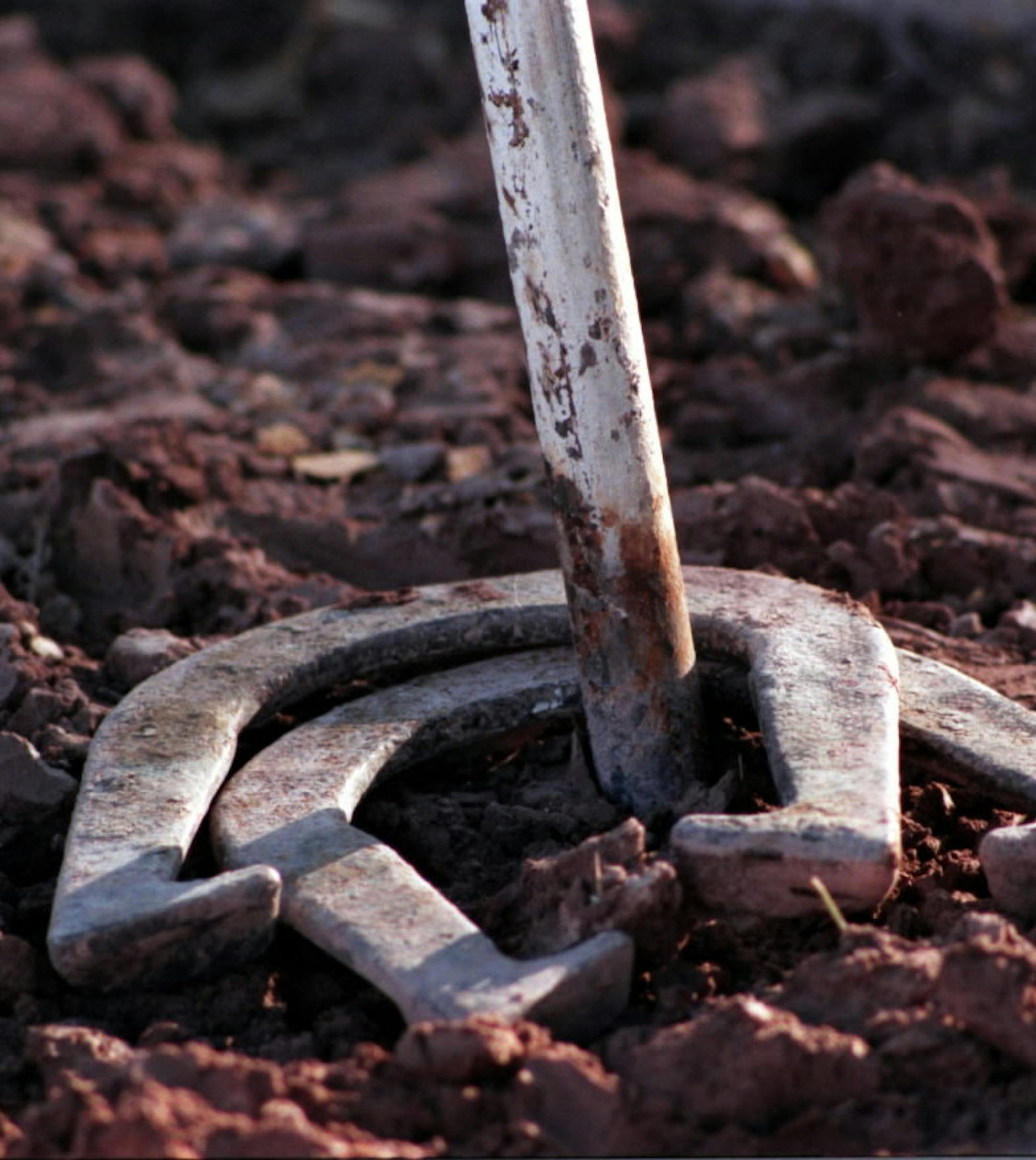
Clang! A common sound in back yards and parks once upon a time, the sound of the horseshoe hitting the stake. Then came lawn darts, which didn't require equine equipment, but did occasionally require tourniquets. Like croquet, you might think horseshoes have faded away in the mists of a quaint America — but don't tell that to Rob Dunn, a Minnesotan horseshoe enthusiast who's also the sport's official historian.
It's an ancient pastime, he says.
"The sport goes back to the Roman days, where horseshoes were round. They used to pitch these things at stakes. Then that became a German game, and that became quoits. I've heard accountings of the Civil War to let prisoners play it to give them something to do."
Did you play as a kid? "I thought it was something your old uncles did on the weekend," he said.
This changed in a unique way: "I was at a management seminar, and the lecturer said if you have a goal and haven't achieved it, it's probably because you haven't written it down. It should be something you can take out and look at. So I wrote down: 'I would like to win a horseshoe pitching trophy.' "
"Well, I had a goal, so I went to the library to look up pitching, and I learned it was a formal sport."
Formal? "I mean leagues, state tournaments, a world tournament. These are guys who get 70, 80 percent ringers, day in and day out. The back-yard guy will average 20 percent."
He'll reel off these stats galore — the weight of the shoe ("They vary from 2 pounds 4 ounces to 2 pounds 10"), the number of kids competing today ("About 800 nationally, with 90 in Minnesota") to the advantages of good steel shoes over cheaper Chinese-made models. ("They might break.")


