

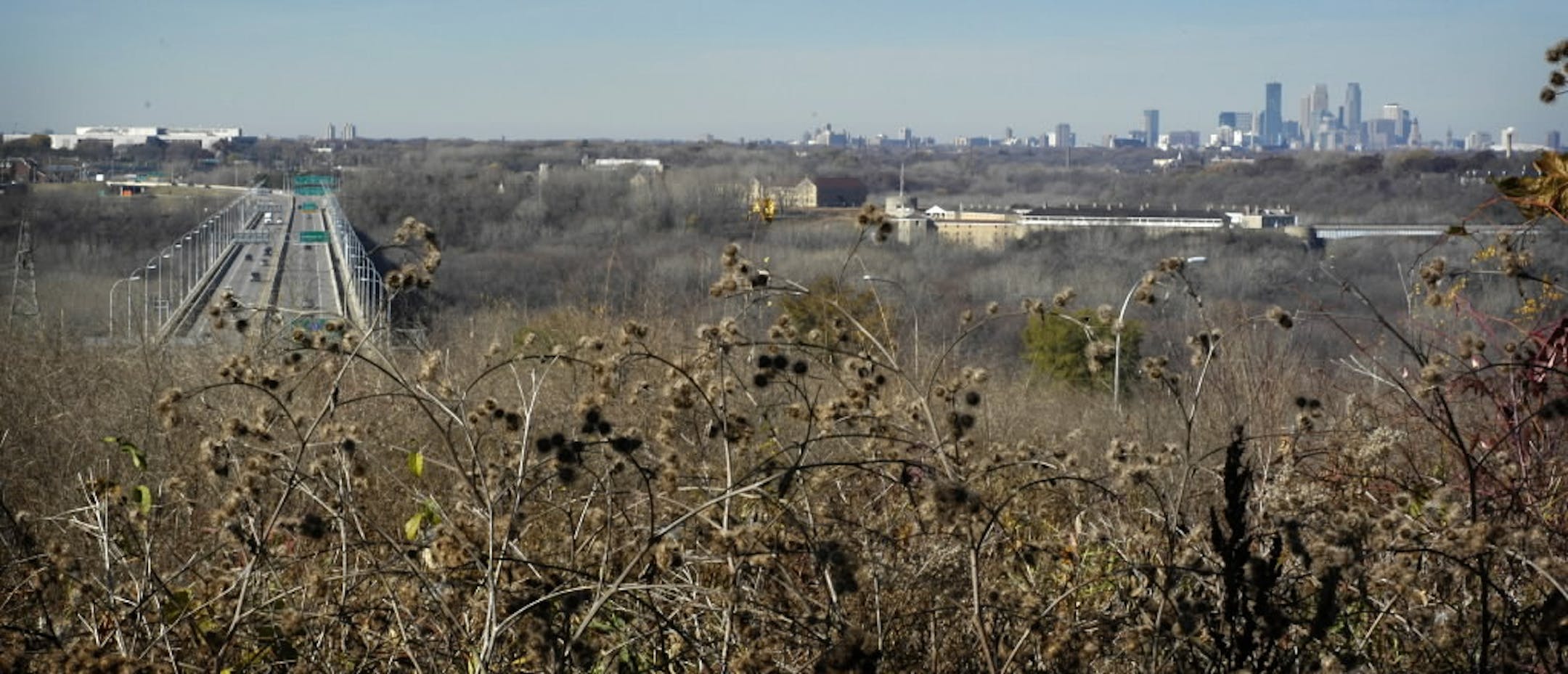
The Pilot Knob open space site, a landmark of Minnesota's beginnings, is set to make it into the books for another historic achievement: It will be the first public urban site in the nation that will use grazing animals to help restore prairie vegetation.
The city of Mendota Heights is using funds left over from a grant from the National Trust for Historic Preservation to bring horses to Pilot Knob to eat nonnative grasses, part of an effort to bring the land back to its historic state as a prairie oak savanna.
"It's pretty intensively managed grazing," said Wiley Buck, restoration ecologist for Great River Greening, the company working with the city on the project. "It removes the thatch, the dead vegetation, and also gets the nitrogen cycle back into balance. These large grazers are just a natural part of the prairie. It really helps with the prairie restoration."
Pilot Knob is a 23-acre site overlooking Hwy. 55. It was a sacred site for Dakota Indians, and it was the place where a treaty was signed ceding 35 million acres of land to the U.S. government more than 160 years ago. That land would become southeastern Minnesota and portions of other states.
It is known to Dakota people as Oheyawahi, "the hill much visited." The land is named Pilot Knob because in the 1800s, when steamboats came into the area, there was a knob at the top of the hill that pilots of the boats used for navigation.
The city of Mendota Heights purchased the land in 2006 and has since worked to bring it back to its historic state. The scenic area is well-known for bird observation and wildlife sightings, along with views of the river valleys, Fort Snelling and downtown Minneapolis. The land is on the east end of the Mendota Bridge, south of Hwy. 55.
The Mendota Heights City Council on April 2 approved a contract with Great River Greening to begin the project. Since then, city leaders and Buck have met with horse owners to talk about preparing the land for the safety of the horses and the public.
Because of its urban setting, the conservation project faces challenges.


