
Opinion | When summer camp is over, ask about the horses

Food and boarding over the winter can be expensive, and some won’t be at camp next spring.

August 31, 2025 at 12:59PM
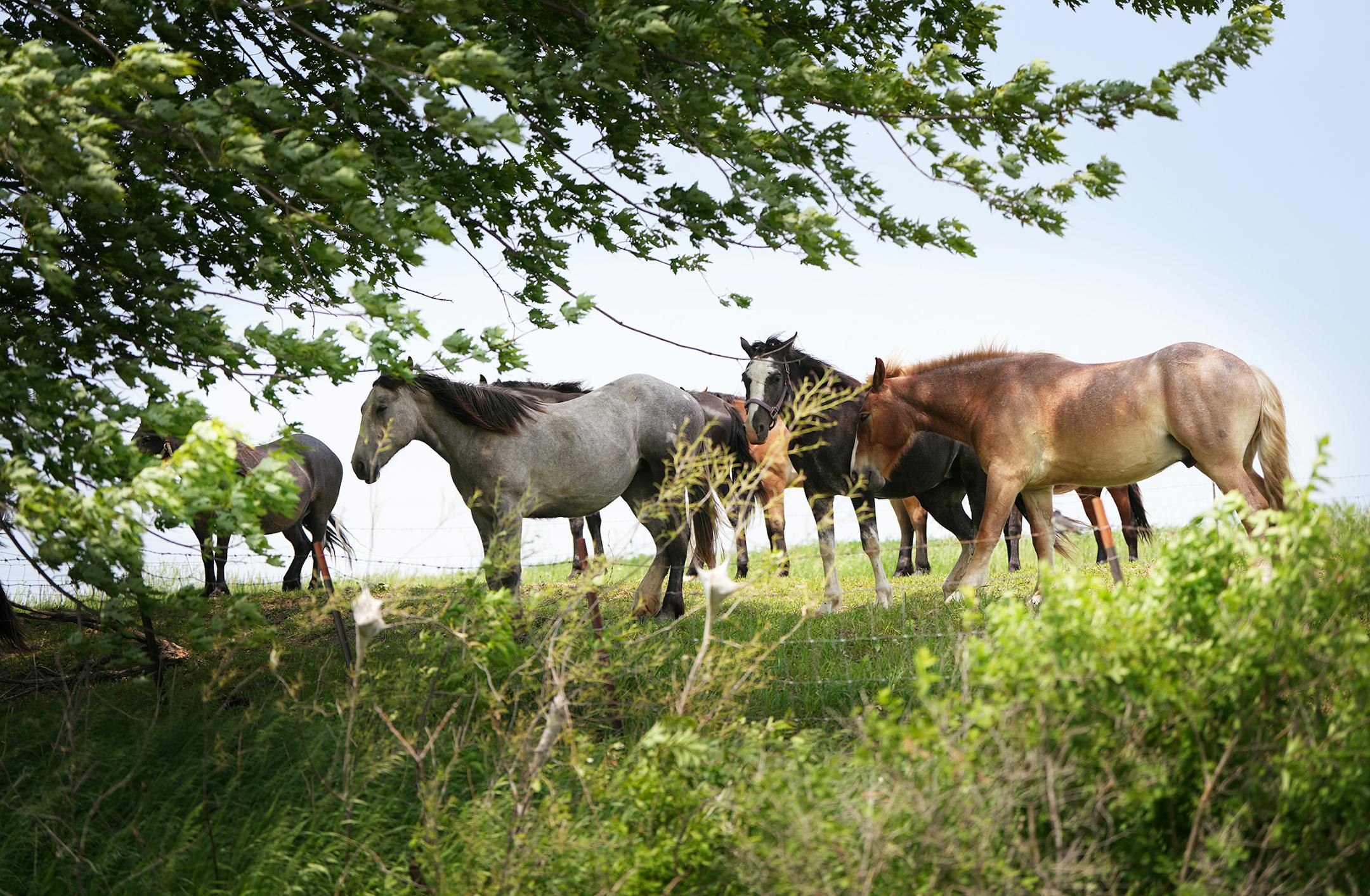
"When autumn arrives, with the rising price of land, feed, insurance, veterinary and farrier care, and with the increasing shortage of farm workers," writes Karin Winegar, "what happens to the dear camp horses?" (Leila Navidi/The Minnesota Star Tribune)

Opinion editor’s note: Strib Voices publishes a mix of guest commentaries online and in print each day. To contribute, click here.

•••

Amid the pines and birches, they walk dutifully on the trail or trot nose to tail in a ring. There are blacks and bays, pintos and grays: Thunder, Chief, Ranger, Belle, Beauty, Skipper, Midnight, Bud and Goldie. There’s usually a Hank and a Fred. Sometimes a Diablo. I remember a Schimmel.

A child’s first crush — usually a girl child’s — is often the camp horse.

Good camp horses and ponies are babysitters with four legs, beloved by children who learn heads up, heels down, lower your hands, don’t grab the horn. Each summer, fortunate American kids take their first risks and get their first big thrills atop the back of trusty geldings and mares at Camp Lake Widji-Goomi-Wahoo.

From Maine to California, America’s more than 15,000 summer camps (according to the American Camp Association) offer varying degrees of rustic-ness and sports. Many camps, even day camps, offer riding.

I adored camp — Sailing! Riflery! Archery! Horses! — and spent a couple of summer sessions as a pre-teen falling in love with all the horses, from the Belgian draft team that pulled a wagon to the feisty ponies, which hurt a lot less when they stepped on your foot.

Later, I was a riding counselor in that same northern Minnesota camp when the herd of 30-some got the winter off. It was many decades ago, and hay was cheap and available, and they stayed through the snowy months on the former dairy farm that served as our riding headquarters and tack shed.

These days, when autumn arrives, with the rising price of land, feed, insurance, veterinary and farrier care, and with the increasing shortage of farm workers, what happens to the dear camp horses?

Around Labor Day, while the glossy, high-stepping draft horse hitches pound around the hippodrome at the Minnesota State Fair, cheered by thousands of onlookers, thousands of camp horses enter an almost invisible pipeline that runs from summer camps to auctions to slaughter buyer trucks to slaughter houses in Mexico or Canada.

Although some camp horses are scooped up by appreciative families and individual riders, the kill buyers, the “meat men,” get great deals. Their semis wait behind the auction barns where bewildered horses with bidding numbers stuck to their hips are led in or shooed into the ring loose. They are quickly taken away by bidders from big buyers such as Kaufman, Stanley Bros., Rotz, Fabrizius and O’Dwyer.

Then they make the 18-hour — and documented up to 35-hour — truck ride (standing without food, water or rest) to the unregulated Mexican slaughter plant (nearly 117,997 U.S. horses in 2023) or the Belgian-owned Bouvry plant (2,344 sent in 2023) in Canada. Their meat goes to Asia, South America, Russia and parts of Europe, where people consider horse meat a delicacy.

Camp horses are only part of the mix: race horses, Amish work horses, companion horses, backyard horses, show horses and more are processed. Never mind the de-wormer, painkillers and antibiotics likely circulating in the bloodstream. European customers, wise to these hazards, mandate a six-month stay for U.S. horses in a feedlot before slaughter. The feedlots are bleak, the horses unsheltered.

Don’t tell your camper all this. Camp should be the distillation of all of the good things of summer: singing around the campfire, capture the flag, treasure hunts, skits, sack races, new BFFs. But perhaps next spring, when you are choosing a camp for your child, remember autumn and ask about the horses.

Karin Winegar, of St. Paul, is a freelance journalist and former Minnesota Star Tribune staff writer. She’s the author of “Horse Lovers: Unpacking the Female Fascination.”

about the writer

about the writer

Karin Winegar

More from Commentaries

See More
card image
Leila Navidi/The Minnesota Star Tribune

In government leadership, young people need to be ready to accept the torch, but previous generations can’t slow down their leg, or delay the pass.

card image
card image