

Opinion editor's note: Editorials represent the opinions of the Star Tribune Editorial Board, which operates independently from the newsroom.
•••
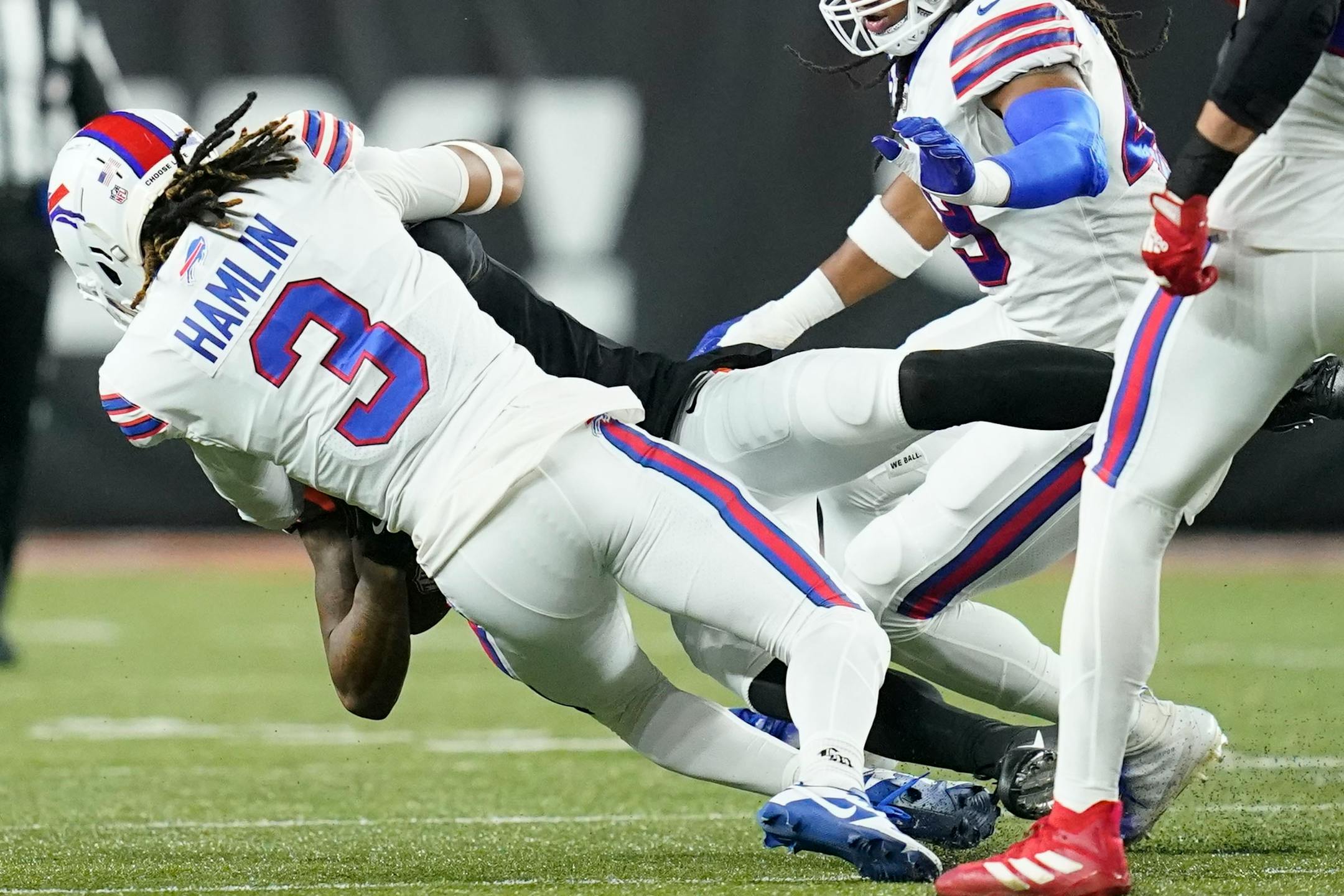
On Monday night, Buffalo Bills safety Damar Hamlin tragically became one of an estimated 356,000 Americans who suffer an out-of-hospital cardiac arrest each year. That's about 975 people a day.
Roughly 90% of the time, this health emergency is fatal. But the medical team that rushed onto the field in Cincinnati after Hamlin collapsed had the expertise and equipment to give him a fighting chance. The team administered CPR, used an automated external defibrillator (AED) and was able to restart the 24-year-old player's heart on the field. Hamlin remained hospitalized in critical condition on Tuesday.
The remaining 900 or so Americans whose hearts also suddenly stopped on the new year's second day, and the thousands who will have the same happen in the days and weeks ahead, almost certainly won't collapse during a Monday Night Football game with trainers and emergency personnel on the sidelines. Most cases of sudden cardiac arrest, which can affect people of all ages and fitness levels, occur in more-ordinary places, including a home, office, store, restaurant or gym.
Are you ready to help resuscitate a family member or friend who's crashed to the floor without a pulse? Sadly, most Americans are not, a reality that requires urgent remedy.
"Although 65% of people in the United States say they've received CPR training at some point in their lives, only 18% of people are up to date on their training," according to an Aug. 22 Harvard Heart Letter report.
That low percentage is alarming. Minutes matter when the heart is no longer pumping oxygen-rich blood to the brain and other vital organs. Immediate cardiopulmonary resuscitation (CPR) can double or triple the chances of survival, the American Heart Association (AHA) reports.


