

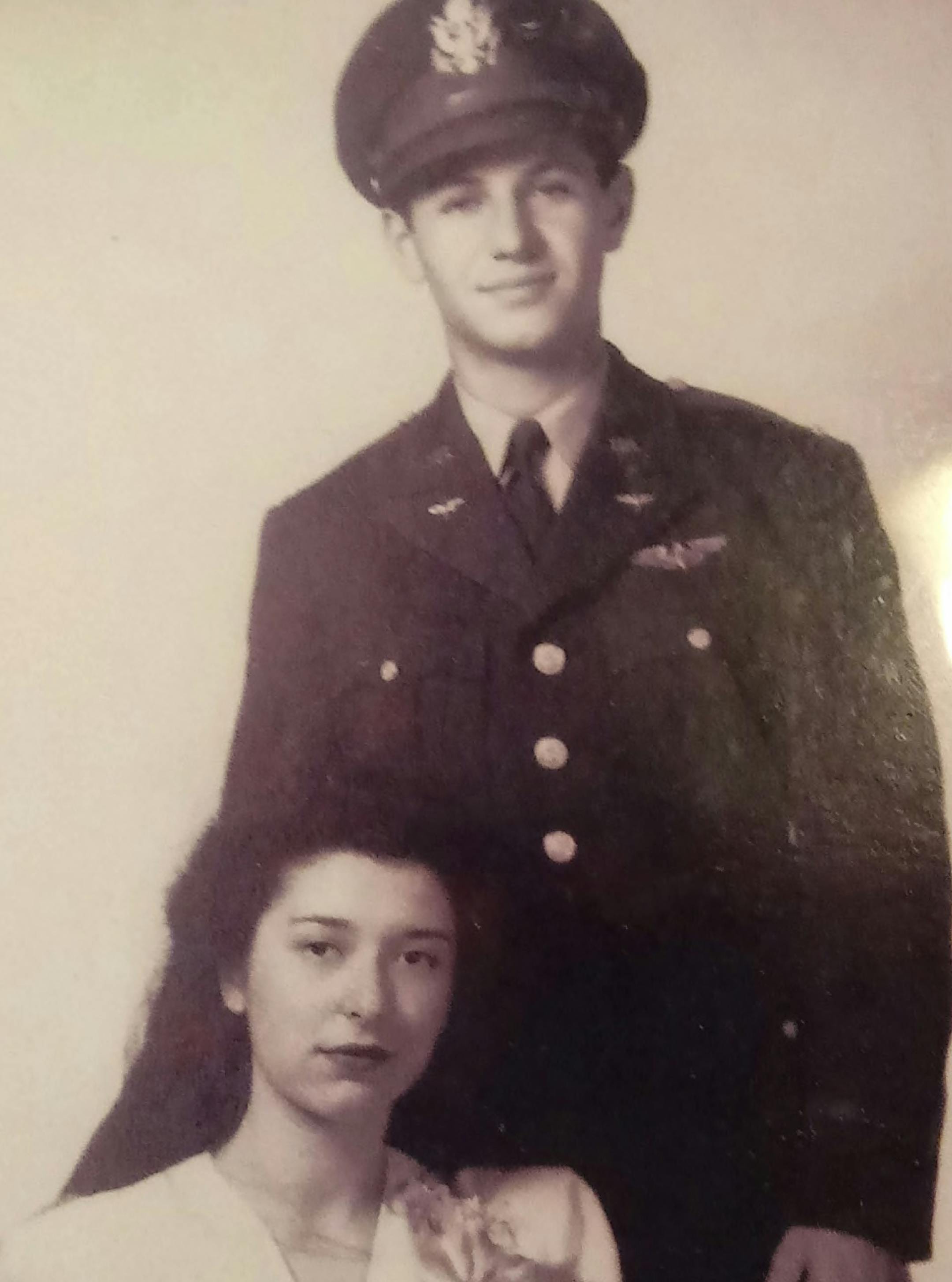
They met randomly the day after the day that would live in infamy — kindling a connection that would span 70 years, including nine dreadful early months when the Jewish bombardier was shot down over Germany.
Lorraine Blumenfeld and Marcus Hertz were strangers when they filed into Northrop auditorium on Dec. 8, 1941, joining thousands of fellow University of Minnesota students who came to hear President Franklin Roosevelt address Congress about Japan's attack on Pearl Harbor.
"That's the first we heard about the war," Lorraine, now 96, said from the Sholom Home in St. Paul.
She recalled bumping into an old friend that day nearly 78 years ago at Northrop whom she'd met at a Jewish girls' camp. That friend, sitting one row back, came to the speech with Hertz — her friend from St. Paul Central High School. Introductions were made.
Lorraine, 18, the daughter of a South St. Paul clothing store family, was studying dietetics. Hertz, 19, the son of a Latvian émigré who worked in the meatpacking business, was learning about animal husbandry.
Hertz enlisted in the Army Air Corps two months later and they were married March 6, 1944, in Florida before he shipped out to Europe with an "H" for Hebrew on his dog tags.
Hertz had no interest in serving in the Pacific. Word of how Nazis were treating Jews in Europe had started to trickle back to his synagogue in St. Paul and he wanted to get there to help.
People told him "are you crazy, you're Jewish, you're going to go to Germany in combat? They'll cut you in slices." But, he said in a 90-minute oral history recorded in 2005, "If anybody was going to get their picture on the front page of the St. Paul paper it would be a St. Paulite who was successful in hitting the target … at someplace that was strategic."


