Honkers away

The annual goose roundup is about to begin and will cull nearly 3,000 geese out of Twin Cities-area flocks.

June 4, 2009 at 3:14AM
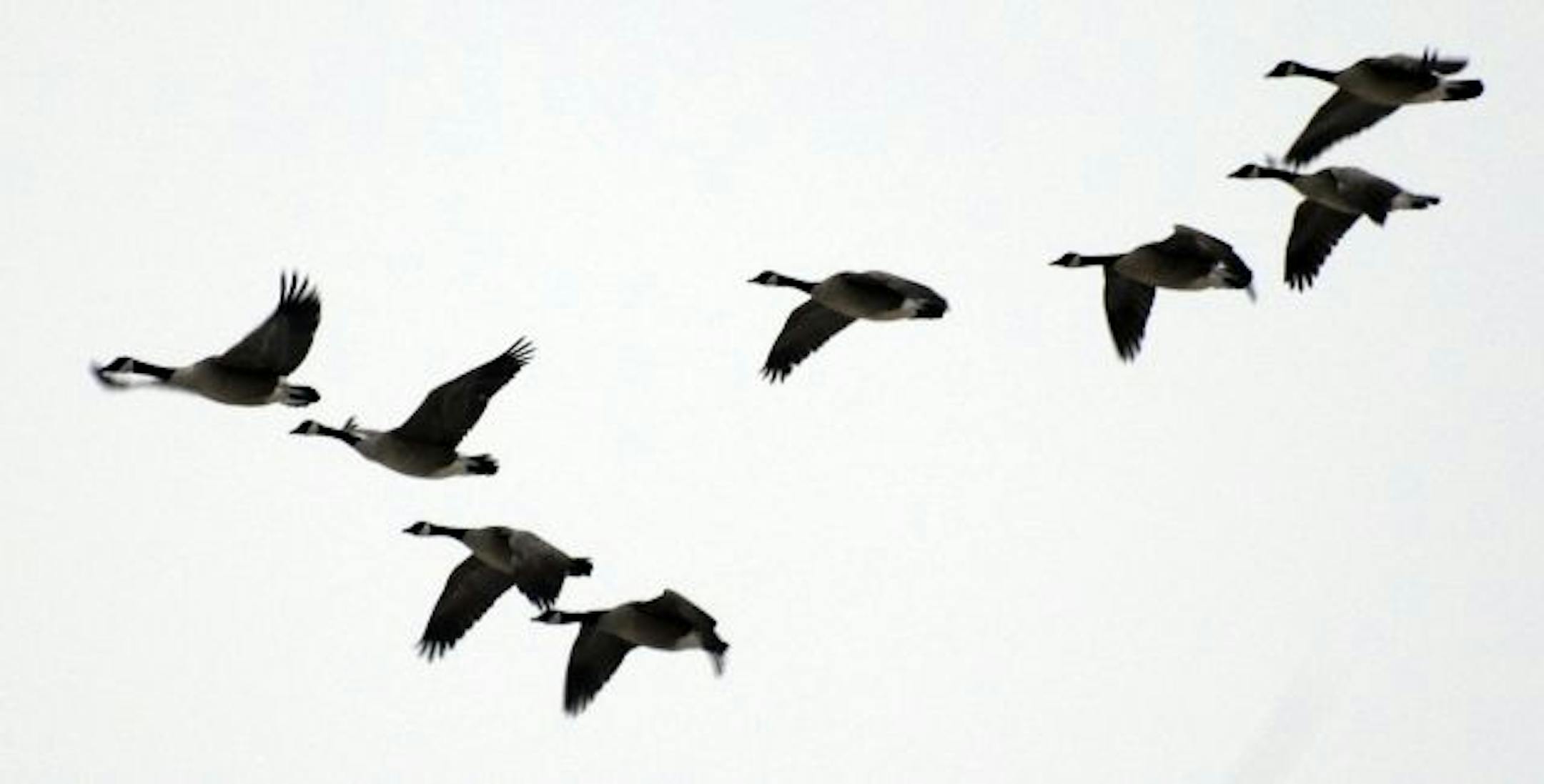
A flock of Canada geese in White Bear Lake. These geese were in an industrial area, but across the metro area, officials are preparing to remove geese that are located in picnic and swimming areas as well as on golf courses. The culling goes on year after year because the geese reproduce rapidly.
A flock of Canada geese in White Bear Lake. These geese were in an industrial area, but across the metro area, officials are preparing to remove geese that are located in picnic and swimming areas as well as on golf courses. The culling goes on year after year because the geese reproduce rapidly. (Star Tribune/The Minnesota Star Tribune)

Love 'em or loath 'em, geese spur strong sentiments this time of year as they congregate around area lakes and parks.

Mother goose and her goslings may be cute. But the adult birds can produce 2 pounds of feces per day, creating health concerns at parks, beaches and golf courses.

Hence, the annual geese roundup.

This year's culling of Canada geese is set to begin later this month and continue through mid-July. More than 50 area cities and park districts contract with one goose buster -- Tom Keefe, a former Department of Natural Resources biologist -- to remove the large grey birds from roughly 100 metro-area locations.

Last year, his team rounded up 2,752 geese: 879 adults and 1,873 goslings. But even that kind of harvest doesn't mean fewer geese year to year. After 20 years of whittling away at a population that peaked at 25,000 in 1994, the annual culling now maintains numbers at around 17,000. This year Keefe again expects to round up nearly 3,000 birds.

"The population in the metro would be ten-fold what it is now if there hadn't been a goose control program," said John Moriarty, natural resources manager for Ramsey County Parks.

The effort is not without its detractors. A national group called GeesePeace advocates targeting only eggs and not killing birds. But the people who operate parks and other places frequented by the birds are sold on Keefe's strategy.

How the roundup works
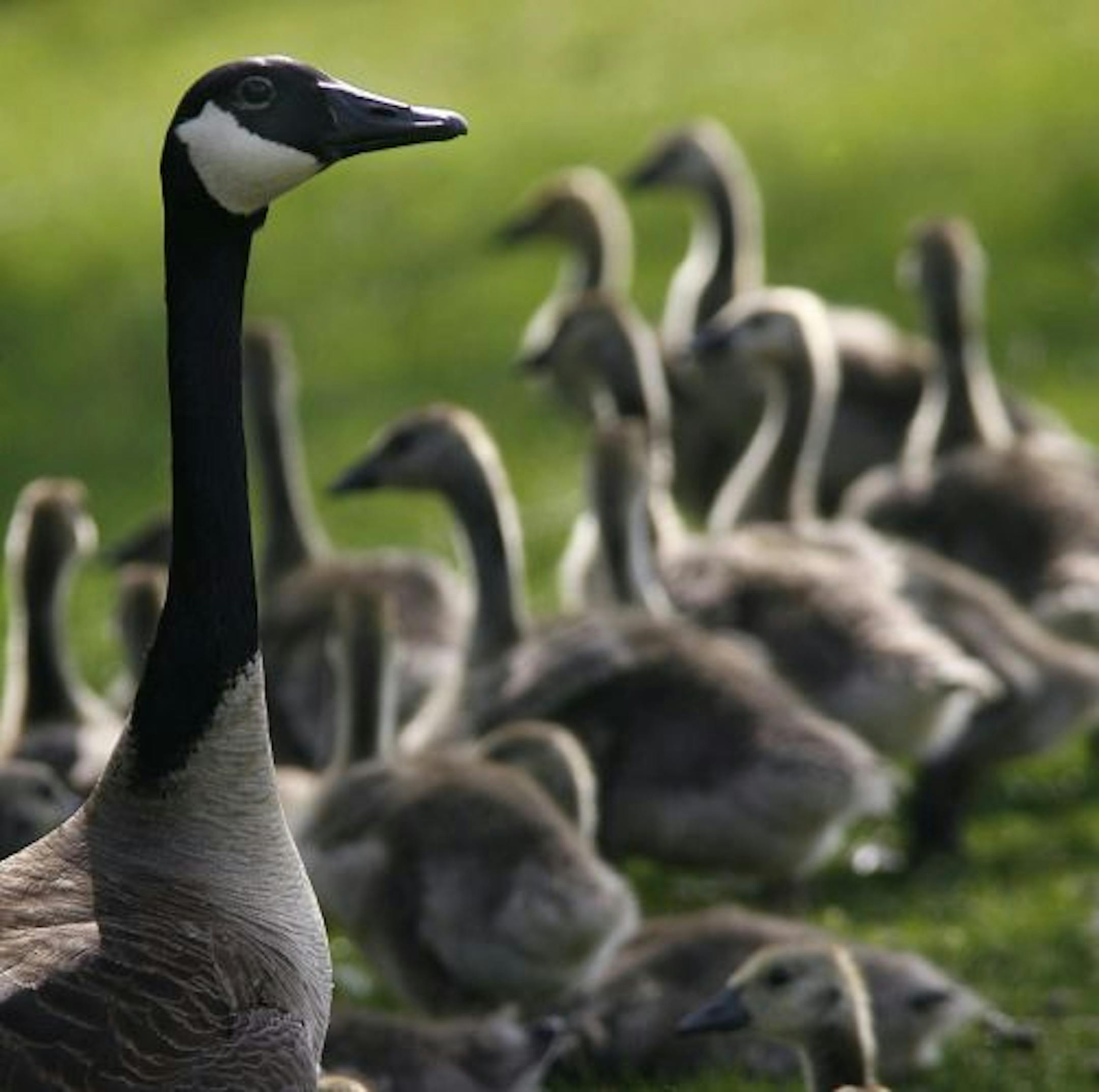
The geese are captured when adults lose their flight feathers and goslings have not yet learned to fly.

For years they were shipped to other states that welcomed them. But since 1996, when they were no longer wanted elsewhere, they have been used for food -- the adult birds processed and donated to local food shelves, the goslings' carcasses going to an animal research center where they are fed to wolves.

The DNR permits goose management and considers it an established routine, said Bryan Lueth, the agency's urban area wildlife manager.

"We are blessed with wetlands and a lot of water and a lot of mowed lawns down to the water's edge, which is exactly what geese are looking for. So we are creating habitat and dealing with the implications," Lueth said.

Corraling the geese

Keefe took on the touchy task of rounding up and killing the geese two years ago after the retirement of Jim Cooper, a former University of Minnesota professor who initiated the roundup in the 1980s. Keefe was a student of Cooper's at the U, where he graduated with a degree in wildlife management and went on to assist Cooper's program as an employee of the DNR for 27 years.

Keefe's firm, Canada Goose Management Co., uses a crew of six to eight to conduct the roundups. Though he loves Canada geese and spent several years raising them for reintroduction to North Dakota, Keefe said he reduces their numbers to keep them from becoming more of a nuisance. He winces when he hears people refer to them as "flying rats."

Keefe's team nets the geese into corrals, then walks them into holding pens and loads them onto trucks. The adults are processed at poultry plants.

The culling goes on year after year because the geese reproduce rapidly and the offspring return as adults to where they learned to fly. The cost of a roundup is approximately $1,200 per site, plus $15 for each adult goose and $6 for each gosling, to cover the cost of holding and processing the birds.

Three Rivers Park District spends about $5,000 a year on goose control and removes 100 to 200 geese a year from five or six sites in the regional parks in suburban Hennepin County, said wildlife manager Larry Gillette.

Another way

GeesePeace -- a Falls Church, Va., advocacy group for humane treatment of geese -- recommends using border collies to get flocks of geese to move on early in the season before they nest.

"We flush the birds into the water with the border collies, and the geese think they are safe. Then we bring the border collies into the lake ... " said David Feld, GeesePeace national program director. "We continue to do that until the birds leave the lake."

After geese have nested, GeesePeace recommends oiling or addling eggs in the nest, which prevents them from hatching. If eggs are simply broken or taken from a nest, the female may produce more.

A few cities and Three Rivers have a DNR permit to oil or addle eggs, Lueth said. Without a permit, state law protects bird nests and eggs.

Local governments are working on making parks less appealing to geese, said Marcia Holmberg, environmental coordinator for the Minneapolis Park Board. Geese repellent, herding dogs and tall grasses along shorelines are all used to move geese elsewhere.

In Eden Prairie, goose management efforts have led to an experiment with community volunteers who let their dogs chase migrating geese away from playing fields at Eden Lake Park.

"We have had to move soccer games off of those park fields because it's filthy," said Leslie Stovring, Eden Prairie's environmental coordinator. "It's too dirty. It's unsafe."

Last year the volunteers kept the fields open, she said. "If it's successful, we will expand it in the future."

Laurie Blake • 612-673-1711

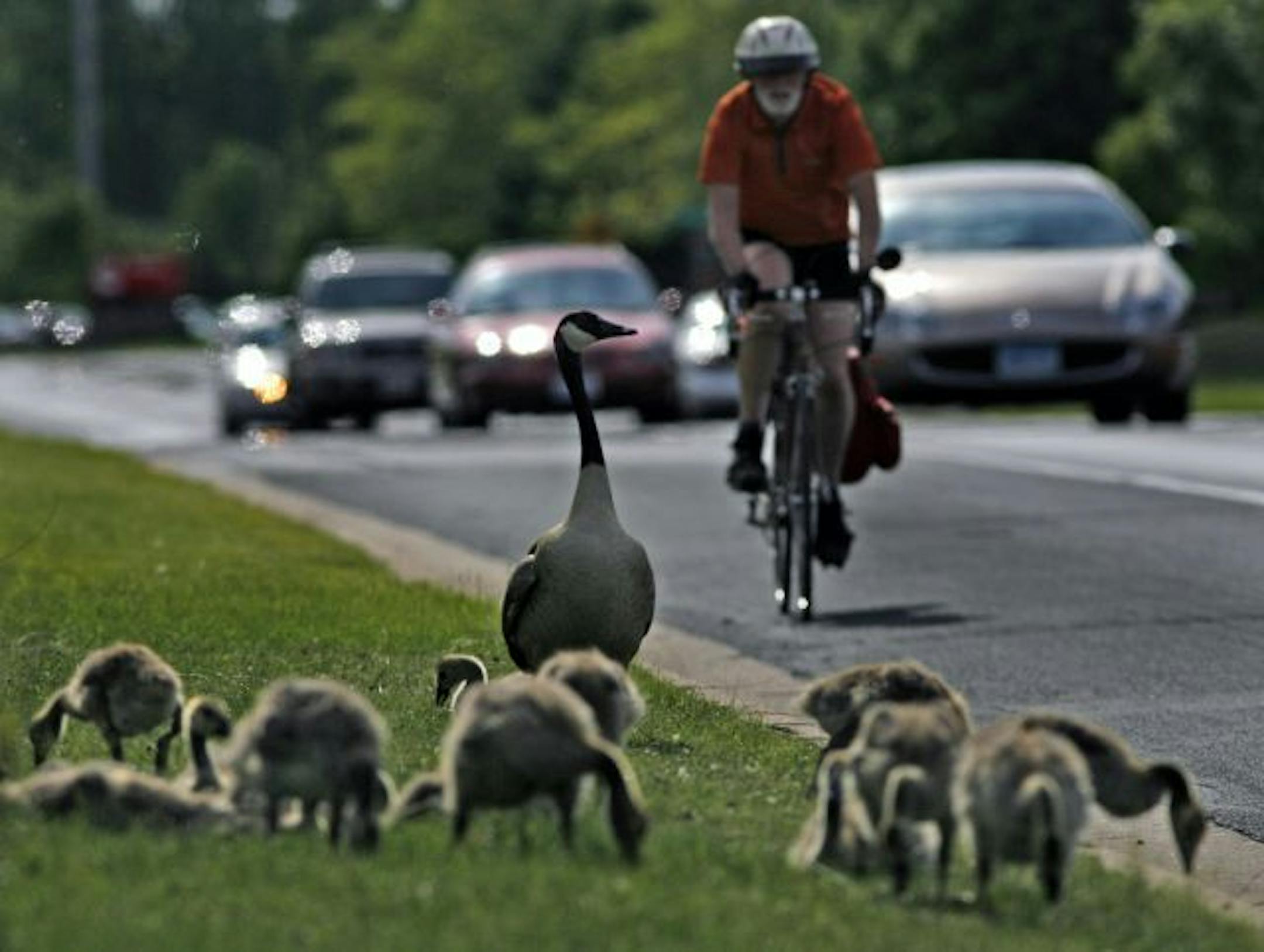
A Canada goose stood guard over goslings on Buerkle Road in White Bear Lake. Almost 3,000 geese will be rounded up and culled through mid-July, and then be donated to food shelves.
A Canada goose stood guard over goslings on Buerkle Road in White Bear Lake. Almost 3,000 geese will be rounded up and culled through mid-July, and then be donated to food shelves. (Star Tribune/The Minnesota Star Tribune)
Canada geese
Canada geese (Star Tribune/The Minnesota Star Tribune)
about the writer

about the writer

LAURIE BLAKE, Star Tribune