

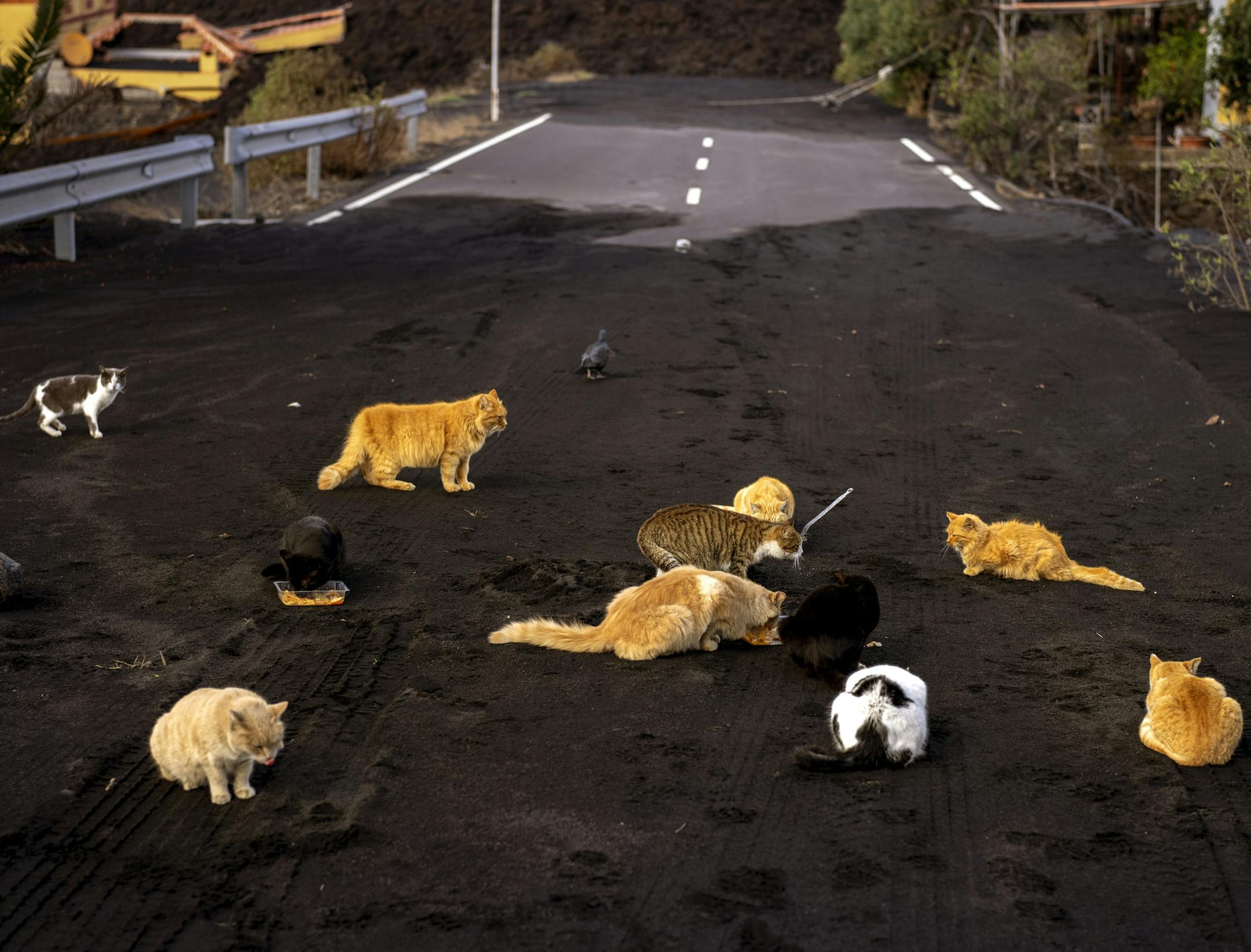
About 50 days after the Cumbre Vieja volcano in the Canary Islands erupted in September, unleashing lava flows and destroying homes, churches and stores, a beekeeper returned to one of the devastated villages to see what the volcano had done to his hives.
What he found shocked beekeepers and delighted scientists: Inside five hives that had been covered in volcanic ash were tens of thousands of bees, still alive and buzzing away.
Not only had the bees managed to survive the volcano's heat and noxious gases, but they also had avoided starvation by feeding off stores of honey inside the hive, said Antonio Quesada, a beekeeper in the Canary Islands and a spokesperson for the Gran Canaria Beekeepers Association.
Their survival provided a glimmer of good news for La Palma — a resort island in the Canary archipelago of Spain — which was devastated by the eruption, which continues to spew lava. The island of about 80,000 people employs more than 100 beekeepers who manage hives that hold millions of honeybees and who are vital workers in the local ecosystem and key economic players for those who sell honey throughout the region.
The bees' ability to stay alive in such dire conditions was also a reminder of their toughness, a characteristic that is often overlooked amid news stories about the very real threats they face from pesticides, parasites and the loss of habitat.
"It's incredible how such a tiny animal that has been around for hundreds of thousands of years can maintain that resilience, that ability to survive," Quesada said in an interview Wednesday.
The bees, known in the region as the Canary black bee, used propolis, a resinlike mixture sometimes known as bee glue, to seal themselves inside the hive, he said.
"They protected themselves from the gases," Quesada said. The bees also made sure to leave open a tiny pathway to the outside that they could later use to get out, he said.

