

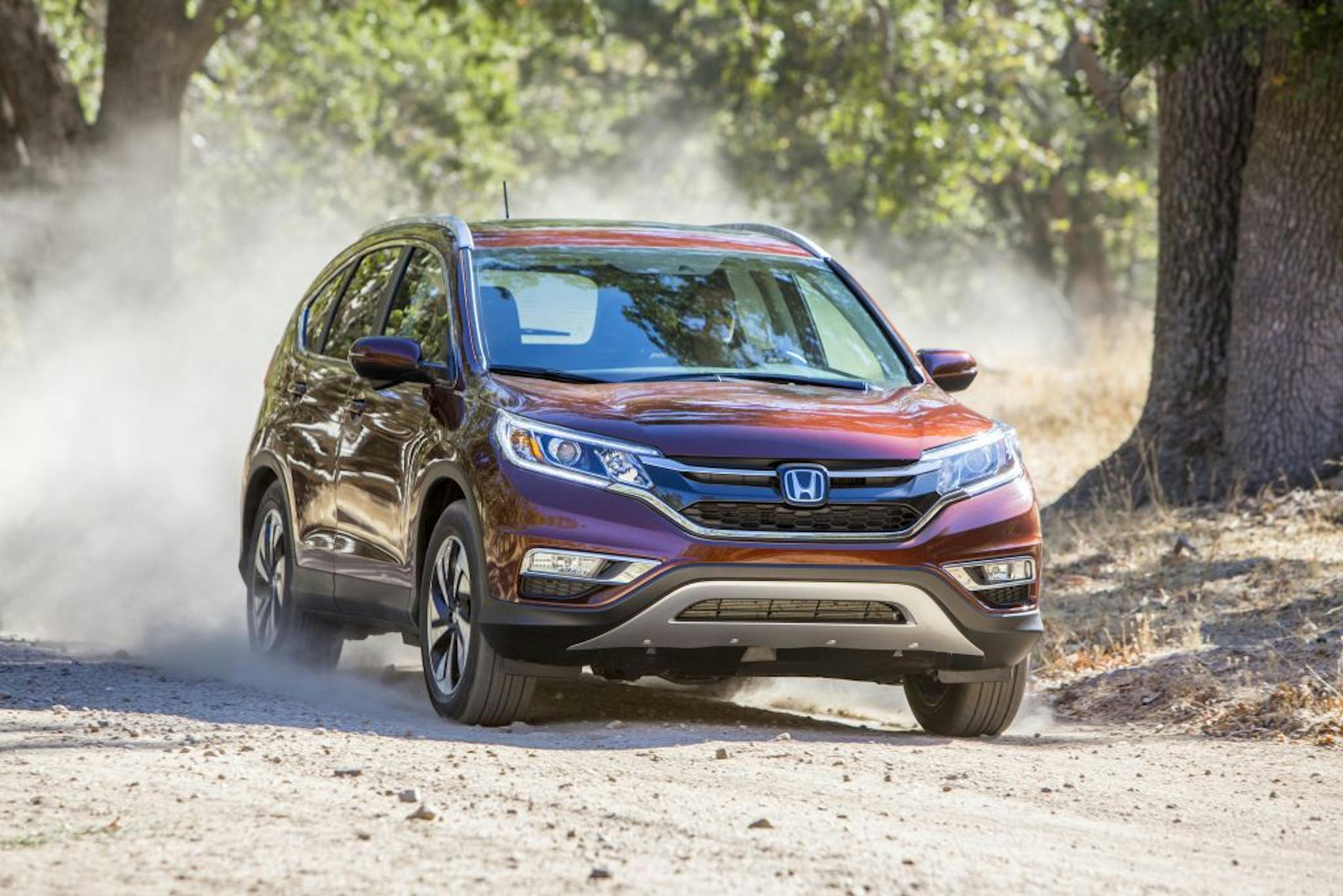
A new engine and transmission transform the 2015 Honda CR-V (I give it three out of four stars), returning the SUV to its accustomed place among the leaders. The new drivetrain generates 11 percent more torque and a whopping 3 mpg improvement in the combined city and highway fuel economy rating for an all-wheel-drive CR-V.
Combined with a roomy and practical interior, the changes rescue the latest CR-V from an unaccustomed mediocrity for what has become one of Honda's core models.
The CR-V competes with small and midsize five-passenger SUVs like the Chevrolet Equinox, Ford Escape, Hyundai Santa Fe Sport, Jeep Cherokee, Kia Sportage, Nissan Rogue and Toyota RAV4. That's a tough bunch, including some of the industry's most popular models. I'm not including the Dodge Journey because its four-cylinder model doesn't offer all-wheel drive, like all the others.
After a couple of years when the current CR-V trailed the pack, the changes for 2015 make Honda a strong competitor, as the SUV has been for most of its 17-year history.
CR-V prices start at $23,445 for a base front-wheel drive model. AWD starts at $24,695. All CR-Vs have the new drivetrain: a 185-horsepower 2.4-liter four-cylinder engine and continuously variable automatic transmission (CVT). I tested the top version, an AWD Touring with a power sunroof, power tailgate, heated front seats, leather upholstery, Bluetooth phone and audio compatibility, pre-collision alert and braking, lane keeping assist, USB port, AM/FM/Sirius radio, CD player and 18-inch tires. It stickered at $32,895. All prices exclude destination charges.
The CR-V's prices are competitive with similarly equipped SUVs from other automakers.
The new engine and transmission provide competent acceleration on the highway and around town. There's a bit of a lull as the CVT strives for the best ratio when you accelerate suddenly from 40 to 50 mph. Activating the Eco mode saves fuel and accurately recreates the experience of dragging an anchor behind the CR-V.
The CVT keeps the engine running at very low rpm to maximize fuel economy. That leads to a noticeable vibration when running at a steady speed from 30 to 50 mph. Road and wind noise drowned the engine out at higher speeds.


