

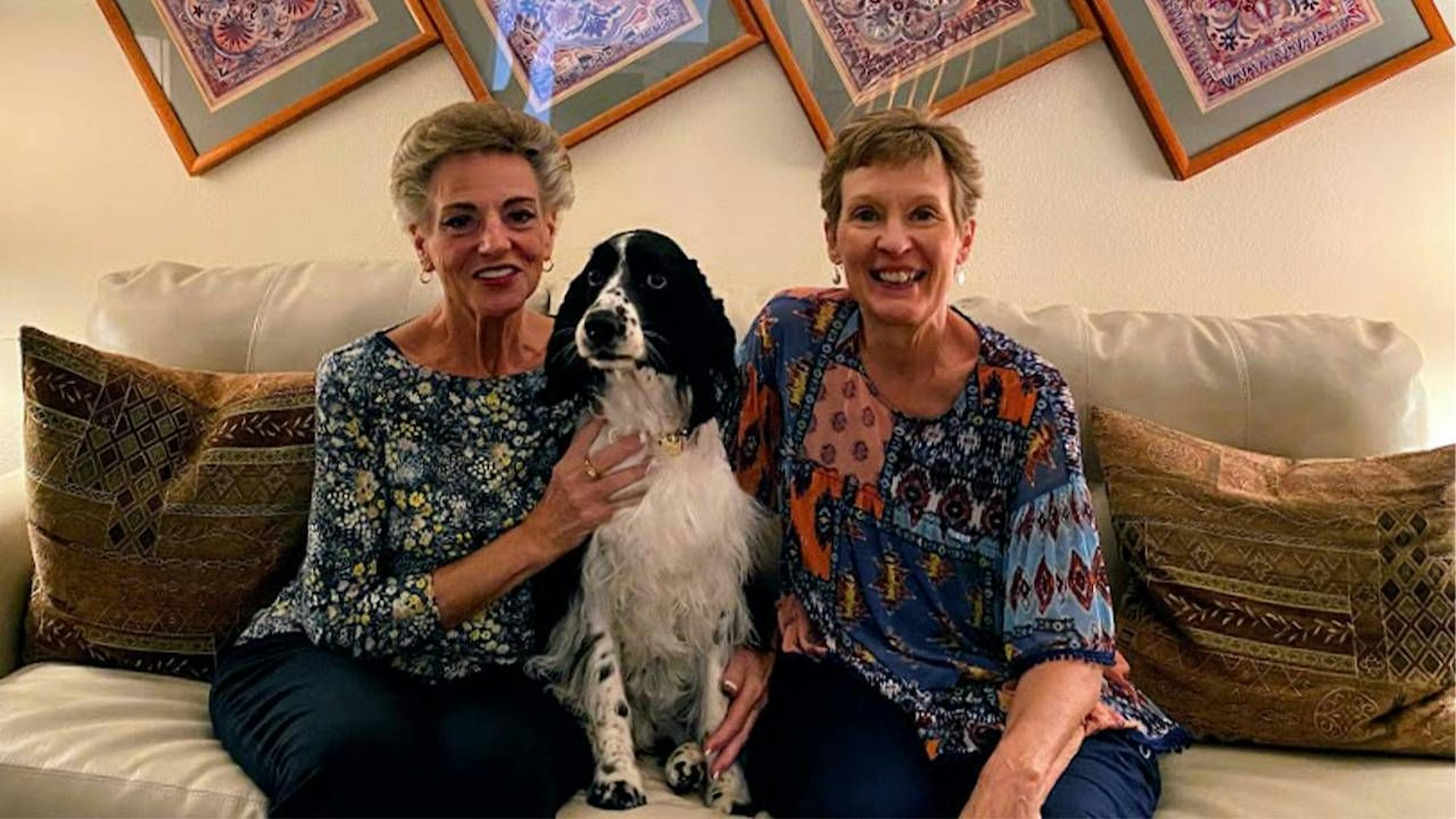
Sue Ronnenkamp, 64, worked in health care and aging services for over 40 years. Her last job was with a startup company focused on the Medicare Plus market in Pennsylvania, but she lost that position in a layoff.
Ronnenkamp made the decision to shift to homesharing when she decided to leave Pennsylvania and move to Colorado in 2018.
"[Homesharing] allowed me to move far less stuff and make my relocation less expensive. I also believed it would be a great way to make the transition to a new city and state (my fifth one)," she said. "Moving alone is never easy because you have to establish yourself all over again and build new relationships."
Ronnenkamp knew about Silvernest, a homesharing service, and posted a profile before leaving Pennsylvania, ultimately finding an opportunity in Littleton, a suburb of Denver.
"This has turned out so perfectly living here with my housemate Sue Larsen, her dog Tyndall, and her cat Emily. I love and cherish my personal living space, feel so comfortable here in Sue's home, love the neighborhood, have become a part of her family, have connected with great people and services here in Littleton, and so much more," Ronnenkamp added.
Increased interest in homesharing
There has been a significant spike in demand for homesharing that is being triggered by a perfect storm of events.
COVID-19 made loneliness and social isolation very real for older adults, rents are skyrocketing and forcing many to look for alternatives, and rising costs of living are especially affecting older homeowners, particularly since many are on fixed incomes, according to Riley Gibson, president of Silvernest.
In 2018, the Harvard Joint Center for Housing Studies pointed to homesharing as a growing phenomenon, noting that 879,000 Americans over 65 were living with unrelated roommates. The center also presented data showing a dramatic increase in homesharing between 2006 and 2016, with an 88% rise in the number of adults in these arrangements.

