

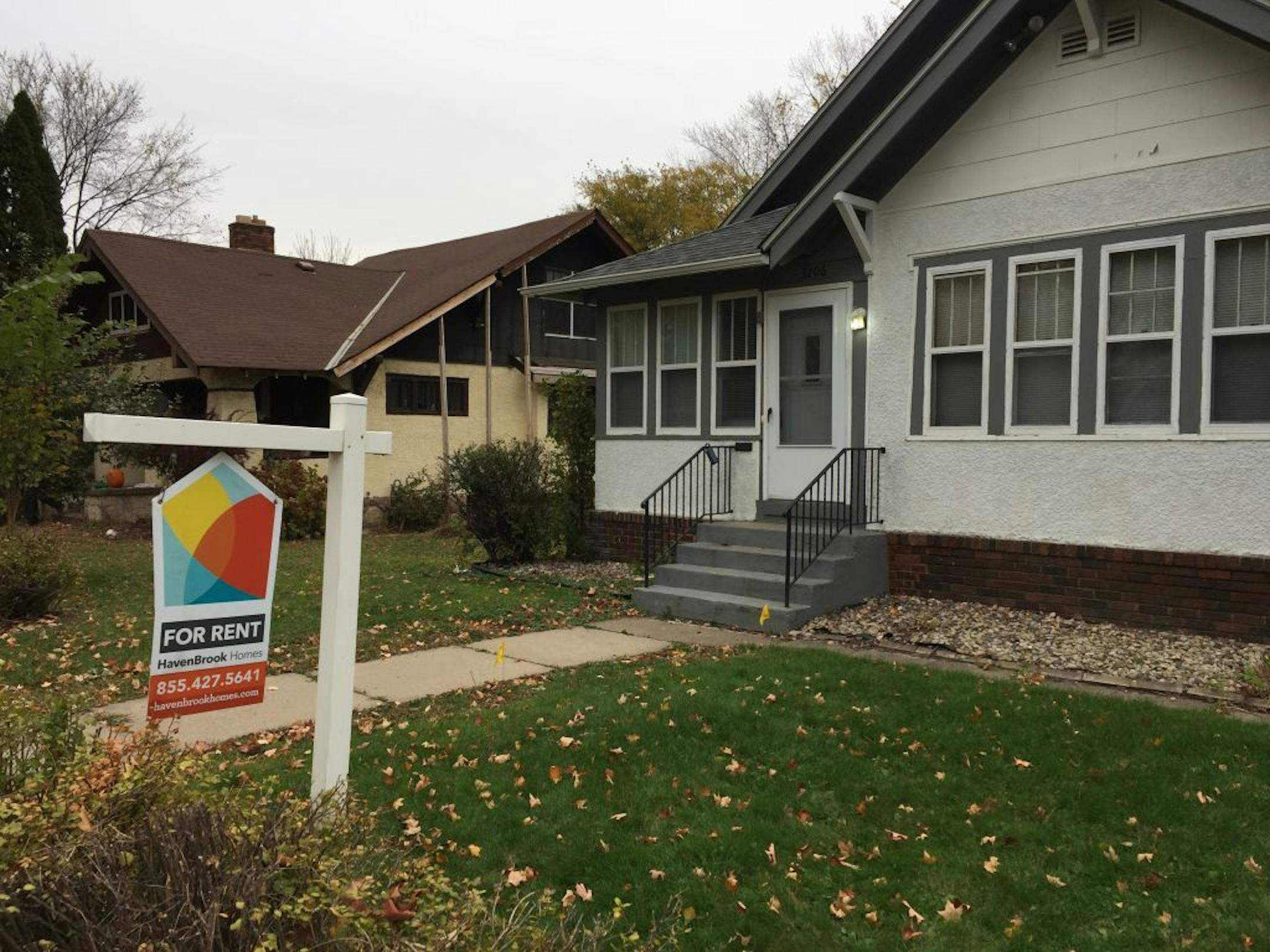
A Georgia company has snapped up about 400 homes mostly in low-income neighborhoods across the Twin Cities during the last three years, renting them out to benefit of one of the nation's largest investment firms.
HavenBrook Homes now owns more rental properties in north Minneapolis than any other private entity, based on a Star Tribune analysis of rental records, nearly three years after making its first Twin Cities purchase. Some North Side blocks are peppered with three or four HavenBrook houses. The highest concentrations are in Minneapolis' Camden and Near North communities and the Payne-Phalen neighborhood of St. Paul.
Real estate agent Jean Bain said it appeared the company zeroed in on the Twin Cities as an undervalued area, then set metrics for which homes to buy.
"They didn't know Camden from Edina," said Bain, consultant of the Northside Home Fund, a public-private partnership that tracks north Minneapolis housing. "But that's where they ended up and they did end up with a lot."
HavenBrook's CEO, Pat Whelan, wrote in an e-mail that "as a policy [we] have no comment for a pending story." Their local director of operations, Scott Beck, did not return several calls seeking comment.
Several neighborhood advocates said they wish those homes could have gone to first-time homeowners. HavenBrook's average Minneapolis purchase price was just $102,000, and only half the properties had active rental licenses. Local leaders are now watching HavenBrook closely, since Bain said it is unprecedented for an out-of-state entity to own so many homes in the city.
"It concerns me that at some point they'll reach a point where they'll say, 'Let's get out of this' and we'll have 200 homes for sale," said Council President Barb Johnson, who represents north Minneapolis.
Investors from Wall Street and other places have poured money into single-family rental property across the country in the wake of the housing crisis, said Daren Blomquist, senior vice president at California-based Attom Data Solutions, which tracks the industry. They typically buy up the distressed properties, he said, and then "rent them out to this growing group of people who are now renters who used to be homeowners."


