

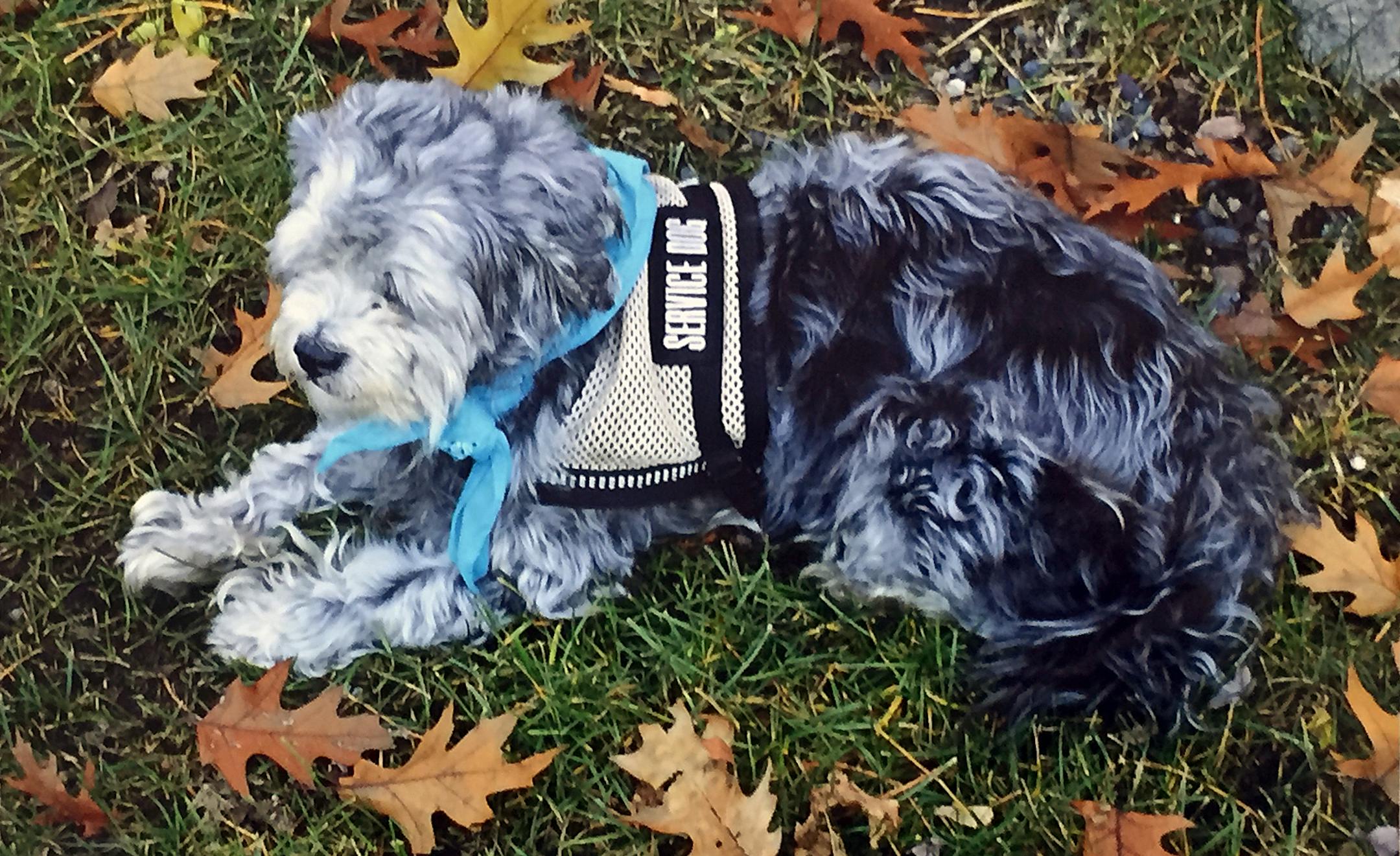
Mike Heath spreads a dozen tattered fliers across the table of an Arby's restaurant where he spends a lot of time, mostly because time is all he has.
The fliers are not printed or photocopied. Each one is written in pencil, each message slightly different. That's because Heath is now homeless and someone took his laptop computer — one of the few things he had left — from one of the cheap motels where he usually spends the night. Heath, 69, said his memory has gotten bad as he's gotten older, and he's become too trusting.
His laptop isn't the only thing gone missing.
"SERVICE DOG STOLEN," says one flier. "Name: Baby. He is black and gray, cute and calm, $200 reward." Heath doesn't know exactly how he will come up with the $200 if someone finds Baby. His disability check should run out any day, but he knows a guy who just might help, if only he can find his dog — his best friend and constant companion for the past 10 years.
"He's everything," said Heath. "Please help me find him."
I met Heath about three years ago, after he sued a fast-food restaurant that would no longer let Baby, a service dog validated by a doctor and the Disability Rights Center, into the premise. Heath got a small settlement, for which he agreed to stay away from the place. When he went to the drive-through in his car, thinking the agreement prevented him only from going inside, police were called and Heath was cited for criminal trespass.
I wrote about the case. The day the column ran, all charges were dropped.
Heath, a Vietnam veteran, said he suffers from post-traumatic stress disorder. He has episodes in which he doesn't know where he is or has flashbacks and becomes unstable and confused. He has a letter from his doctor recommending he be allowed into establishments with the dog because of his brain injury.


