

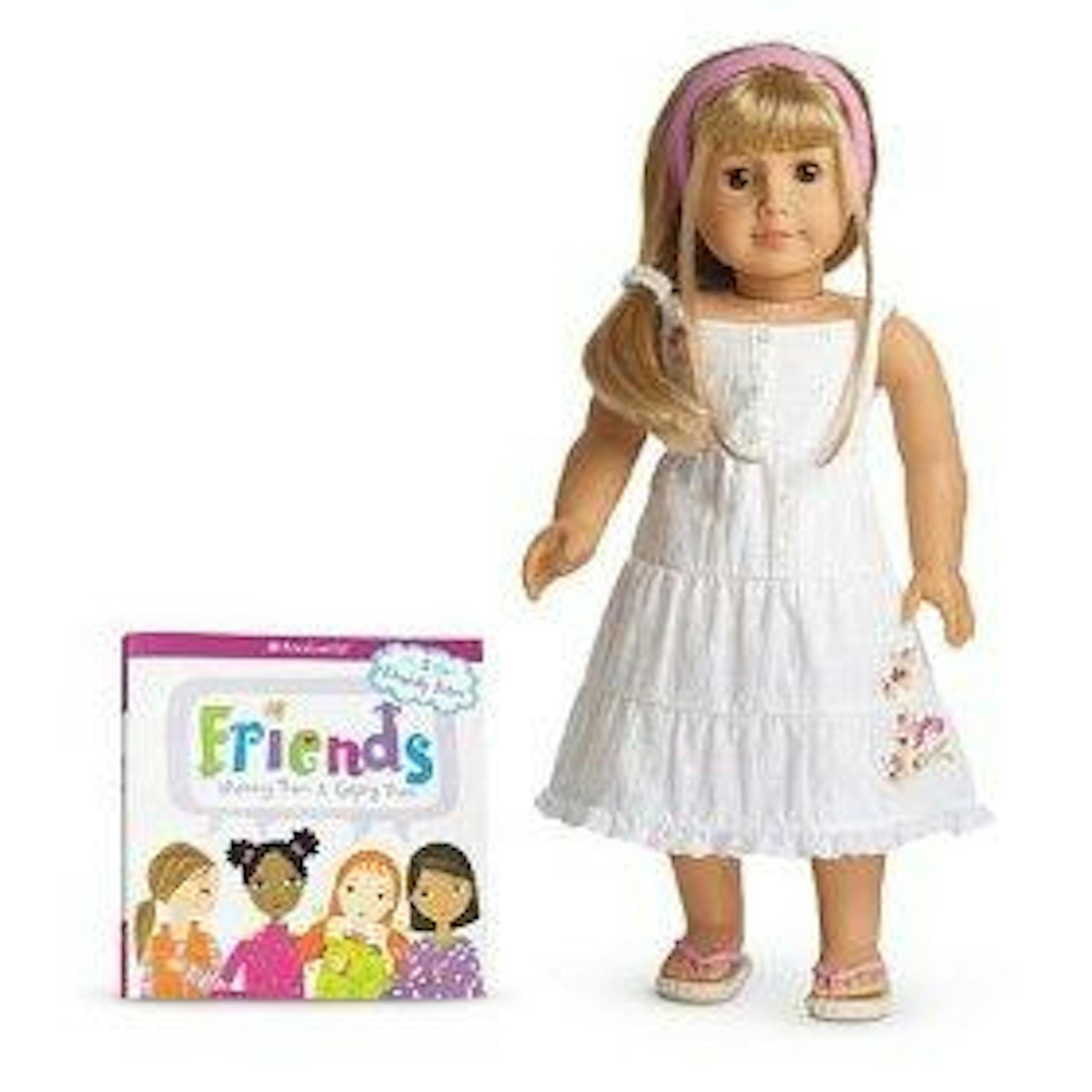
People on each coast have been blogging about the new homeless American Girl doll. New York Post columnist Andrea Peyser was the first to write about Gwen. In her column, she says:
For$95 -- more than your average homeless person would dream of spendingon a rather mediocre baby substitute -- Gwen Thompson can be yours. Amixed message if ever there was one.
In San Francisco, Amy Graff asks:
IsMattel presenting an important social issue to children bymanufacturing a doll who faces real, present day challenges? Or is thecompany comodifying and prettifying the issue by slapping on a BarbieBand Aid? And how can you charge nearly $100 for a doll that's supposedto promote compassion for homeless people?
I am goingto take a stab at this from the Midwest. If you are raising children inNew York or San Francisco, it is required in your parenting to explainwhy some people are sitting on the ground and you aren't. I make thispoint because Gwen probablyisn't your only exposure to homelessness. In Minnesota, this issomewhat different. Even though 2,726 children age 17 and youngerexperienced homelessness with their parents in Minnesota in 2006, wedon't have the problems that many cities do.
Even if ourchildren saw as much despair as children do in other cities, toysprobably aren't the best way to learn about current social problems.This makes me wonder why every single American Girl doll EXCEPT forGwen and her upper middle class friend Chrissa (who is girl of the year2009), are HISTORICAL figures?
Why does this matter? All theother dolls have historically accurate happy endings. Think of thepropaganda for their 1854 doll.
KirstenLarson must leave all she's ever known to come with her family to theNew World. They settle on the Minnesota frontier, where people don'tspeak her language or understand her traditions. Yet in time, Kirstendiscovers the richness of her new land—and the true meaning of home.
Weall know that if you are a Larson in Minnesota, things have probablyworked out for you. (Can't wait to read the comments I get for thatone).
The issue that I have with Gwen is that her story has ahappy ending that doesn't truly reflect today's homeless population.When you read about Gwen you learn that her father walked out on herand her mom. The mother and daughter lose their house, spend timeliving in the car, and bed down at a homeless shelter. But theyeventually get their lives back together and move into an apartment.
Onpage 113 of the Chrissa book, Gwen's mom says, "I'd park so that we'dwake up near a wayside rest area or a restaurant--somewhere where wecould use the sink for washing up--and then I'd go to work and pretendthat life was just as it had always been...I was too ashamed to ask forhelp. Finally, when all seemed lost, we found help through the caringstaff at Sunrise House. Without Sunrise House, I don't know where we'dbe today."
After you read that to your child, they might ask,"What if Sunrise House is filled?" Do you explain that everyone doesn'tget their lives back together and move into an apartment? Do you saythat all homelessness will go away in 2010? That homelessness is a"limited edition" like the Gwen doll, which is only slated to beavailable for a few more months?
If we read our children bedtimestories about homeless people who quickly get jobs and apartments atthis particular economic moment; it's both a story of triumph, andpossibly a fairy tale. The American Girl Company begs to differ andissued this statement: "Our singular goal with these stories is to helpgirls find their inner star by becoming kind, compassionate, and lovingpeople who make a positive and meaningful difference in the worldaround them."
That is easily done. If your child is old enough for a Gwen doll, he/she can go to Sharing and Caring Handsin Minneapolis. That's a really good place to be a kind, compassionate,loving person who could make a positive and meaningful difference. Andwhile you're there, they could probably use $95.
Homeless Doll Doesn't Need a Home
Even if our children saw as much despair as children do in other cities, toys probably aren't the best way to learn about current social problems. This makes me wonder why every single American Girl doll EXCEPT for Gwen and her upper middle class friend Chrissa (who is girl of the year 2009), are HISTORICAL figures?
September 30, 2009 at 5:34AM

about the writer
sischolar

It’s too soon to tell how much the immigration crackdown is to blame.
