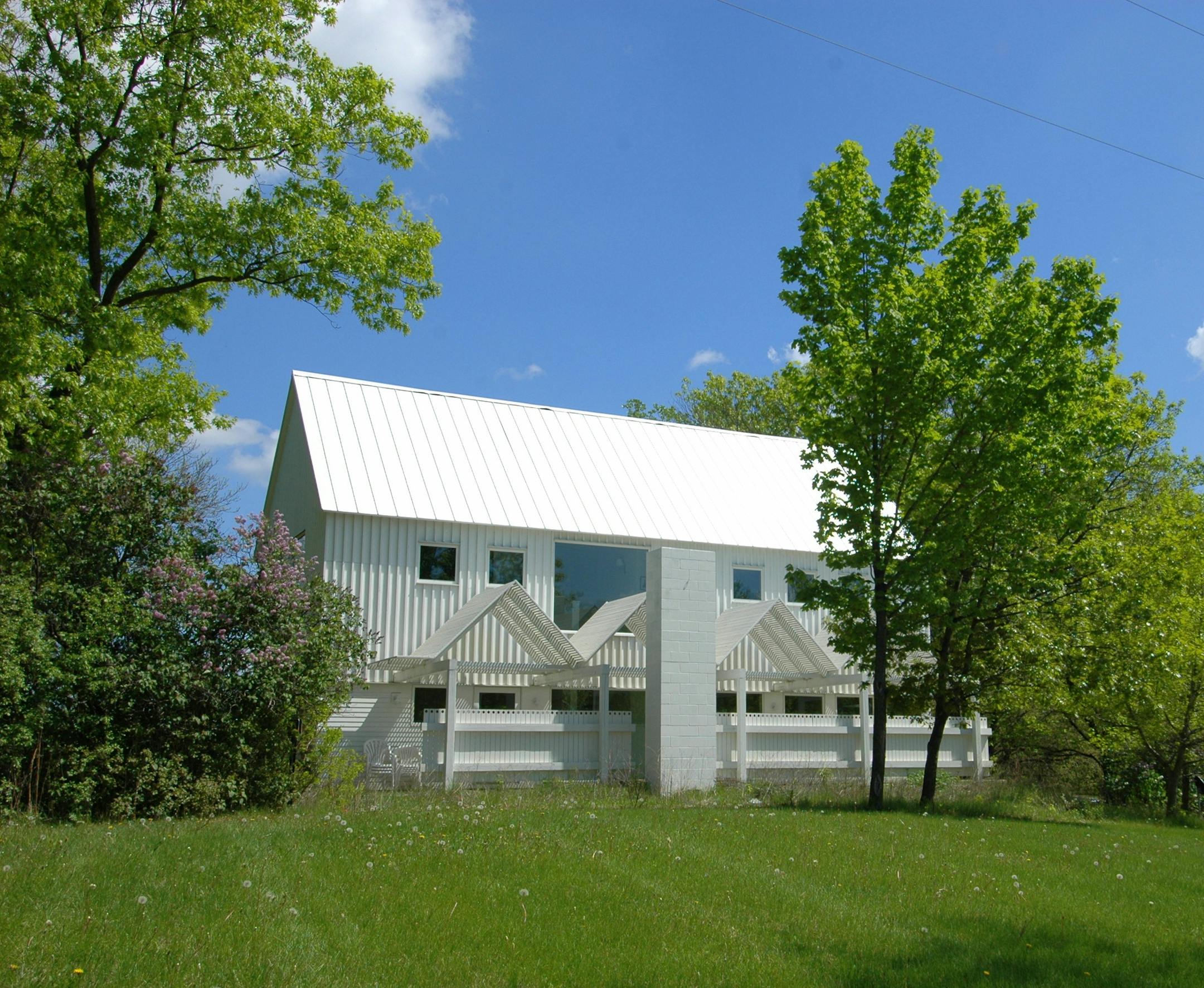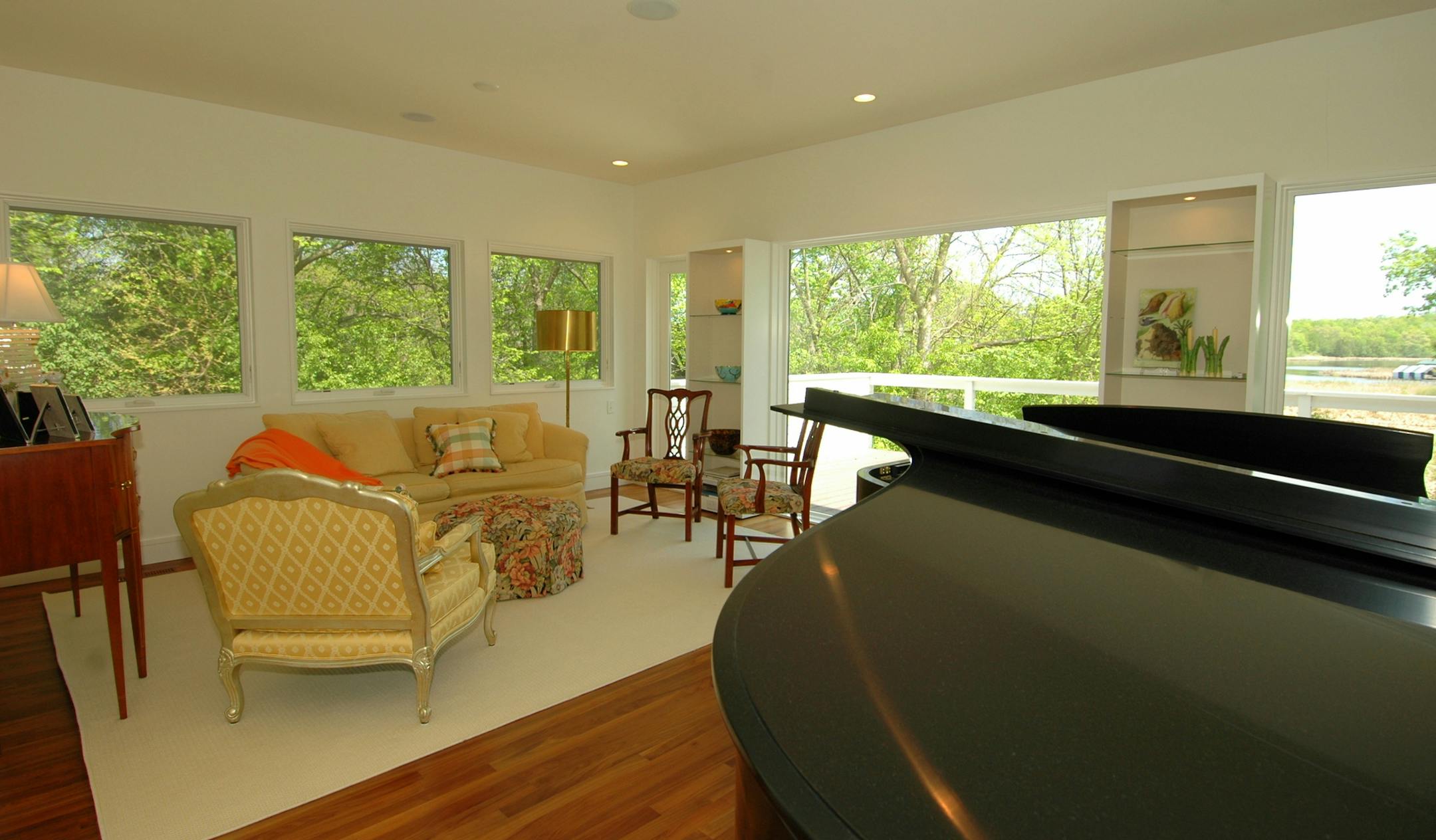
There was a two-year waiting list when Rebecca Jorgenson Sundquist and her husband, Jerry, first approached architect David Salmela about designing a home for them. The couple had admired his houses in the Duluth area. "We love the symmetry, the Scandinavian nature and all the light," Jorgenson Sundquist said.
So they were willing to wait. But in the meantime, they asked Salmela to look at their site.
That site, 3.45 acres in Deephaven adjacent to the historic Cottagewood community, overlooked a marsh and beyond that, Lake Minnetonka. It was a beautiful natural setting, with the potential for stunning views of Carson's Bay, but also posed design challenges, including strict setback requirements.
"One of the key things an architect brings to the project is siting, and David Salmela did a brilliant job," said Jorgenson Sundquist of the house Salmela ultimately designed for them. "He really took advantage of the lake view. As you walk into the bedroom, all the eastern exposure is looking at the lake. There's always natural light, and incredible views in the morning."
The house was completed in 2008, the same year Salmela was awarded his peers' highest honor, the AIA Minnesota (American Institute of Architects) Gold Medal for his body of work and contributions to architecture. "Salmela's work is distinctively Minnesotan, and he has done so many projects that are so good," explained the selection committee.
Three years later, the Jorgenson Sundquist house was featured in a book about Salmela, "The Invisible Element of Place: The Architecture of David Salmela," by Thomas Fisher, dean of the University of Minnesota's School of Design.
In the book, Salmela described the design evolution of the couple's project. His original design called for a tall, gable-roofed music room and flat-roofed master-bedroom suite in a one-story wing adjacent to the main house.
But the project ultimately was scaled down, for cost and sustainability reasons, into a more simplified form with 2,800 finished square feet. "It's possible to live with less and still have a very nice house that exceeds people's expectations," Salmela explained in the book. "This is what architects do. We don't try to win awards; we solve real problems."