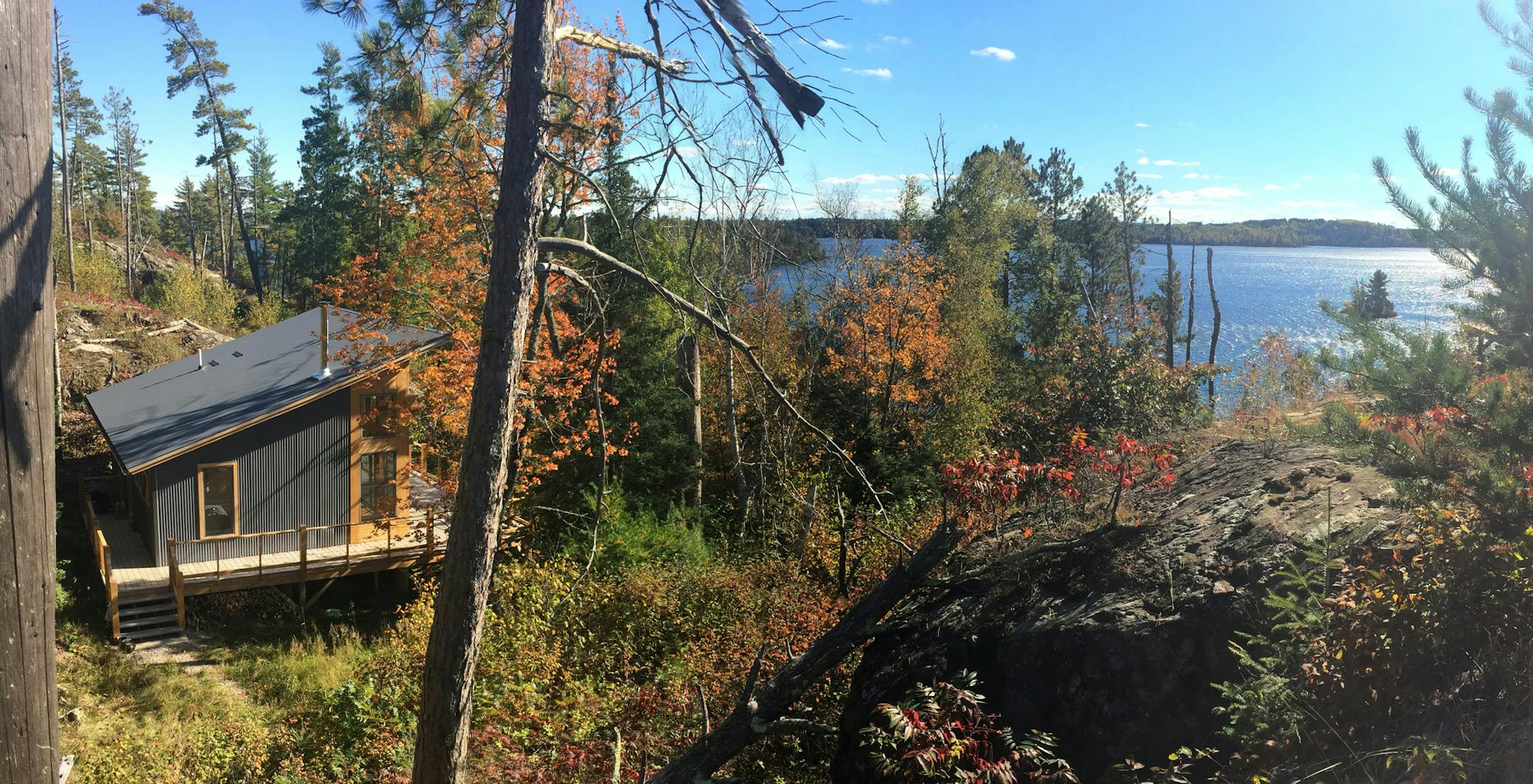
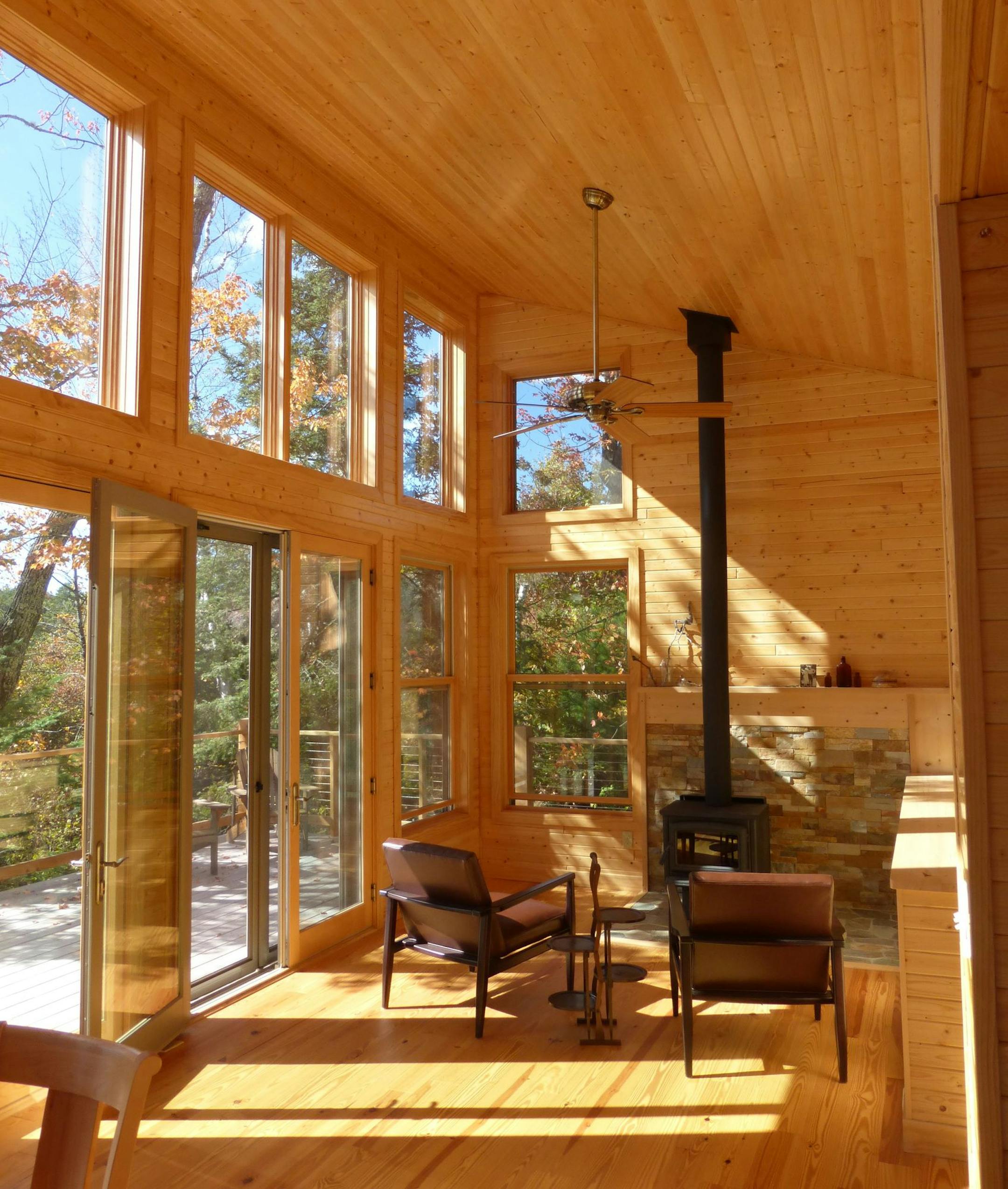
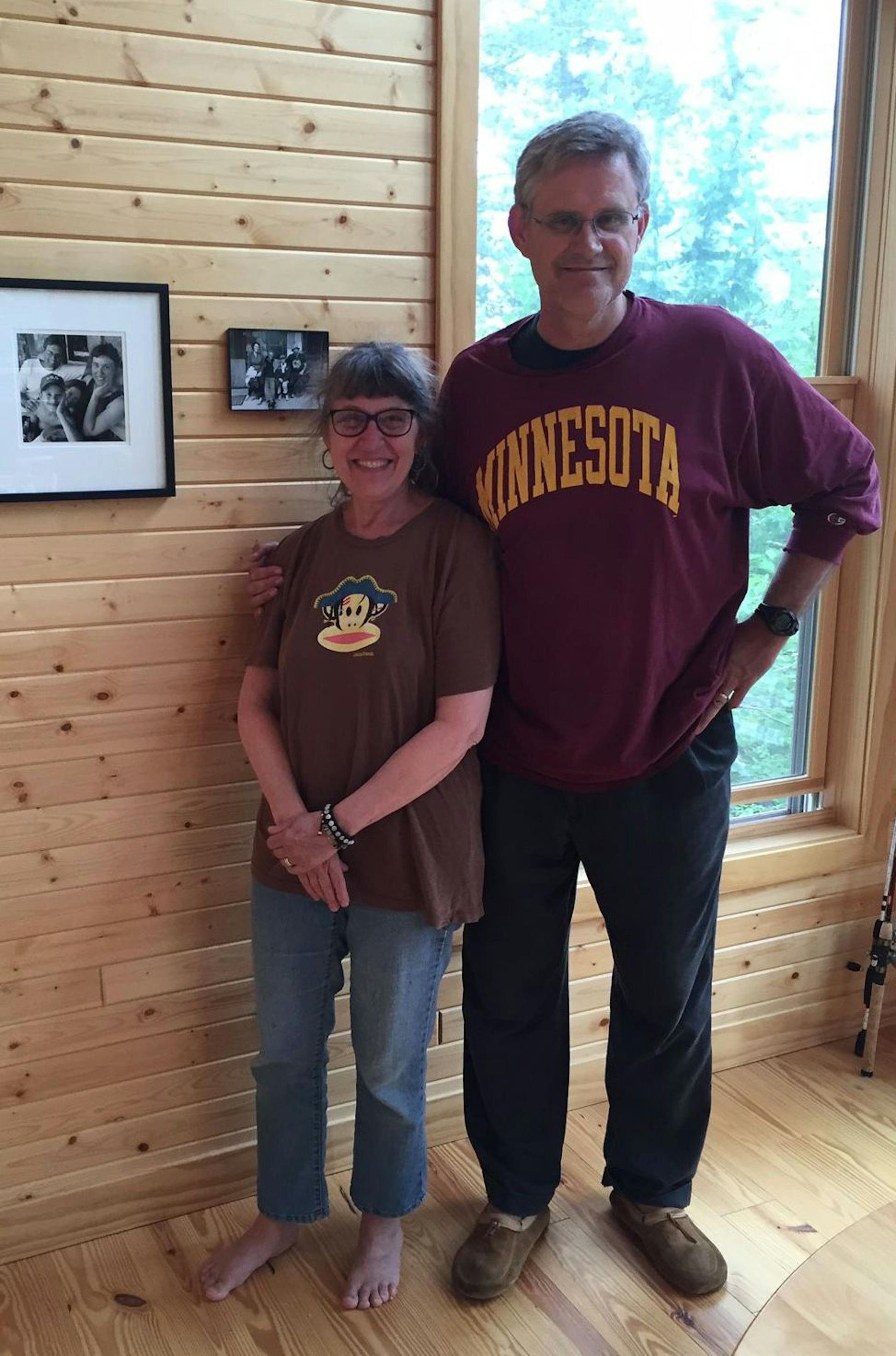
Paul Engh and Claudia Kraehling never planned to build a cabin on their remote property on Burntside Lake near Ely in northern Minnesota. Kraehling had a lifelong connection to the area, including the acreage on Ripple Island that she inherited from her mother, Natalie Kraehling. But it took a forest fire and a windstorm to push the couple into finally creating their dream island dwelling.
Kraehling and her sisters grew up vacationing at Camp Van Vac, which was founded by her mother's uncle Van Vacton Harris in 1917. The rustic resort offered 25 log and stone cabins on Burntside Lake. "When I was a kid, it was a magical time," she said. As a teen, she worked at the resort store. After Kraehling and Engh were married, they spent summers in the area with their two children.
In 2002, Kraehling's father, Bud Kraehling, the former WCCO-TV weatherman, divided his estate. He gave Claudia 9 acres on Ripple Island, which her mother had invested in decades before she died in 1998.
The property was mostly rocky terrain and covered a fourth of the island — but it was right across the lake from Camp Van Vac. Although Bud and Natalie Kraehling never built a cabin on the island, they often boated over from the camp to pick blueberries.
"I was happy to carry on my mother's love for the Burntside Lake area," said Kraehling.
For the first few summers, Kraehling and Engh and their two young children simply camped on a wood tent platform that they built atop a rocky bluff surrounded by century-old white pines. Every other weekend, they roughed it with only an outhouse, hauling in food and water.
In 2005, a Ripple Island resident forgot to extinguish a campfire, and almost all of the trees on the couple's acreage were destroyed by a forest fire. Kraehling and Engh raced north to survey the still-smoldering destruction. "I was devastated," recalled Kraehling. "I wouldn't be alive to see those trees again."
So they built a new tent platform and outdoor "biffy" to replace the old ones, which were destroyed. But this time they erected a permanent yurt made of canvas so they wouldn't have to assemble and disassemble a tent on trips to the lake. It wasn't the perfect solution — fewer trees meant less shade, and the yurt was uncomfortably hot in the summer.