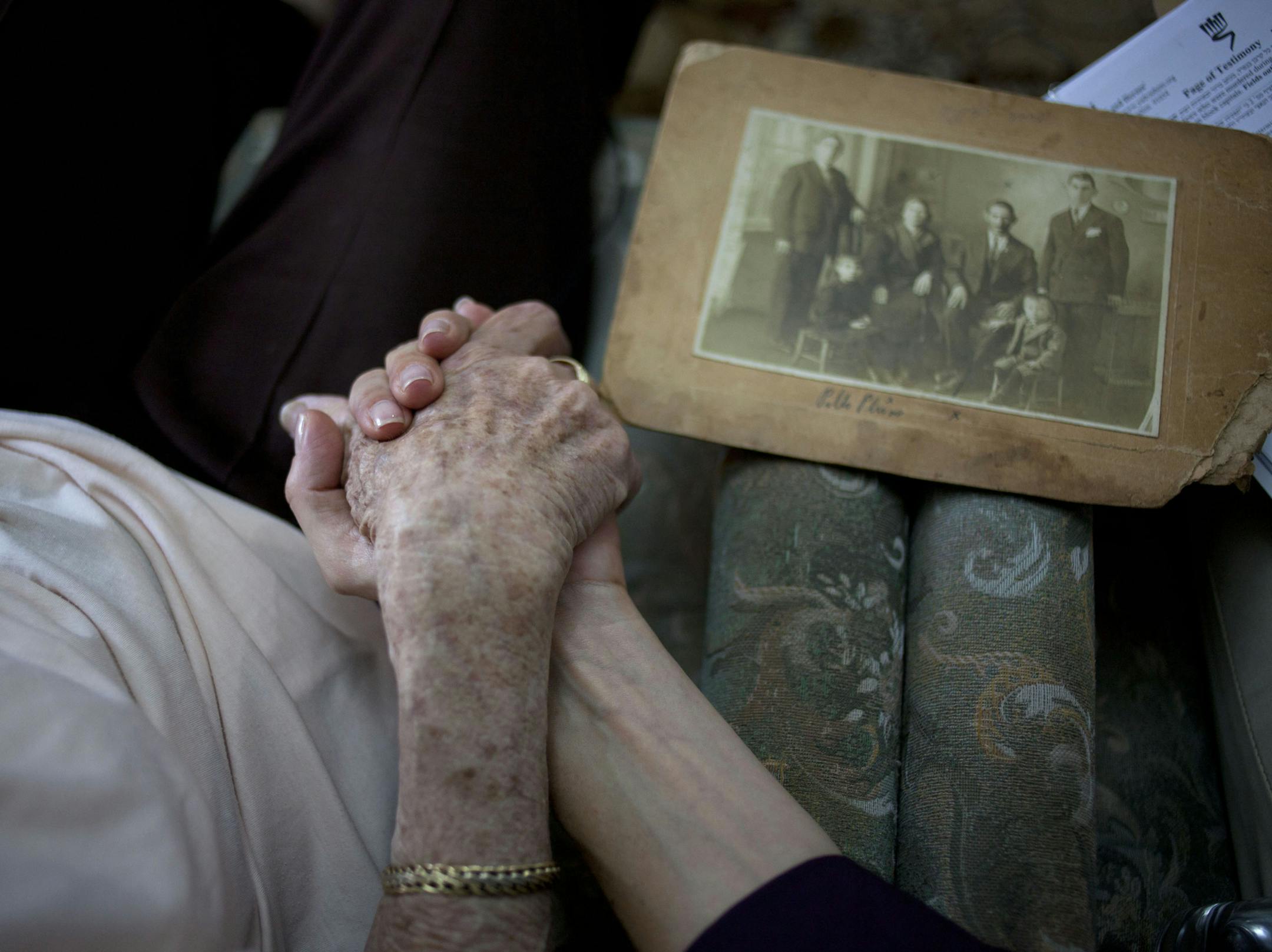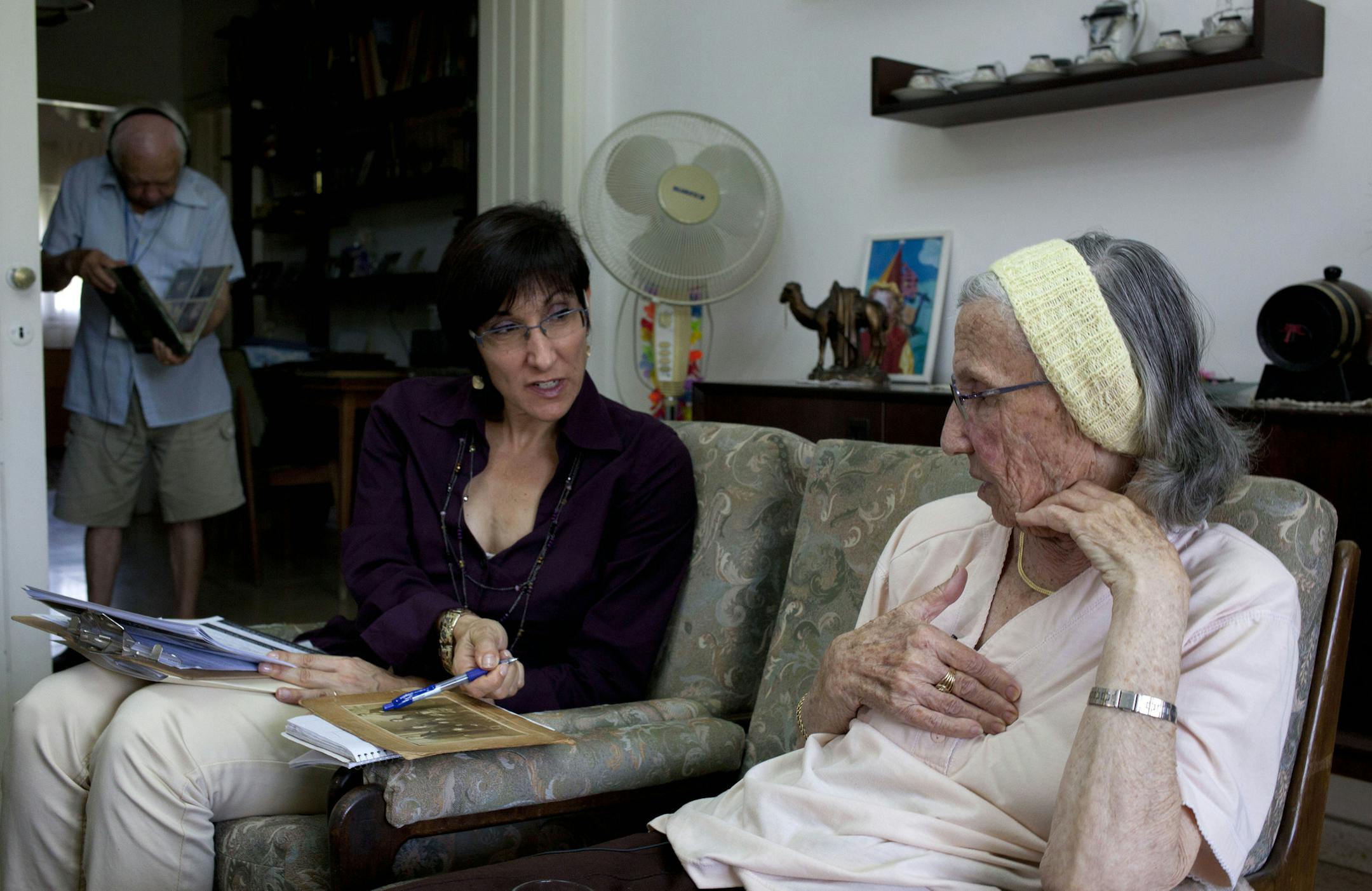
REHOVOT, Israel – With a hand on her chest, 82-year-old Rivka Fringeru battled back tears as she reeled off a list of names she has rarely voiced in the past 70 years: her father, Moshe, then her mother, Hava, and finally her two older brothers, Michael and Yisrael.
All perished in the Holocaust after the Harabju family from Dorohoi, Romania, was rounded up in 1944 and sent to ghettos and camps. Only Rivka and her brother Marco survived, and like many others, they spent the rest of their lives trying to move on and forget.
Now, Yad Vashem, Israel's national Holocaust memorial and museum, is asking them to remember.
Decades after the Holocaust, experts have documented the names of about 4.2 million of the roughly 6 million Jews who were killed by the Nazis in World War II, and officials are going door-to-door in a race to record the memories of elderly survivors before their stories are lost forever.
It is a painstaking process, complicated by trauma, attempted cover-ups and limited record-keeping.
The Names Recovery Project has been Yad Vashem's flagship mission in recent years. It's a vigorous campaign to complete a central database of Holocaust victims' names by encouraging survivors to fill out pages of testimony about those they knew who were killed.
The outreach effort has taken on a greater sense of urgency, with volunteers spanning the country to engage the fewer than 200,000 remaining survivors in Israel and etch the names of their dead relatives into the pages of history. Elsewhere — primarily in the United States and the former Soviet Union — testimony also is being collected from those unable to do so online.
With the passage of the years, Fringeru's recollection of the details of her traumatic past has become sketchy, but the emotions remain raw.