

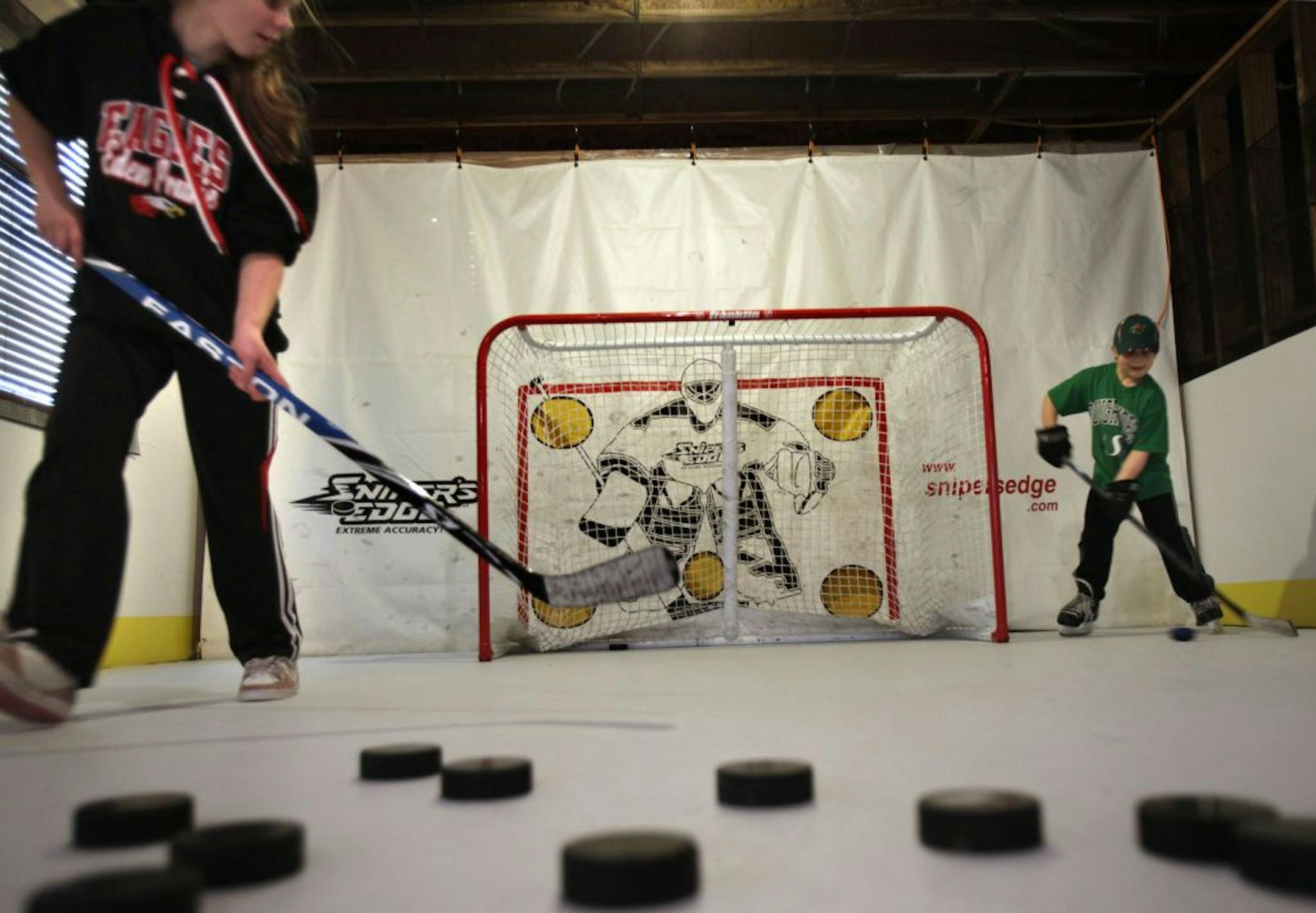
Like many hockey players, the O'Brien brothers like to warm up before games by shooting a few pucks. Unlike most players, they shoot them in their finished basement.
Their mom, Liz O'Brien, doesn't mind a bit. Last year, she and her husband, Mike, turned a lower-level playroom in their Mendota Heights home into a synthetic ice rink for their four sons -- 10-year-old triplets Mac, Riley and Connor, and 7-year-old Finn.
"We surprised 'em with it, right before Christmas," Liz said.
The floor of the windowless room is now a wall-to-wall slick surface where the brothers play two-on-two scrimmages and practice their stick-handling. "People come over and can't believe they're seeing kids whizzing around in the basement," Liz said.
Minnesota has long been a hotbed of back-yard hockey, but synthetic home rinks are a relatively new phenomenon. Don Mason, president of KwikRink Synthetic Ice, the Maple Grove company that supplied the materials for the O'Briens' rink, has been in business 15 years, mostly outfitting hockey-training centers and other commercial facilities. But residential rinks are a growing part of his business, he said.
"Garages and basements are popular places," he said. "We've also put 'em in a lot of pole barns." In one home, Mason said, "we even raised the whole house 2 feet, so a tall kid on skates could have a full slapshot in the basement."
The market for in-home synthetic ice is "not huge -- but very passionate," Mason said. "Hockey is such an expensive sport, and a lot of hockey parents want kids to be able to practice at home."
With price tags typically ranging from $2,000 to $8,000, indoor "ice" can be a significant investment, but so is hockey. Many families regularly shell out thousands of dollars per year for fees, equipment, out-of-town tournaments and off-season training.


