
History of city's mills has a darker side

And we would do well to address it.

February 1, 2022 at 11:45PM
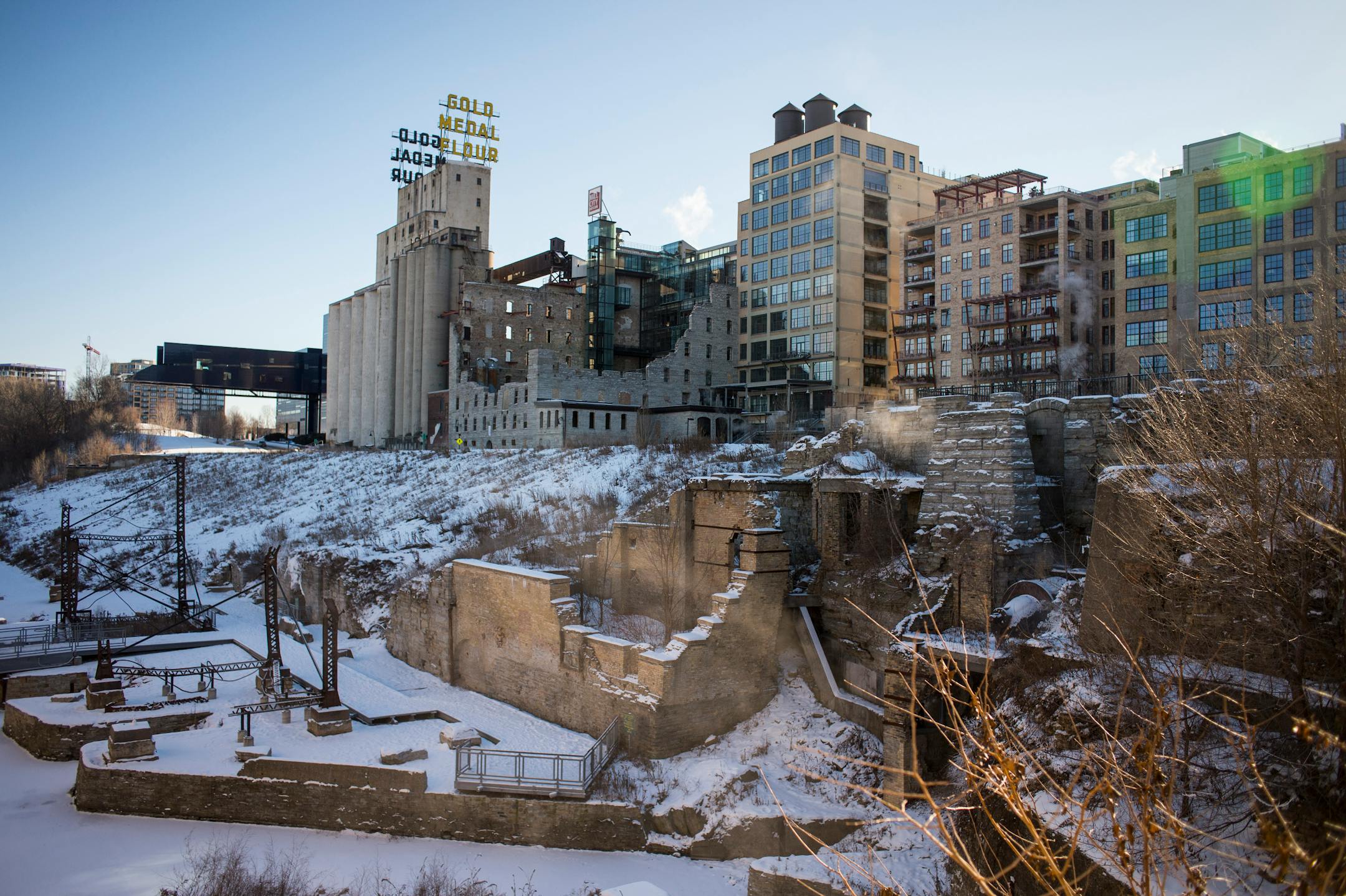
The Mill City Museum should develop a program on the darker history of wheat price manipulation, Paul Stolen says. (Bre McGee, Special to the Star Tribune/The Minnesota Star Tribune)

The Star Tribune's "Curious Minnesota" feature is one of my favorites, including the Jan. 14 description of the decline of the Minnesota flour industry. But the story missed an important part of that history. It is the dark part: the ability of the Minneapolis flour companies to fix low prices for wheat and higher prices for flour in the early days of the mills.

This price manipulation was especially prevalent in the late 1800s before the gradual development of antitrust laws in the early 1900s. Those laws and increased competition meant Minneapolis mills eventually lost their price-fixing power. But the political movements that were created in the era carried on, partially leading to the "Democratic Farmer and Labor" movement in Minnesota.

One can learn more about this history soon. On Feb. 4, PBS will begin airing a five-part documentary titled "The Rise and Fall of the Non-Partisan League."

The Non-Partisan League (NPL) was formed in large part to reduce the dominance of the Minneapolis flour mills and bring higher prices for farmers. It was primarily a movement in North Dakota but had support in northwestern Minnesota. In fact, my grandfather, Roy Hoialmen, strongly supported it when he farmed near Fosston in Polk County.

Minnesotans who buy Dakota Maid Flour are actually, unconsciously, participating in the results of this history. That flour mill is owned by the state of North Dakota and was one of the results of the NPL movement. Believe it: It is a government flour mill, now the biggest flour mill in the U.S.

There is also an independently made movie about the NPL called "Northern Lights," released in 1978. For some reason, it seems to be little known, but it's very relevant to Minnesota. I watched it with my parents when it was shown in Fosston. My mother, a Hoialmen, confirmed its accuracy.

I also have personal experience with the consequences of those long-ago events. In about 1998, before I retired from the Department of Natural Resources, Minnesota was in conflict with North Dakota over some water issues. North Dakota wanted to move Missouri River water east into the Red River basin. This meant crossing the divide between the Hudson Bay drainage and the Mississippi drainage.

At a meeting in Fargo, I gave the Minnesota policy position: that if there was a very severe drought as in the 1930s, where the Red River basically dried up, Minnesota would be responsive to North Dakota's water needs.

As soon as I said that, a North Dakota state legislator who was there stood up and angrily told me: "We haven't trusted Minnesota since the grain mills fixed the grain prices low and the flour prices high! That was why we built the Dakota Mill to make flour!"

In the 1980s, when I worked for Montana's state government, I met a landowner just east of the Marias River Northeast of Great Falls. He ran cattle and also had wheat fields. A pipeline project was proposed to cross his land. I was there to tell him about it. He was friendly. Over coffee and cookies, he told me he had gone east and worked in finance in New York, but came back when his father retired. He was actually only about 40 years old or so. Not an old man at all.

When he found out I was from Minnesota, he looked at me and said, "Do you know about the history of your Minneapolis flour mills? How they fixed the prices low for wheat and high for flour?"

I did say yes, I did, because of my grandfather. He was pleased about that and then said, "It costs me more to ship my wheat to Portland, Oregon, than it would to ship it to Minneapolis. But I'll never send it to Minnesota because of what those mills did to the farmers and ranchers back then."

I'd recommend that the Mill City Museum develop a program that goes into this history. I'm going to do a bit of guessing. Based on my knowledge of North Dakotans, from experience both in Montana and Minnesota, I know they secretly love the Twins and Vikings. But they might not come to the games very much because of the long animosity toward Minneapolis, and their faithful support of the Dakota Flour Mill. This may be true even though the Charles Pillsbury Co. designed the first state government Dakota flour mill in the 1920s.

A nice expansion of the museum that gives this accurate picture would be more than just a goodwill gesture to a neighboring state that now has the biggest flour mill in the U.S. It might even result in a lot more North Dakotans coming to Twins and Vikings games as they stop into the Mill City Museum. Then it would finally tell their story, too.

Paul Stolen is a retired biologist in Fosston, Minn.

about the writer

about the writer

Paul Stolen

More from Commentaries

See More
card image
Alex Kormann/The Minnesota Star Tribune

We can rebuild our country while rebuilding the middle class.

card image
card image