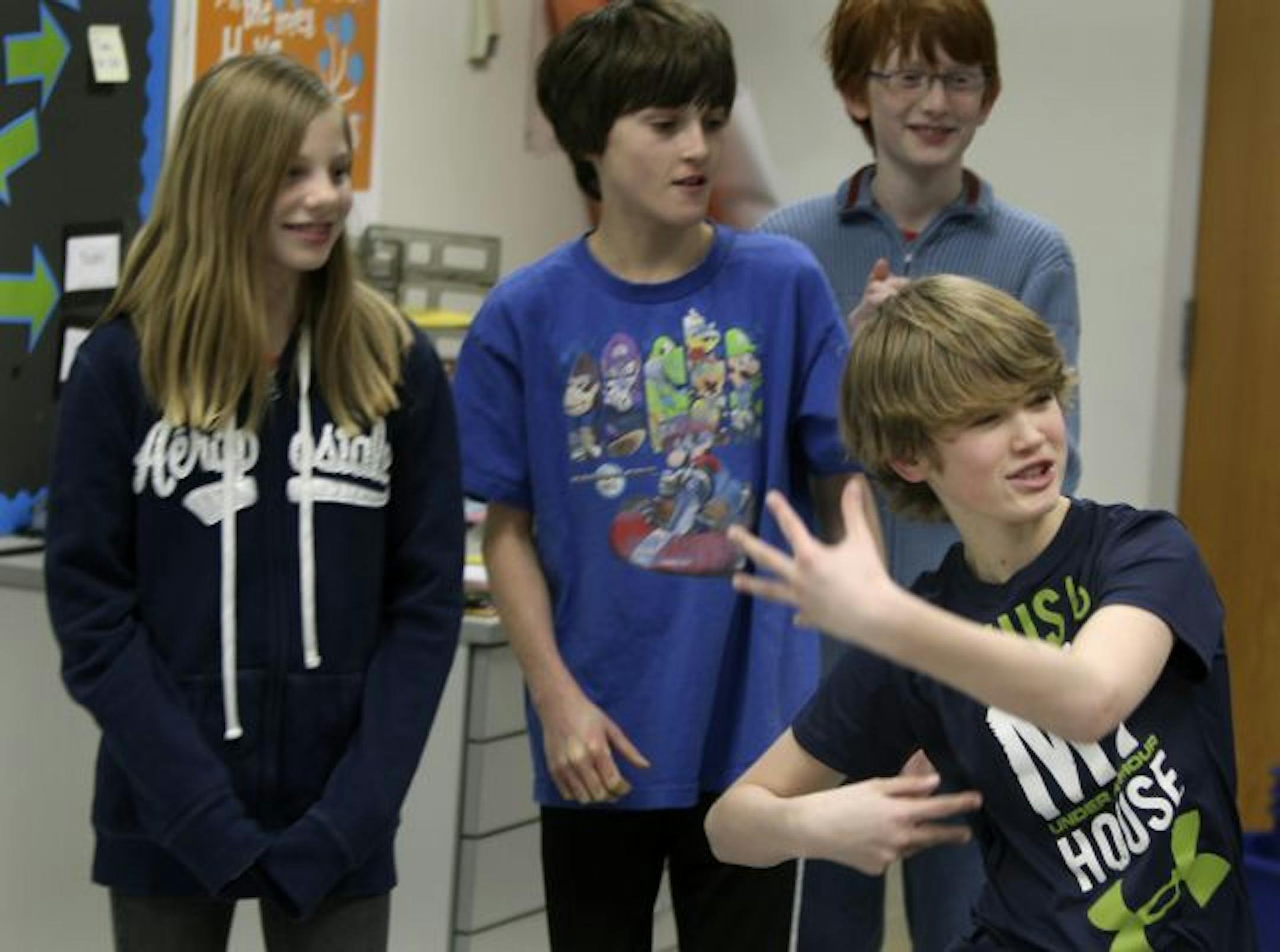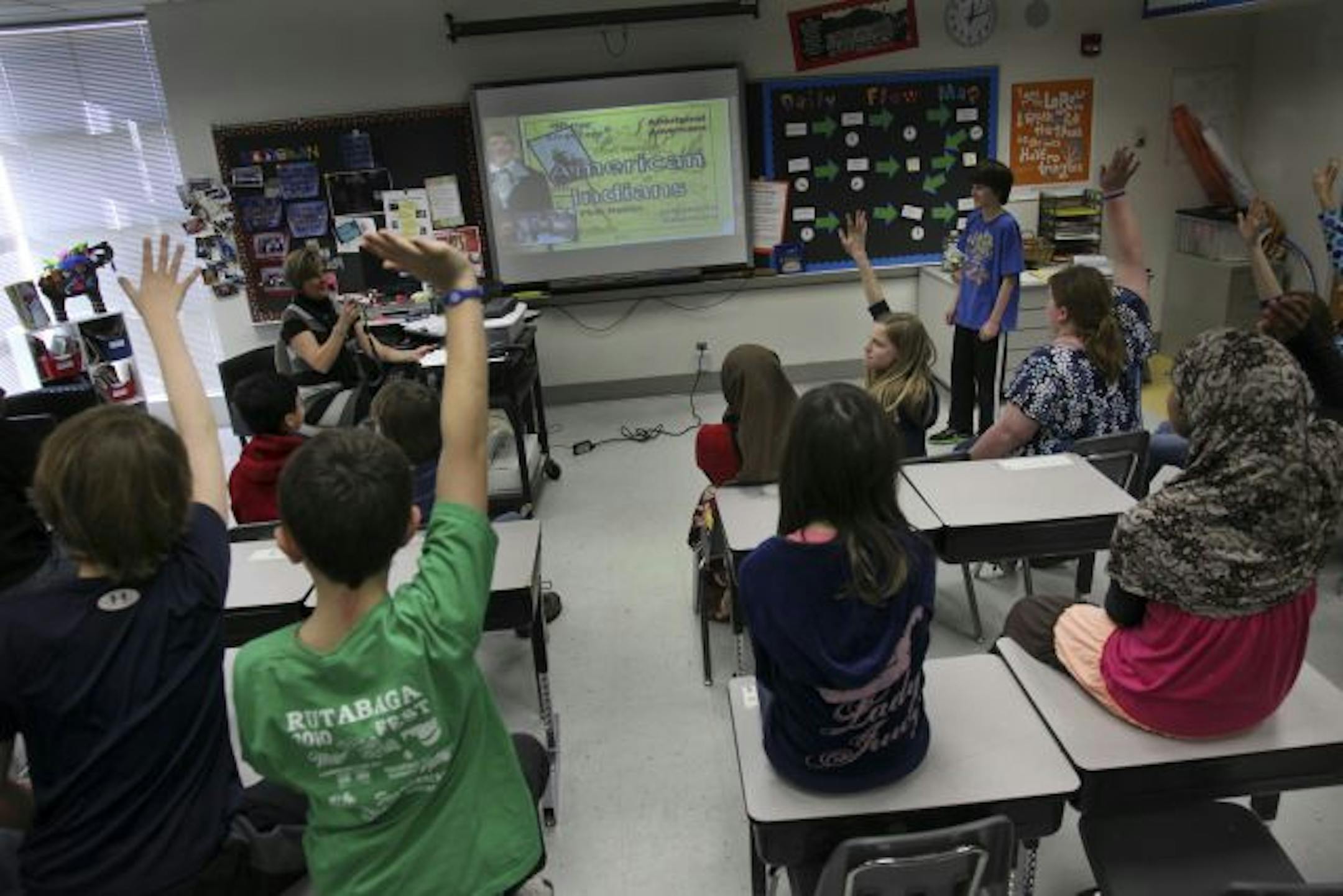
It was two minutes before noon in Sarah Dolan's sixth-grade social studies class as 27 students began to buzz and scrambled to sit atop their desks in full view of a small videoconferencing camera at the front of the room.
Soon it was beaming their images via Internet from Oak Point Intermediate School in Eden Prairie to a basement studio in the Minnesota History Center in St. Paul. There, history center program assistant Jack Matheson, impersonating 19th century geographer Joseph Nicollet, stood in front of an interactive white board, much as a television meteorologist appears before weather maps.
Dressed in historic garb and speaking with a French accent, "Nicollet" greeted students precisely at noon with a hearty "Bonjour."
He was using a relatively new teaching tool called interactive videoconferencing, which allowed two-way visual and audio communication between the students and Nicollet as dozens of maps, photographs and drawings flashed next to him on a screen. Kids could also see themselves in a small insert on the big screen as they interacted with Nicollet.
About 40 schools in 22 counties have linked to the History Center for videoconferencing since last April. In the metro area, schools in Minneapolis, Eden Prairie, Plymouth, Inver Grove Heights, Woodbury and Robbinsdale have participated.
The center received nearly $500,000 from the Arts and Cultural Heritage Fund to build a videoconferencing studio and develop programs. The fund is part of the 2008 Legacy Amendment that provides sales tax money for outdoors and cultural projects.
So far, the videoconferencing has focused on fourth- through sixth-graders, providing lessons on Nicollet, pioneer schoolteacher Harriet Bishop and an early 1900s logging camp in northern Minnesota. Soon to come are a program featuring three Minnesota inventors and the scientific methods they used, and a lesson called "All About Minnesota" that can also be used with younger students.
Not a field trip