

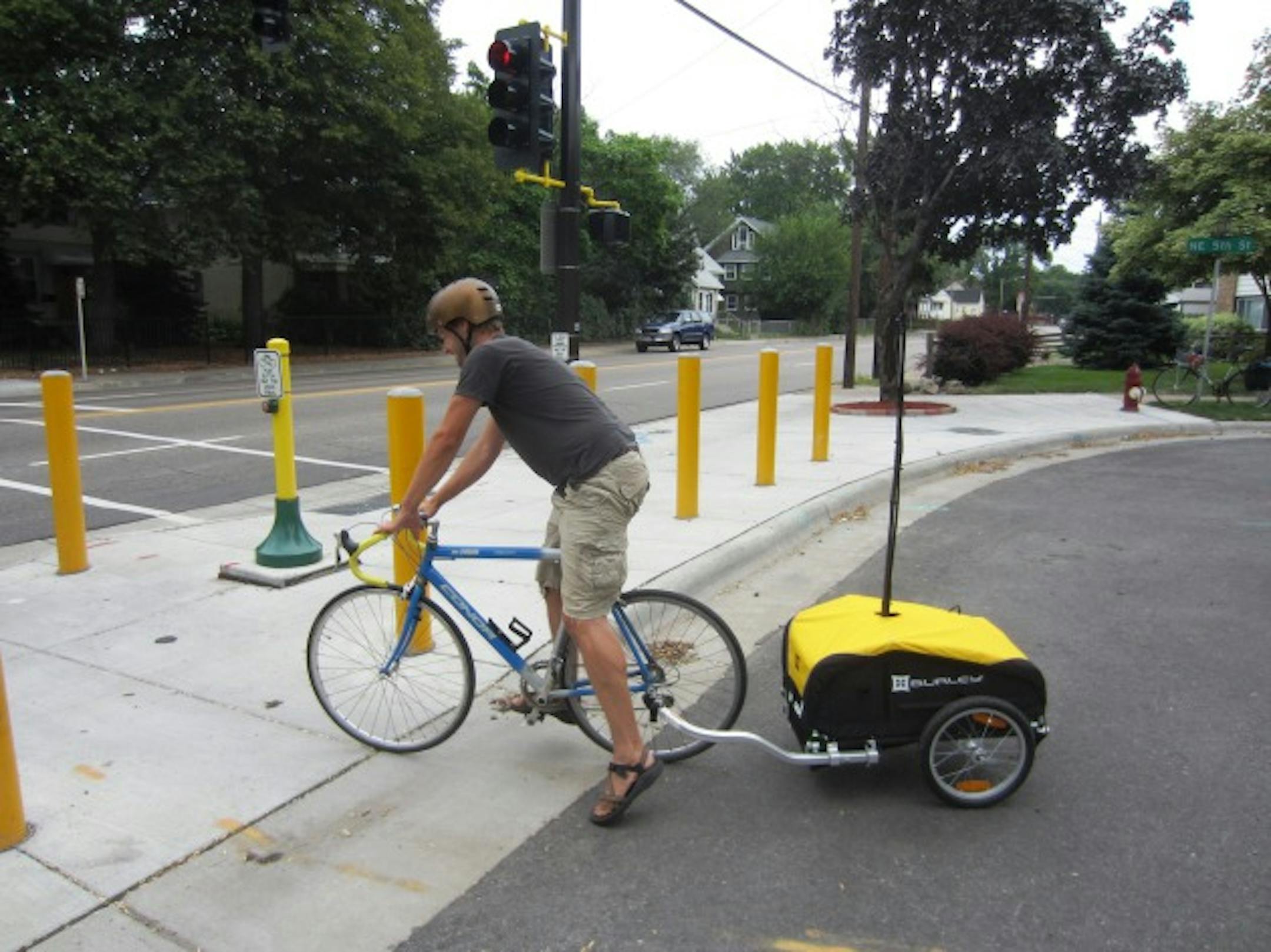
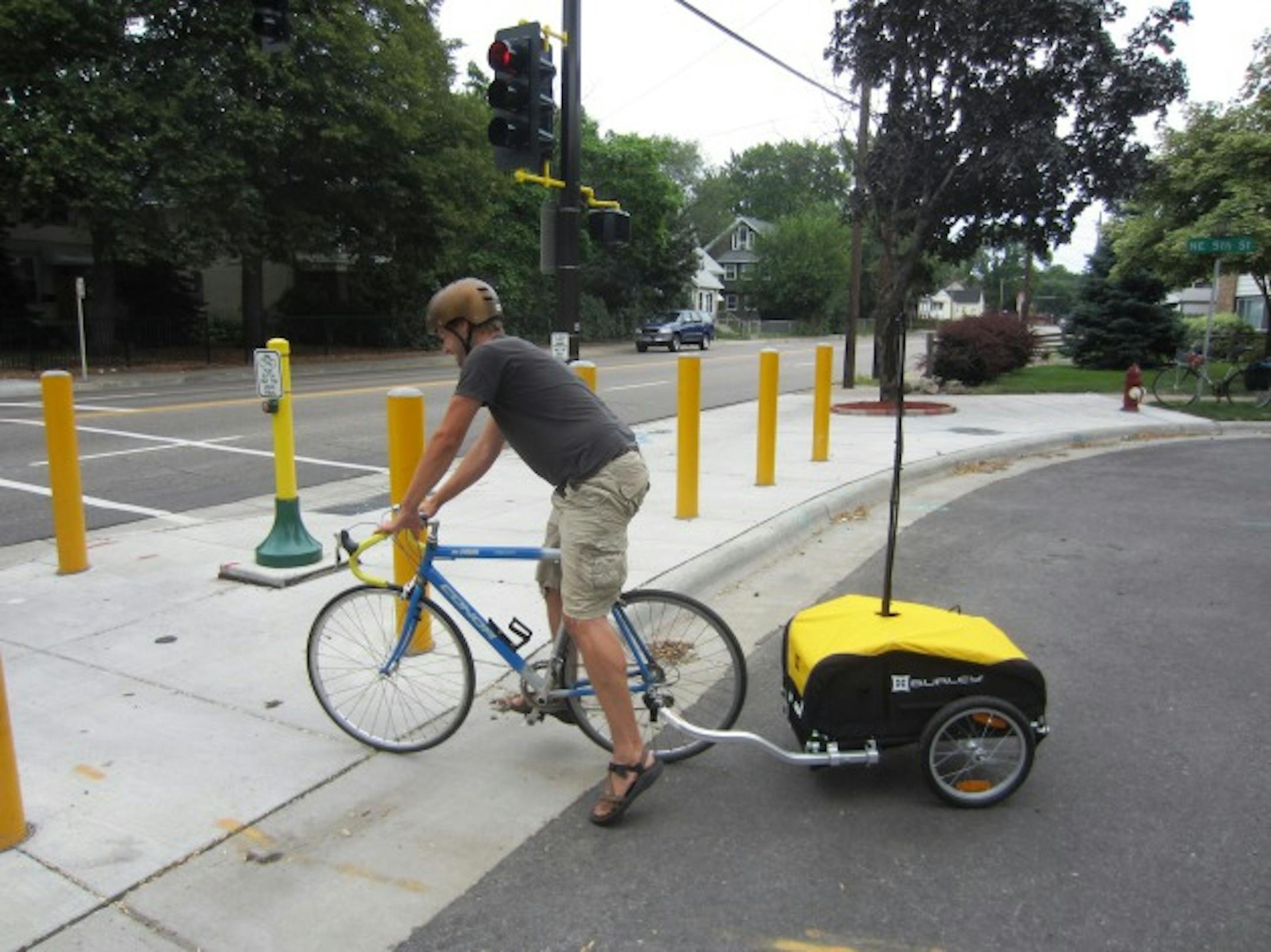
Steve Hankey drew lots of curious fellow bikers last year on Minneapolis streets as he hauled a covered bike trailer sprouting a pipe that extended up to his helmet level. Many assumed that he was photo mapping for Google.
Instead, the University of Minnesota graduate student was mapping one aspect of the city's pollution—concentrations of particulates—with an eye toward improving the health of bike commuters and pedestrians, and potentially influencing public policy.
Although the health impacts of bike commuting are well documented, the downside can be increased exposure to a brew of pollutants, especially those from auto, truck and bus exhausts.
Hankey's work could influence which routes bikers and walkers choose. Preliminary results found concentrations of particulates were about half again higher on the city's arterial and collector streets than they were on off-street paths such as the Midtown Greenway. Moreover, those concentrations were almost twice as high in the morning rush hour as its evening twin.
Ultimately, he'll use sophisticated statistical analysis and land use modeling to produce a block- by-block map that estimates particulate exposure across the city. He's hoping to integrate that with online bike route finders, such as Cyclopath at the university, so that commuters have a choice of mapping the shortest route, the fastest or the healthiest.
The work could also be integrated into bike route planning, although representatives of two prominent organizations that site bike facilities say they first want to review Hankey's work when it's completed.
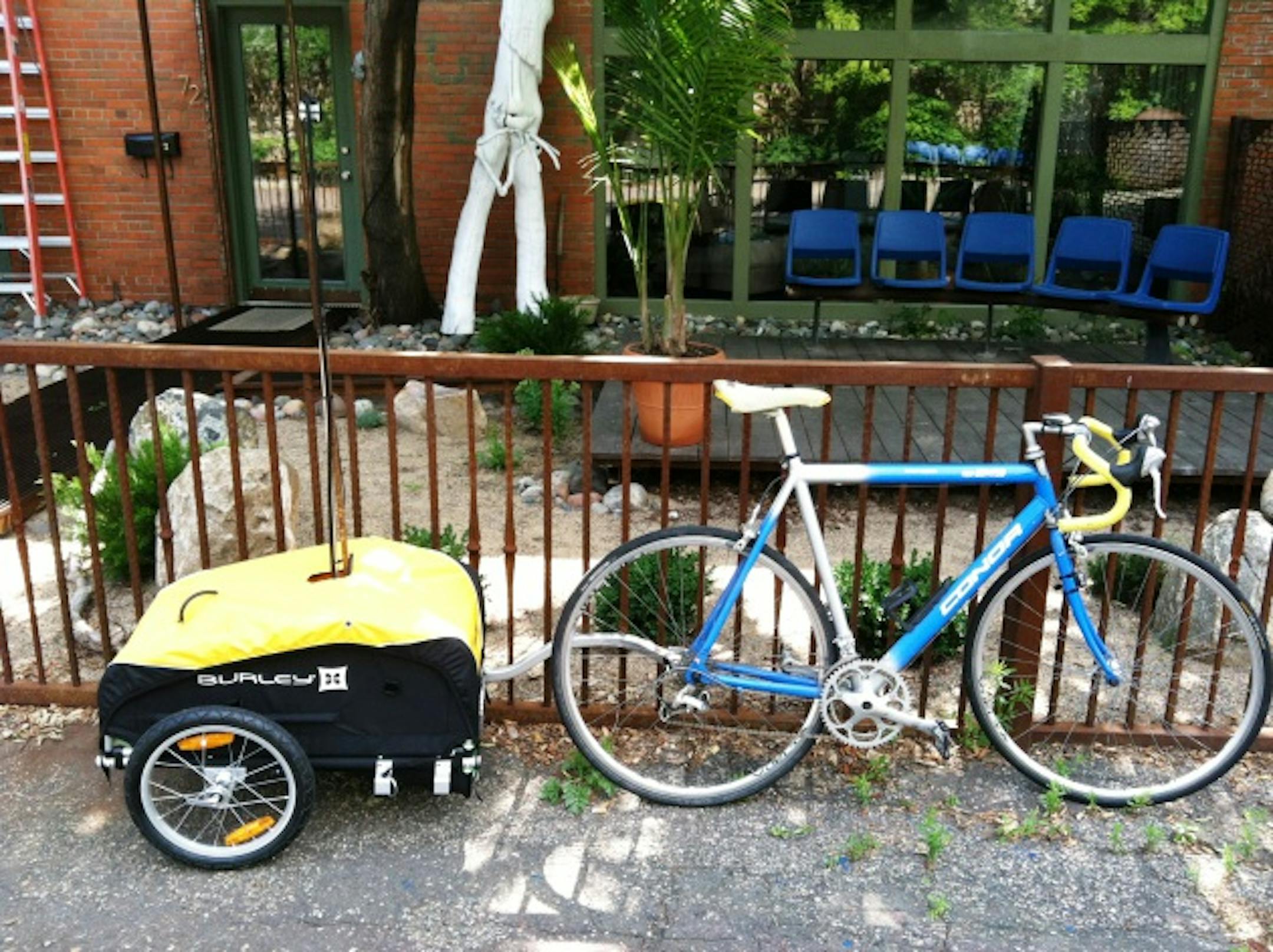
But it's already influencing Hankey, who used to like to speed by snarled traffic on his bike, to pick less-traveled routes. His normal 100 weekly miles on a bike helped prep him for the demands of his fieldwork.
That involved repeatedly cycling three different routes that averaged close to 20 miles each, all while hauling more than 65 pounds of monitoring gear in the bike trailer. He sampled four types of particulate air pollution, including the finest particles that are associated with increased heart risk when inhaled. He accumulated more than 800 miles during his sampling runs.


