

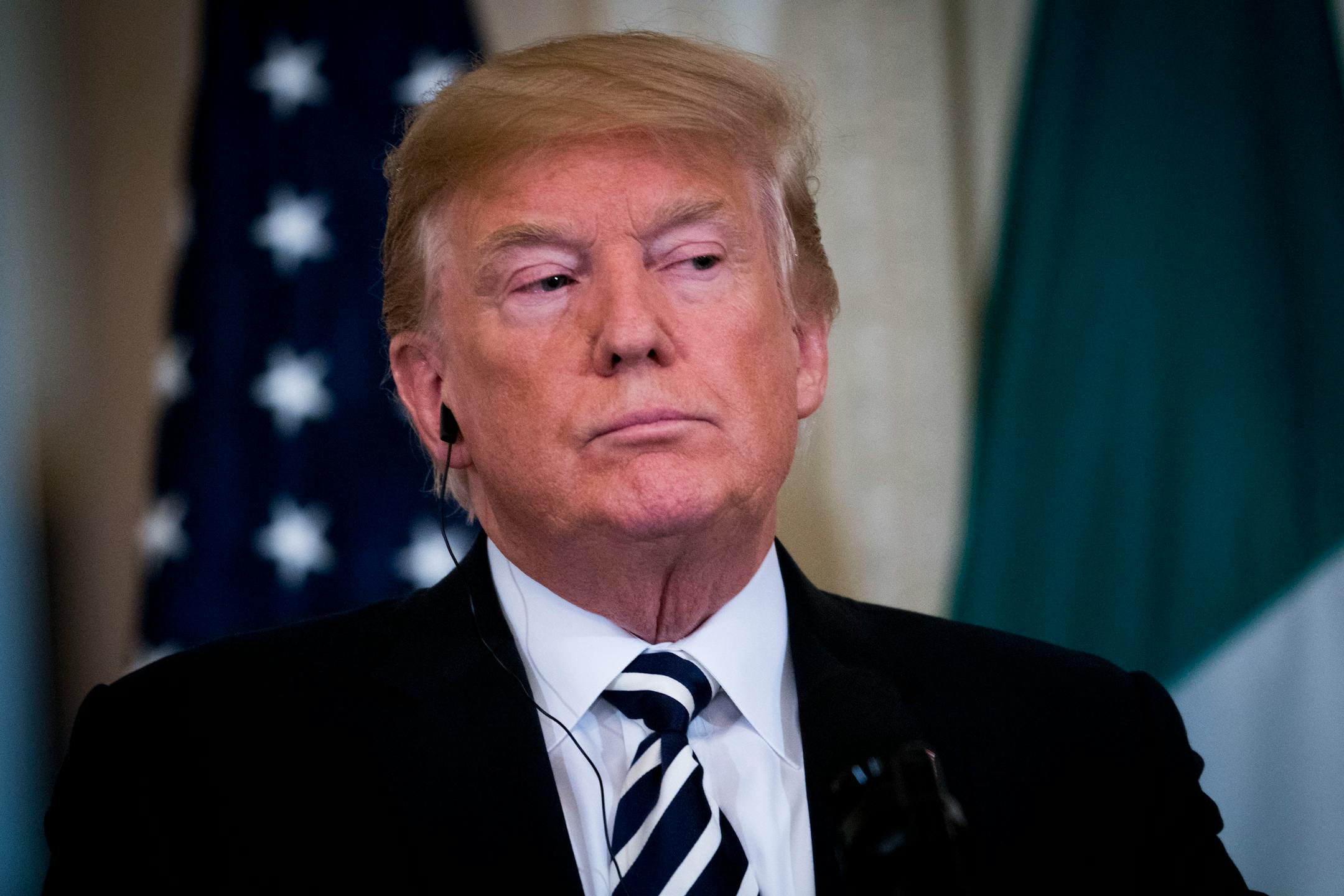
WASHINGTON – Not since the dark days of the Civil War and its aftermath has Washington seen a day quite like Wednesday.
In a Capitol bristling with heavily armed soldiers and newly installed metal detectors, with the physical wreckage of last week's siege cleaned up but the emotional and political wreckage still on display, the president of the United States was impeached for trying to topple American democracy.
Somehow, it felt like the preordained coda of a presidency that repeatedly pressed all limits and frayed the bonds of the body politic. With less than a week to go, President Donald Trump's term is climaxing in a spasm of violence and recrimination at a time when the country has fractured deeply and lost a sense of itself. Notions of truth and reality have been atomized. Faith in the system has eroded. Anger is the one common ground.
As if it were not enough that Trump became the only president impeached twice or that lawmakers were trying to remove him with just a week left in his term, Washington devolved into a miasma of suspicion and conflict. A Democratic member of Congress accused Republican colleagues of helping the mob last week scout the building in advance. Republican members complained about security measures intended to keep guns off the House floor.
All of which was taking place against the backdrop of a pandemic that, while attention has drifted away, has grown catastrophically worse in the closing weeks of Trump's presidency.
More than 4,400 people in the United States died of the coronavirus the day before the House vote, more in one day than were killed at Pearl Harbor or on Sept. 11, 2001, or during the Battle of Antietam. Only after several members of Congress were infected during the attack on the Capitol and new rules were put in place did they finally consistently wear masks during Wednesday's debate.
Historians have struggled to define this moment. They compare it with other periods of enormous challenge like the Great Depression, World War II, the Civil War, the McCarthy era and Watergate. They recall the caning of Charles Sumner on the floor of the Senate and the operation to sneak Abraham Lincoln into Washington for his inauguration for fear of an attack.
They cite the horrific year of 1968 when the Rev. Martin Luther King Jr. and Robert F. Kennedy were assassinated while campuses and inner cities erupted over the Vietnam War and civil rights. Or the wake of the Sept. 11 attacks, when further violent death on a mass scale seemed inevitable. And yet none of them is quite comparable.


